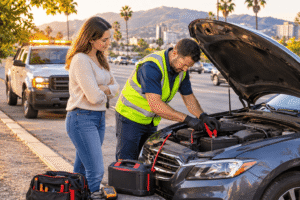
It’s a warm Tuesday afternoon on the Ventura Freeway. Traffic is crawling, the AC is working hard, and suddenly the dashboard lights up with a warning. A few minutes later, the car is coasting onto the shoulder with nowhere to go.
Moments like this are why Roadside Assistance in Glendale, CA matters to so many local drivers. Between busy freeways, steep hillside streets, and long summer heat waves, breakdowns here tend to happen at the worst possible times. Knowing how roadside support works, and what to expect, can turn a stressful situation into a manageable one.
Why Breakdowns Happen So Often in Glendale
Glendale sits at a busy crossroads. The I-5, SR-134, and SR-2 all run through or near the city, and commuters pass through daily on their way to Los Angeles, Pasadena, and Burbank.
Heavy stop-and-go traffic is hard on vehicles. Engines run hotter, brakes wear faster, and batteries work overtime powering AC systems during long idle stretches.
The local terrain adds to the strain. Neighborhoods near the Verdugo Mountains and Chevy Chase Canyon have steep grades that test transmissions and cooling systems. A car that runs fine on flat roads may struggle on a climb in August.
Then there’s the heat. Southern California summers are tough on car batteries, which often fail without warning after a few hot seasons. Tires lose pressure or blow out more easily on hot pavement as well.
What Roadside Assistance Usually Covers
Roadside assistance is a broad term. It can mean different things depending on the provider, but most services cover a familiar set of problems.
The most common calls involve dead batteries. A jump-start or on-the-spot battery replacement can get a driver moving again in under an hour.
Flat tires come in a close second. Many drivers don’t carry a usable spare, or they don’t feel safe changing a tire on a busy shoulder. A technician can swap the tire or tow the car to a shop if needed.
Lockouts, fuel delivery, and minor mechanical fixes round out the list. Running out of gas on a freeway on-ramp is more common than people admit, especially during long traffic delays.
The Shift Toward Mobile Mechanics
One of the biggest changes in the industry is the growth of mobile mechanics. In the past, roadside help often meant a tow truck and a long wait at a repair shop.
Today, many problems can be fixed right where the car stopped. Mobile mechanics carry diagnostic tools, common parts, and equipment that let them handle repairs in a driveway, parking lot, or office garage.
This approach saves drivers time and often money. A tow alone can cost more than a simple fix, like replacing a serpentine belt or a faulty starter.
Drivers across the area have started looking for this kind of help beyond city lines. Someone who lives in Glendale but works near the Burbank studios, for example, might search for a Trusted Mobile Mechanic in Burbank, CA who can reach them during the workday.
Key Advantages for Local Drivers
The most obvious benefit is safety. Waiting on the side of a freeway is risky, and fast response times reduce that exposure. Knowing who to call ahead of time cuts down on panic and delay.
Convenience is another big factor. A mobile repair means no rearranging the day around a shop’s schedule or finding a ride home. The work comes to the driver instead.
There’s also the value of local knowledge. Technicians who work in the area know the traffic patterns, the tricky spots, and the fastest routes. That familiarity often means shorter wait times.
Cost transparency has improved, too. Many providers now give upfront estimates before starting work, which helps drivers avoid surprise bills after a stressful day.
Real-World Situations Drivers Face
Take a parent leaving the Glendale Galleria with two kids in the back seat. The car won’t start, and the parking structure is hot and crowded. A quick battery test and jump-start get the family home in under an hour, without towing.
Or consider a rideshare driver whose tire blows on Brand Boulevard during the evening rush. Every hour off the road means lost income. A mobile technician who can replace the tire on-site helps that driver get back to work quickly.
Then there’s the commuter whose car overheats on the SR-2 climbing toward La Cañada Flintridge. A failing thermostat or a coolant leak is often the cause. Getting it diagnosed early can prevent serious engine damage.
These situations are common, and they show how much timing matters. The faster a qualified person arrives, the smaller the problem usually stays.
How to Choose the Right Roadside Help
Not all services are equal, so it pays to do a little homework before an emergency strikes.
Start by checking reviews from local drivers. Look for comments about response time, honesty, and whether the technician solved the problem on the first visit.
Ask about the range of services. Some providers only tow, while others handle full mobile repairs. Local businesses such as Green Way Mobile Mechanic, along with other independent technicians in the region, represent the growing number of options that bring repair work directly to drivers.
Licensing and insurance also matter. A reputable technician should be willing to share credentials and explain their pricing clearly.
Finally, save a number in your phone before you need it. Searching for help on a dark freeway shoulder is far harder than making one quick call.
Simple Habits That Reduce Breakdowns
Many roadside calls could be avoided with basic care. Checking tire pressure monthly, especially in summer, helps prevent blowouts.
Testing the battery once it hits three years old is smart in a hot climate. Most auto parts stores and mobile technicians can do this in minutes.
Keeping an eye on coolant levels and dashboard warnings also goes a long way. A small leak caught early is much cheaper than a failed engine later.
A basic emergency kit is worth having, too. Water, a phone charger, a flashlight, and reflective triangles can make a long wait safer and more comfortable.
Final Thoughts
Car trouble is never convenient, but it doesn’t have to become a crisis. Understanding how Roadside Assistance in Glendale, CA works helps drivers stay calm, make better choices, and get back on the road faster.
With busy freeways, hillside roads, and hot summers, local drivers face their own set of challenges. A little preparation, combined with knowing where to turn for help, makes all the difference.
FAQs
How long does roadside assistance usually take to arrive in Glendale?
Response times often range from 30 to 60 minutes. Traffic, time of day, and location can all affect how quickly help arrives.
Can a mobile mechanic fix my car without towing it?
In many cases, yes. Battery replacements, flat tires, belts, starters, and many minor repairs can be handled on-site.
Does car insurance include roadside assistance?
Some auto insurance policies include it as an add-on. It’s worth checking your policy details or calling your insurer to confirm what’s covered.
How do I find a trusted mobile mechanic in Burbank, CA or nearby areas?
Read local reviews, confirm licensing and insurance, and ask for upfront pricing. Recommendations from friends or coworkers can also help.
What should I do while waiting for roadside help on the freeway?
Move as far off the road as possible, turn on hazard lights, and stay inside the vehicle with your seatbelt on if it’s safe to do so.