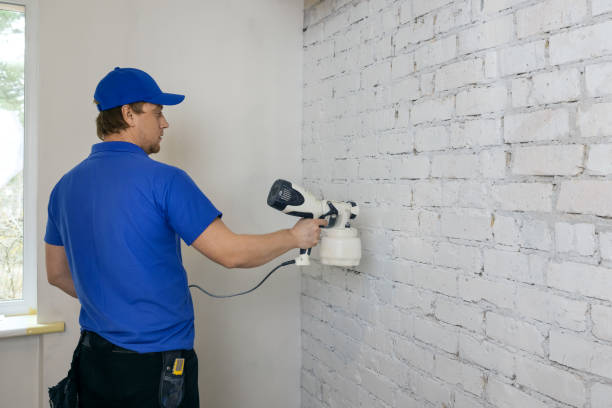
man painting old brick wall in white color with paint sprayer
Every homeowner with a dated brick fireplace eventually googles the same question: should I just paint it? And almost every forum shouts yes, grab a roller. Slow down. Painting brick is the most popular option and, in many cases, the wrong one. There is a better technique that professionals quietly prefer, one that changes the color while keeping everything that makes brick worth having. Staining a brick fireplace transforms tired orange masonry into modern charcoals, warm neutrals, or soft whitewashed tones without burying the texture under a film of plastic. Here is how it works, what it costs, and how to avoid butchering it.
The Problem With Painting Brick
Paint sits on top of brick as a film, and that single fact causes every downstream problem. The film fills the pores and flattens the texture, which is why painted brick often reads as fake or plastic up close. Brick also needs to breathe, and sealed masonry can trap moisture, leading to bubbling, chipping, and peeling, especially around the heat cycles of a working firebox. Then comes the kicker: paint on brick is effectively forever. Stripping it means harsh chemicals or blasting, both expensive and messy. Paint is a one way door, and most people walk through it without ever knowing.
How Brick Stain Actually Works
Quality brick stains, particularly mineral silicate stains, do something completely different. Instead of coating the surface, they penetrate the brick and chemically bond with the masonry itself. The color becomes part of the brick rather than a layer on top of it. Because the finish is translucent and breathable, the natural texture, variation, and character of the brick stay fully visible, and moisture can still escape the way it should. There is nothing to peel, chip, or scratch off. That is why stained brick can go decades without maintenance while painted brick starts a repaint cycle within a few years.
Why Designers Keep Choosing Stain
There is a reason stained brick keeps showing up in upscale renovation reveals. Interiors have moved hard toward natural materials, honest textures, and finishes that age gracefully, and stain fits that brief perfectly while paint fights it. A stained surround photographs with depth because light still plays across the brick face instead of bouncing off a uniform film. And in resale conversations, permanent finishes with zero upkeep are an easy story to tell buyers. Paint asks for a maintenance schedule. Stain asks for nothing. That difference compounds every single year you own the home. One look at professional brick staining transformations usually settles the debate.
The Looks You Can Achieve
Stain is more versatile than most people expect. Layered translucent tints can cool harsh orange brick into warm greige, deepen everything into moody charcoal or black for a modern statement, or lighten the surround into a soft, weathered whitewash. Skilled applicators often vary tones brick by brick, keeping the natural variation that makes masonry beautiful, then treat the mortar separately for contrast or blending. Stain can also unify mismatched brick left over from past repairs. The one real limitation is direction: taking dark brick dramatically lighter requires more opaque mineral treatments, since translucent stain cannot lighten what sits beneath it. Reviewing real mineral stain finishes on completed projects is the quickest way to shortlist tones for your own surround.
The Process, Step by Step
First, the brick gets cleaned thoroughly, because dust, soot, and grime block penetration. Next comes the most important step in the entire project: a test patch on a hidden brick, evaluated only after it fully dries. Then the stain is applied brick by brick in thin translucent layers, using brushes or sponges rather than rollers, building color gradually and varying tones for a natural look. Mortar lines are treated separately, either masked off or tinted intentionally. Most fireplace surrounds are completed within a day or two, and the surface is typically ready for normal use shortly after the final coat cures.
Mistakes That Turn Stain into Regret
The classic disaster is buying a cheap acrylic product labeled as stain that is really just thin paint, which peels exactly like paint does. The second is skipping the test patch, since brick porosity varies wildly and the same stain can look completely different on two fireplaces. The third is applying one flat color across every brick and mortar joint, which produces the unmistakable painted look everyone was trying to avoid. Add staining over sealed brick, where nothing can penetrate, and rushing coats before the previous layer dries. Every one of these failures is avoidable with patience and a proper test.
Can Stained Brick Handle the Heat?
Yes, and better than paint. Mineral stains are inorganic, so they do not soften, blister, or break down under normal fireplace temperatures the way some coatings can. Because the color bonds inside the brick rather than sitting on the surface, heat cycling does not cause the chipping and peeling that plagues painted fireboxes. For the interior firebox itself, where flames make direct contact, specialized heat rated products remain the rule. But for the surround, chimney breast, and hearth, a proper mineral stain is one of the most heat tolerant finishes available anywhere.
What It Costs and How Long It Lasts
A DIY staining kit for a typical fireplace runs roughly one hundred to three hundred dollars in materials. Professional staining commonly lands between eight hundred and three thousand dollars depending on the size of the surround, the condition of the brick, and the complexity of the color work. Now compare that against the lifetime math of paint. Painted fireplaces often need touch ups or full repaints every three to five years, while mineral stained brick is essentially permanent and maintenance free. Over a decade of ownership, stain is frequently the cheaper option despite the higher day one price.
When a Professional Makes Sense
If your brick is bare, your goal is a single soft tone, and you are patient, DIY staining is achievable. The moment the project involves color matching to floors and furniture, blending multiple tints, correcting previous bad work, or a floor to ceiling surround, expertise starts earning its money. Specialists in staining brick fireplace surrounds will test custom tints on your actual brick, layer translucent tones for a natural finish, and control the mortar treatment so the result looks like the brick was always that color. That is the standard worth paying for on the most photographed wall in your house.
Frequently Asked Questions
Can you stain a brick fireplace that has already been painted?
Not directly. Stain needs bare, porous brick to penetrate, and paint seals the surface. The paint must be stripped or blasted off first, which is a significant job. If stripping is unrealistic, a breathable mineral paint or limewash over the existing paint is usually the better path.
Is brick stain permanent?
Effectively yes. Mineral stains bond chemically with the masonry, so the color will not peel or flake and cannot simply be washed away. You can always go darker later with additional layers, but you cannot easily return to the original color, so test thoroughly first.
How long does staining a fireplace take?
Most professional fireplace staining projects are finished within one to two days, including drying time between translucent layers. Simple single tone DIY projects can be done over a weekend, with the test patch stage ideally completed several days before the main work.
Will stained brick look natural?
Done properly, yes, and that is exactly the point. Because stain is translucent and preserves the surface texture, the brick still looks like brick, just in a better color. The unnatural look people fear almost always comes from paint or from a single flat stain color applied uniformly.
Can I make a dark brick fireplace lighter with stain?
Only slightly. Translucent stains cannot cover what sits underneath, so meaningful lightening requires semi opaque mineral coatings or a limewash effect instead. A professional can assess your brick and recommend which system will reach your target color while keeping a natural finish.