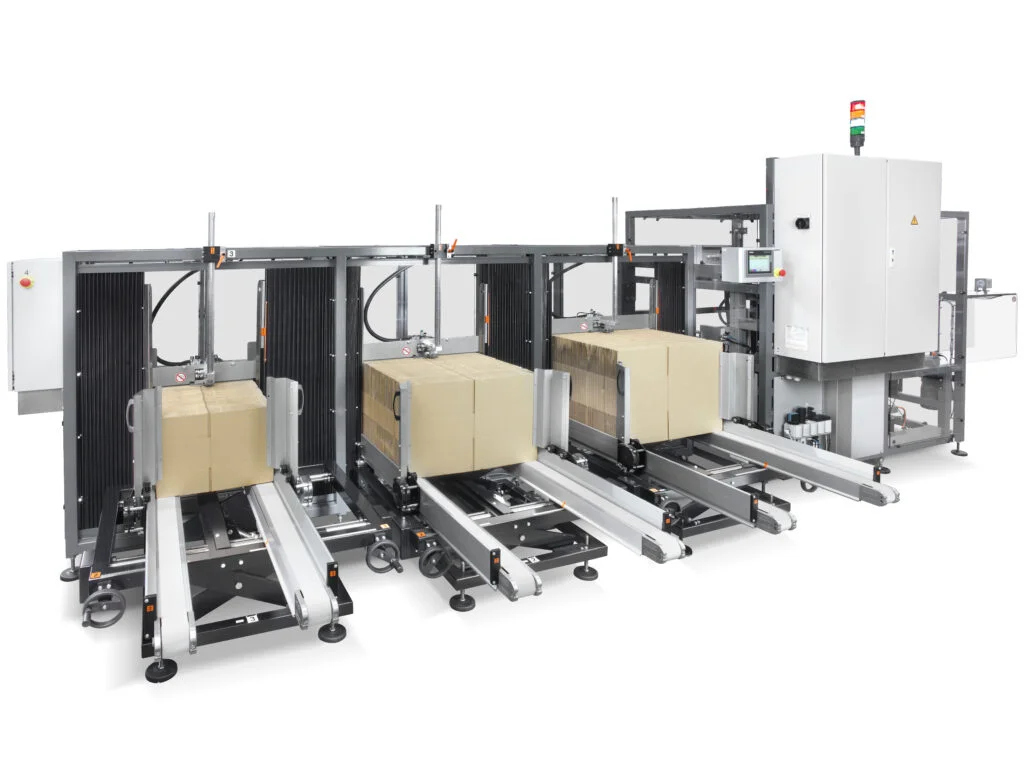
Efficient carton handling is an important part of modern packaging operations. From preparing empty boxes to moving filled cartons toward sealing and dispatch, each stage must work smoothly to maintain production flow. When carton preparation is slow or inconsistent, it can create delays throughout the packaging line.
An Automatic Case Erector helps address this challenge by automatically forming flat-packed corrugated blanks into properly shaped cartons. By reducing repetitive manual tasks and delivering a steady supply of opened boxes, these systems support more organized and reliable carton handling across different industries.
Understanding Automatic Carton Handling
Carton handling involves several connected activities, including storing flat blanks, forming boxes, transferring them to filling stations, and preparing them for sealing. Each activity contributes to the overall efficiency of a packaging line.
Manual carton preparation can become difficult when production volumes increase. Workers may need to repeatedly fold, position, and secure boxes, which can lead to inconsistent results and interruptions. Automated case erecting equipment provides a more controlled way to prepare cartons before they enter the next stage.
How Automatic Case Erector Systems Work
An automatic case erector takes flat corrugated carton blanks from a magazine and forms them into open boxes. Depending on the machine design, the process generally includes several coordinated steps.
Carton Blank Loading
Flat carton blanks are placed into a storage magazine. The magazine keeps the blanks organized and makes them available to the machine during operation.
Blank Separation and Feeding
The feeding mechanism picks up individual blanks and separates them from the stack. Reliable separation is important because overlapping or incorrectly positioned blanks can interrupt the forming process.
Carton Forming
The machine opens each blank and shapes it into a rectangular carton. Mechanical guides and forming components help maintain the required dimensions and structure.
Bottom Flap Folding and Sealing
Once the carton is opened, its bottom flaps are folded into position. Depending on the equipment configuration, adhesive tape or hot-melt glue may be used to secure the bottom.
Carton Discharge
The completed carton is released onto a conveyor or transferred to the next packaging station. It is then ready for product loading or additional handling.
Improving Packaging Line Efficiency
One of the main advantages of automated carton forming is its ability to maintain a consistent supply of boxes. Downstream packaging equipment can operate more smoothly when cartons arrive at a predictable rate.
This helps reduce waiting time between production stages. Instead of relying on workers to prepare boxes individually, manufacturers can coordinate carton forming with filling, weighing, labeling, and sealing operations.
A properly integrated system can also help reduce bottlenecks caused by uneven carton preparation. This is particularly useful in facilities where packaging lines operate for extended periods or handle large production volumes.
Maintaining Carton Quality and Consistency
Carton quality affects more than appearance. Poorly formed boxes may create problems during product loading, stacking, transportation, and storage.
Automatic case erector systems use controlled forming mechanisms to help produce cartons with consistent shapes and properly folded flaps. This reduces the likelihood of problems associated with uneven manual folding.
Consistent carton dimensions can also improve compatibility with conveyors, case packers, and sealing machines. As a result, packaging equipment can handle cartons with fewer adjustments and interruptions.
Reducing Repetitive Manual Work
Preparing cartons manually involves repeated movements such as lifting blanks, opening boxes, folding flaps, and positioning cartons. These activities can take up a significant amount of employee time in high-volume production environments.
Automation reduces the need for workers to perform these repetitive tasks throughout a shift. Employees can instead focus on equipment monitoring, quality checks, material replenishment, and other responsibilities that support production.
Although automated equipment still requires supervision and maintenance, it can make carton preparation less dependent on continuous manual handling.
Supporting Better Use of Production Space
Flat-packed carton blanks generally require less storage space than fully assembled empty boxes. An automatic case erector can form cartons as they are needed, helping manufacturers manage the transition between compact blank storage and ready-to-use cartons.
This approach can make material handling more organized, especially in facilities with limited floor space. It may also reduce the need to store large quantities of pre-assembled empty cartons near packaging stations.
The actual space savings depend on carton dimensions, production volume, machine layout, and the available storage arrangement.
Integration with Other Packaging Equipment
Automatic case erectors are often used as part of a wider packaging system rather than as standalone machines. They can be connected to conveyors, robotic loading equipment, case packers, and carton sealing machines.
Successful integration requires attention to operating speed, carton dimensions, transfer height, and control signals. The equipment must work at a compatible rate so that one machine does not create unnecessary delays for another.
Manufacturers should also consider whether the system needs to handle multiple carton sizes. Machines with suitable adjustment features can provide greater flexibility when production requirements change.
Important Factors When Choosing a System
Selecting suitable carton forming equipment requires an understanding of current production needs and future operating requirements. Important considerations include:
- Production speed: Choose a system that can meet the required carton output without creating downstream delays.
- Carton specifications: Confirm that the machine supports the required box dimensions, board types, and blank styles.
- Machine adjustment: Consider how easily operators can change settings when switching between carton sizes.
- Sealing method: Check whether the system uses tape, hot-melt adhesive, or another suitable bottom-sealing method.
- Integration requirements: Ensure that the equipment can connect with existing conveyors and packaging machinery.
- Maintenance access: Look for a design that allows routine inspection, cleaning, and component replacement.
- Operator safety: Review guarding, emergency stops, and other safety features before installation.
Evaluating these factors helps businesses select equipment that fits their packaging process instead of focusing only on the machine’s maximum operating speed.
Maintenance and Operational Reliability
Regular maintenance is necessary to keep carton forming equipment operating consistently. Dust, corrugated board particles, worn suction components, and misaligned mechanical parts can affect feeding and forming performance.
Operators should follow the manufacturer’s maintenance schedule and inspect important components regularly. Particular attention should be given to blank feeding systems, vacuum components, folding mechanisms, belts, sensors, and sealing units.
It is also important to train operators to recognize common issues, such as blank misfeeds, incomplete carton opening, and inconsistent bottom sealing. Identifying these problems early can help prevent extended downtime.
Conclusion
Automatic case erector systems play an important role in efficient carton handling by preparing boxes consistently, reducing repetitive manual work, and supporting smoother packaging line operations. Their ability to form cartons on demand also helps manufacturers coordinate material flow and improve the organization of production areas.
When selecting a system, businesses should consider carton specifications, production requirements, equipment compatibility, maintenance needs, and operator safety. With suitable equipment and proper integration, automated carton forming can become a dependable part of an efficient packaging operation.

