In today’s competitive business environment, maintaining quality, efficiency, and customer satisfaction is essential for long-term success. Australian businesses across manufacturing, healthcare, construction, food processing, IT, and service industries are increasingly adopting international standards to improve their operations and build customer confidence. Choosing the Top ISO Certification Company in Australia can help organisations establish effective management systems and demonstrate their commitment to internationally recognised quality and compliance requirements.
Importance of ISO Certification for Australian Businesses
ISO certification provides organisations with a structured framework to improve business processes, manage risks, and maintain consistent performance. It also helps businesses strengthen their reputation, meet customer expectations, and improve operational efficiency. Whether an organisation is a small business or a large enterprise, implementing the right ISO standard can create valuable opportunities for growth and development.
Some widely recognised ISO standards include:
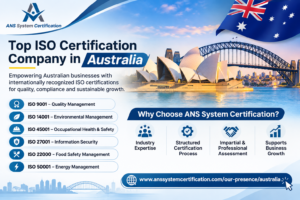
- ISO 9001:2015: Quality Management System for improving customer satisfaction and service quality.
- ISO 14001:2015: Environmental Management System for managing environmental responsibilities.
- ISO 45001:2018: Occupational Health and Safety Management System for promoting workplace safety.
- ISO 27001:2022: Information Security Management System for protecting sensitive information.
- ISO 22000:2018: Food Safety Management System for maintaining food safety throughout the supply chain.
- ISO 50001:2018: Energy Management System for improving energy performance.
These standards help Australian organisations develop reliable processes, reduce operational risks, and demonstrate their commitment to continuous improvement.
How to Choose the Right ISO Certification Company in Australia
Selecting a suitable certification partner is an important step towards achieving ISO certification. Businesses should consider the company’s industry experience, professional expertise, certification scope, transparency, and accreditation status.
A reliable certification body should provide clear information about the certification process, audit requirements, documentation, and applicable standards. Organisations should also verify whether the certification body is appropriately accredited for the relevant standard and scope.
The typical certification journey involves understanding organisational requirements, implementing the management system, conducting internal audits, completing the certification audit, and addressing any identified nonconformities.
Benefits of Working with a Professional Certification Partner
Working with an experienced ISO certification provider can help businesses understand applicable requirements and prepare effectively for certification audits. Key benefits include improved process management, stronger customer trust, better risk management, enhanced regulatory awareness, and increased market credibility.
ISO certification can also support Australian companies looking to expand into international markets, participate in business tenders, and establish stronger relationships with customers and suppliers.
ANS System Certification – ISO Certification Services in Australia
ANS System Certification supports organisations seeking to demonstrate their commitment to internationally recognised management system standards. Businesses can explore its ISO certification services and relevant industry requirements through its Australia presence page.
With an emphasis on professional assessment and management system certification, organisations can take informed steps towards improving business performance and achieving their quality, environmental, safety, and information security objectives.
Conclusion
Finding the Top ISO Certification Company in Australia is an important decision for businesses aiming to improve operational performance, strengthen credibility, and achieve sustainable growth. By selecting an appropriately accredited certification body and implementing the relevant ISO standards, Australian organisations can build effective management systems and demonstrate their commitment to quality, safety, and continuous improvement.