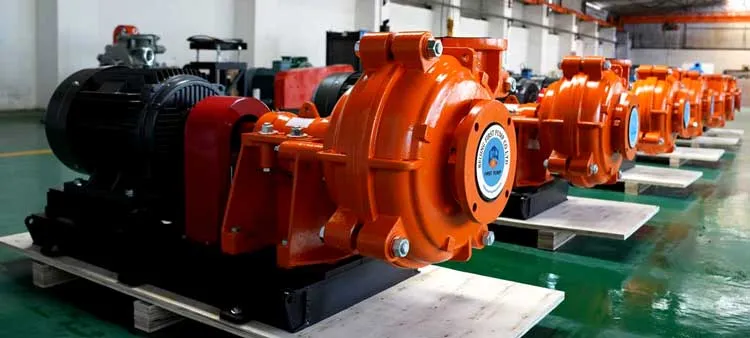
Product quality is one of the most important factors to consider when purchasing slurry pumping equipment. These pumps often operate with abrasive solids, corrosive liquids, and high concentrations of suspended particles, making reliable construction essential for consistent performance.
A dependable Slurry Pump Supplier should be able to demonstrate how its equipment is designed, manufactured, inspected, and tested. Understanding these quality factors helps buyers compare suppliers more effectively and select equipment suited to demanding operating conditions.
Start With Application Requirements
Product quality cannot be evaluated separately from application suitability. A pump may be well manufactured but still perform poorly if it is not designed for the specific slurry being handled.
Before assessing suppliers, identify important operating conditions such as:
- Flow rate
- Total head
- Slurry density
- Solids concentration
- Particle size and hardness
- Temperature
- Chemical composition
- Operating hours
These details provide a basis for determining whether the proposed pump is appropriate for the intended service.
Evaluate Material Quality
Materials used in slurry pumps must withstand the conditions created by abrasive and corrosive slurries. The quality and consistency of these materials can directly affect component life.
Important components include impellers, casings, liners, shafts, and sealing parts. Depending on the application, these components may require different combinations of hardness, toughness, and chemical resistance.
Ask the supplier how materials are selected and verified before manufacturing begins.
Examine Impeller Construction
The impeller has a major influence on pump performance and durability. Its geometry affects flow, pressure, energy consumption, and wear.
A quality-focused supplier should maintain accurate impeller dimensions and appropriate surface conditions. Properly manufactured impellers can help maintain consistent hydraulic performance and reduce unnecessary vibration.
Check Casing and Liner Quality
The casing provides structural support while liners can protect high-wear areas from direct slurry contact. Their construction and material selection are particularly important in abrasive applications.
When evaluating a pump, ask whether wear components are replaceable and how their design helps protect the main casing. Replaceable components can simplify maintenance and reduce repair costs.
Look at Manufacturing Precision
Precision manufacturing affects how well individual components fit and operate together. Incorrect dimensions or excessive tolerances can lead to misalignment, vibration, leakage, and uneven wear.
Important manufacturing areas include:
- Casting accuracy
- Machining tolerances
- Shaft dimensions
- Bearing locations
- Sealing surfaces
- Component clearances
- Assembly alignment
Consistent dimensional control helps ensure that the finished pump performs according to its intended design.
Review Quality-Control Procedures
Quality control should occur throughout production rather than only during final inspection.
A supplier may use inspections to verify raw materials, cast components, machined parts, heat-treated components, rotating assemblies, and final pump construction. Ask what procedures are used and whether inspection records can be provided.
A structured quality-control system can reduce the likelihood of manufacturing defects reaching the operating site.
Ask About Component Balancing
Rotating components, particularly impellers, should be appropriately balanced to minimize vibration. Poor balance can increase mechanical loads and accelerate wear on bearings, shafts, seals, and other parts.
Ask how rotating components are balanced and whether balancing is verified before final assembly. Consistent balancing practices can support smoother and more reliable operation.
Assess Sealing Quality
Sealing systems help prevent slurry from entering sensitive mechanical areas and can reduce unwanted leakage. Seal performance is therefore an important aspect of overall pump quality.
The appropriate sealing arrangement depends on slurry characteristics, pressure, temperature, and operating conditions. A supplier should be able to explain why a particular sealing method is suitable for the application.
Examine Hydraulic Performance
A high-quality pump should deliver the required flow and head under its specified operating conditions. Hydraulic performance is influenced by impeller geometry, casing design, clearances, and manufacturing accuracy.
Request performance curves or relevant technical data when comparing equipment. This information can help determine whether the proposed pump is suitable for the actual system duty.
Check Testing Before Delivery
Testing provides an opportunity to identify problems before equipment reaches the customer. Depending on the pump and project requirements, testing may include:
- Flow verification
- Head measurement
- Vibration checks
- Leakage inspection
- Power measurement
- Mechanical operation
Ask what testing is performed and whether test reports are available. Documented testing can provide useful evidence of product consistency.
Consider Wear Resistance
Slurry pumps naturally experience wear, but quality design and appropriate materials can help control its rate.
Ask about the expected wear characteristics of major components and which parts are intended to be replaced during normal maintenance. Understanding wear behavior can help operators plan inspections and replacement schedules.
Evaluate Maintenance-Friendly Design
Product quality also includes practical serviceability. A pump that is difficult to inspect or repair may create higher maintenance costs even if its components are durable.
Look for equipment that provides reasonable access to wear parts, seals, bearings, and other components requiring periodic attention. Straightforward maintenance can reduce downtime and labor requirements.
Review Spare-Parts Quality
Replacement components should maintain appropriate dimensions and material specifications. Inconsistent spare parts can affect pump performance and may create alignment or wear problems.
Ask how replacement parts are identified and whether the same quality-control standards apply to spare components. Consistency between original and replacement parts is important for long-term equipment reliability.
Consider Documentation
Accurate documentation is another indicator of a structured quality process. Buyers should ask what information is provided with the equipment.
Useful documentation may include:
- Technical specifications
- Performance curves
- General arrangement drawings
- Installation instructions
- Maintenance procedures
- Spare-parts lists
- Inspection or test reports
Good documentation helps operators install and maintain equipment correctly.
Compare Quality With Total Cost
Product quality should be evaluated alongside total ownership costs rather than only initial purchase price. A pump with higher-quality materials and better manufacturing consistency may provide longer component life and fewer maintenance interruptions.
Consider energy consumption, wear-part replacement, maintenance labor, spare-parts costs, and potential downtime when comparing different suppliers.
Ask About Quality Standards
When evaluating suppliers, ask whether they follow documented manufacturing and quality-management procedures. Depending on the project, buyers may also require specific inspection records, material certificates, or testing documentation.
The goal is to understand how quality is controlled rather than relying solely on general claims about product reliability.
Look for Relevant Experience
Experience with similar slurry applications can provide useful context when evaluating product quality. Mining, mineral processing, dredging, and industrial applications can involve very different wear and corrosion conditions.
A supplier familiar with comparable operating environments may be better positioned to recommend appropriate materials, configurations, and maintenance practices.
Conclusion
Understanding product quality is essential when choosing a slurry pump supplier. Material selection, manufacturing precision, component balancing, sealing, hydraulic performance, quality control, testing, wear resistance, and maintenance-friendly design all contribute to the reliability of the finished equipment.
Buyers should evaluate these factors alongside application suitability, technical support, spare-parts availability, and total ownership costs. A systematic approach to product quality can help identify equipment capable of delivering consistent performance in demanding slurry-handling environments.