A home’s foundation does more than support the structure above it. It also stands against soil, moisture, seasonal weather changes, and the constant movement of groundwater below the surface. When water collects around foundation walls, it creates pressure that can slowly lead to cracks, seepage, damp basement walls, mould concerns, and long-term structural damage.
This is where a weeping tile system becomes one of the most important parts of basement waterproofing.
Many homeowners do not think about weeping tiles until they notice water in the basement. However, these drainage systems are designed to work quietly below ground, moving water away from the foundation before it has a chance to build pressure against the walls. When installed properly and maintained over time, a weeping tile system can protect the basement, reduce moisture problems, and help extend the life of the foundation.
In this guide, we will explain how weeping tile systems work, why groundwater pressure is so damaging, what signs may point to a failing system, and when it is time to call a foundation waterproofing professional such as GJ MacRae Foundation Repair.
What Is a Weeping Tile System?
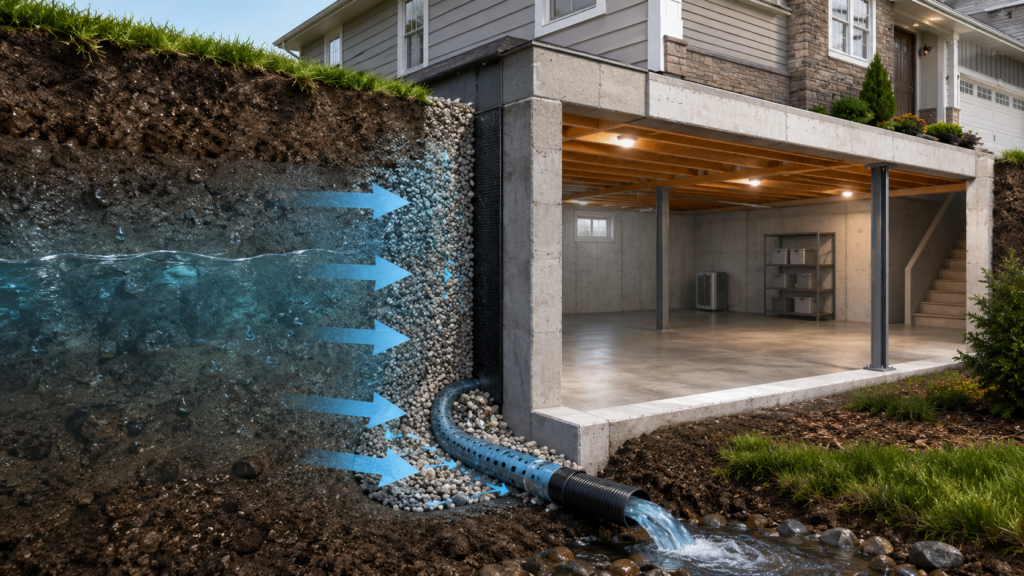
A weeping tile system is a drainage system installed around the foundation of a home to collect and redirect groundwater. Despite the name, modern weeping tiles are not usually made of clay tile. Most systems today use perforated plastic drainage pipe surrounded by gravel and filter fabric.
The pipe is placed near the footing of the foundation, where water naturally collects. Small holes in the pipe allow groundwater to enter. From there, the system carries the water away from the foundation, usually toward a sump pit, storm drain, or approved drainage outlet.
A typical weeping tile system includes:
Perforated drainage pipe installed around the foundation
Clean gravel or drainage stone to help water flow into the pipe
Filter fabric to reduce soil and sediment clogging
A sump pit and sump pump where required
Exterior waterproofing membrane in many full waterproofing systems
The goal is simple: collect groundwater before it builds up against the foundation and move it somewhere safer.
Why Groundwater Pressure Is a Serious Problem
Soil holds water after rain, snowmelt, or poor drainage around the home. When the soil around a basement becomes saturated, the water has weight. That weight pushes against foundation walls. This force is known as hydrostatic pressure.
At first, the damage may not seem dramatic. You might notice a damp smell, small water stains, or slight moisture near the floor-wall joint. Over time, however, the pressure can become strong enough to push water through cracks, mortar joints, window wells, or weak spots in the foundation.
Groundwater pressure can contribute to:
Basement leaks
Foundation wall cracks
Efflorescence or white mineral stains
Damp drywall or flooring
Mould and mildew growth
Bowing or shifting foundation walls
Damage to finished basement spaces
Higher repair costs if ignored for too long
A foundation is strong, but it is not designed to act like a dam. If water keeps collecting around it with nowhere to go, pressure will eventually find a weak point.
How Weeping Tiles Reduce Pressure Around the Foundation
A weeping tile system protects the foundation by giving groundwater a path of least resistance. Instead of water sitting in the soil and pushing against basement walls, it drains into the pipe and moves away.
Think of it like relieving pressure before it becomes a problem.
When rainwater enters the soil, it naturally moves downward. If the home has no effective drainage system, that water can collect at the base of the foundation. If there is a working weeping tile system, the water enters the perforated pipe, flows through the drainage route, and is discharged away from the home.
This helps in several ways:
It lowers the amount of water sitting beside the foundation.
It reduces hydrostatic pressure against basement walls.
It limits water entry through cracks and joints.
It helps protect interior finishes and stored belongings.
It supports a drier, healthier basement environment.
A properly installed weeping tile system does not just deal with visible leaks. It helps manage the conditions that cause leaks in the first place.
Exterior vs. Interior Weeping Tile Systems
There are two common types of weeping tile systems: exterior and interior. Both can help manage water, but they work in different ways.
Exterior Weeping Tile Systems
Exterior weeping tiles are installed outside the foundation wall near the footing. This is usually considered the more complete approach because it collects water before it reaches the foundation wall.
An exterior system often involves excavation around the home, cleaning the foundation wall, repairing cracks, applying waterproofing membrane, installing drainage board, placing new weeping tile, adding gravel, and backfilling the area.
This approach is often recommended when the foundation wall itself needs waterproofing or when water is entering from outside due to soil saturation.
Interior Weeping Tile Systems
Interior weeping tiles are installed inside the basement around the perimeter of the floor. A trench is cut along the basement floor near the wall, drainage pipe is installed, and water is directed to a sump pit.
Interior systems are often used when exterior excavation is not practical due to landscaping, decks, driveways, tight access, or budget limitations. They do not stop water from reaching the outside of the foundation wall, but they can collect water that enters and move it away before it floods the basement.
The right option depends on the home, the source of water, the condition of the foundation, and long-term goals. In many cases, a professional inspection is the best way to decide.
Signs Your Weeping Tile System May Not Be Working Properly
Because weeping tiles are buried, it can be hard to see problems directly. However, your basement and yard often provide clues.
Common warning signs include:
Water pooling near basement walls
Damp or wet basement floors
Water entering where the wall meets the floor
Musty basement odours
Mould growth in corners or behind finished walls
White powdery stains on concrete or block walls
Sump pump running too often or not running at all
Soft soil or standing water near the foundation
Basement leaks after heavy rain or snowmelt
Older homes may have clay weeping tiles that can crack, collapse, or become clogged with soil and roots. Even newer systems can fail if they were poorly installed, clogged with sediment, crushed during backfilling, or not connected to a reliable discharge point.
When these signs appear, it is better to investigate early. Waiting until the basement floods can lead to higher repair costs and more disruption.
What Causes Weeping Tile Failure?
A weeping tile system is exposed to soil, water, minerals, roots, and pressure for many years. Over time, several problems can reduce performance.
Soil and Sediment Clogging
If the system does not have proper filter fabric or clean gravel, soil can enter the pipe and clog the openings. Once water cannot enter or flow through the pipe easily, pressure begins to build again.
Tree Root Intrusion
Tree roots naturally seek moisture. If roots find openings in older drainage pipes, they can grow inside and block water flow.
Crushed or Collapsed Pipe
Poor installation, heavy soil pressure, or old materials can cause pipes to collapse. A collapsed section can stop water from draining properly.
Poor Slope or Drainage Direction
Weeping tiles need to move water toward a sump pit or outlet. If the pipe does not have the right slope or connection, water may sit in the system instead of draining away.
Failed Sump Pump
In homes where the weeping tile drains into a sump pit, the sump pump becomes a key part of the waterproofing system. If the pump fails during heavy rain, water can back up and enter the basement.
Aging Materials
Older clay systems were common decades ago, but they are more vulnerable to cracking and separation. Many older homes need inspection or replacement to bring the drainage system up to modern standards.
Why Weeping Tiles Work Best With Full Waterproofing
Weeping tiles are important, but they are only one part of a strong foundation waterproofing system. A complete approach often includes grading, downspout extensions, crack repair, waterproofing membranes, drainage board, window well drainage, sump pump protection, and proper discharge management.
For example, if the soil around the home slopes toward the foundation, rainwater will continue to collect near the basement. If downspouts dump water beside the house, the weeping tile system may be forced to handle more water than necessary. If a foundation wall has open cracks, drainage alone may not be enough.
This is why professional waterproofing is not just about installing pipe. It is about understanding how water moves around the entire property.
Homeowners who want a deeper look at how these systems are used in real foundation protection can review this resource on weeping tiles and their role in basement waterproofing.
Can a Weeping Tile System Prevent Every Basement Leak?
A good weeping tile system can greatly reduce the risk of groundwater-related leaks, but no single system can solve every possible moisture issue.
Basement water can also come from:
Plumbing leaks
Condensation
Poor window well drainage
Cracks above the weeping tile level
Surface water running toward the house
Blocked gutters
Improper downspout discharge
High indoor humidity
This is why diagnosing the source of water matters. A homeowner may assume the weeping tile is failing when the real issue is a clogged gutter or a window well without proper drainage. On the other hand, a small basement leak after every heavy rainfall may point to a deeper drainage or foundation issue.
A careful inspection can help separate surface drainage problems from foundation waterproofing problems.
Maintenance Tips for Better Foundation Drainage
While buried weeping tiles are not easy to inspect without professional equipment, homeowners can still take steps to reduce water pressure around the foundation.
Keep gutters clean so roof water flows properly.
Extend downspouts away from the foundation.
Make sure soil slopes away from the house.
Avoid planting large trees too close to foundation walls.
Check window wells after storms.
Test the sump pump before rainy seasons.
Install a battery backup sump pump if power outages are common.
Watch for new cracks, damp spots, or musty odours in the basement.
These simple habits can reduce strain on the weeping tile system and help protect the basement during heavy rain or snowmelt.
When Should Homeowners Call a Professional?
A small damp spot may not feel urgent, but basement water problems rarely fix themselves. If water is entering the basement after storms, if the sump pump runs constantly, or if foundation walls show cracks and stains, it is time to speak with a waterproofing specialist.
Professional contractors can inspect the foundation, check drainage patterns, identify whether the problem is inside or outside, and recommend the most practical repair. In some cases, a small repair may be enough. In other cases, the home may need weeping tile replacement, exterior waterproofing, sump pump upgrades, or foundation crack repair.
For homes in areas with heavy rainfall, clay soil, aging foundations, or repeated basement leaks, early action can prevent a manageable issue from turning into a major foundation repair.
Final Thoughts
A weeping tile system is one of the most valuable defenses your home has against groundwater pressure. It works below the surface, collecting water before it can build up against the foundation and pushing it away from the basement.
When the system is working properly, it helps keep basement walls dry, reduces hydrostatic pressure, and protects the structural health of the home. When it fails, water can quickly find its way through cracks, joints, and weak points.
The best approach is to treat foundation drainage as a long-term part of home maintenance, not just an emergency response after a leak. Watch for warning signs, keep surface water away from the foundation, maintain your sump pump, and get expert help when basement moisture keeps coming back.
A dry basement starts outside the walls, below the soil, where water pressure begins. A well-designed weeping tile system helps control that pressure before it becomes damage.