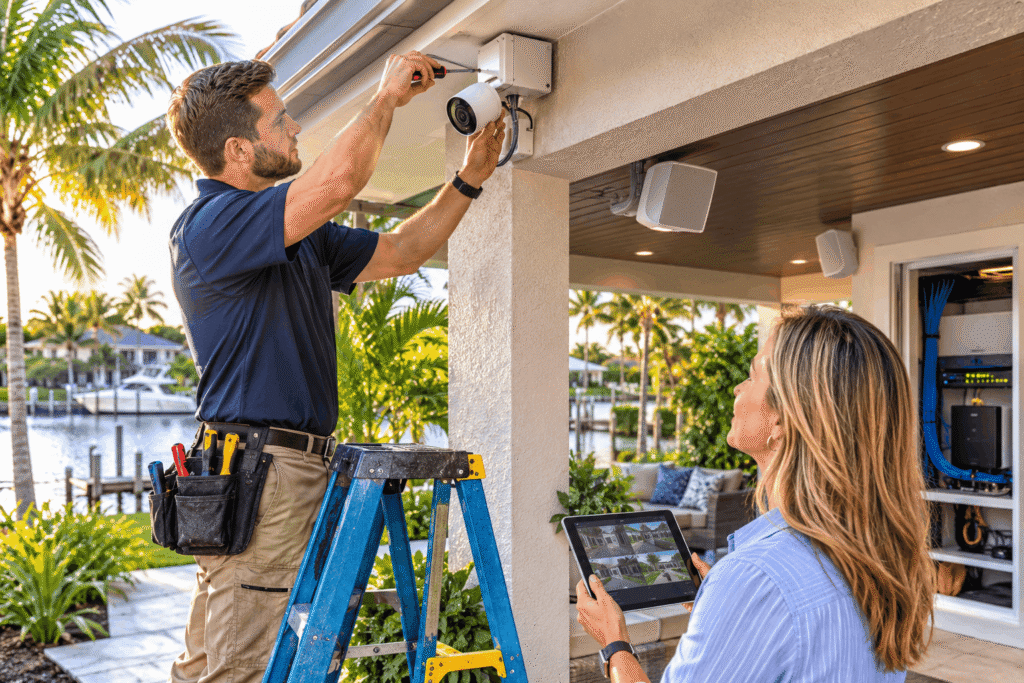
A new homeowner in Martin County walks through a freshly renovated house. The Wi-Fi drops in the back bedroom, the doorbell camera lags, and the outdoor speakers by the pool crackle every time the wind picks up. None of these problems involve the main electrical panel. They all trace back to low voltage wiring.
That is where a low voltage technician in Stuart FL comes into the picture. These specialists handle the systems that quietly run modern homes and businesses, from security cameras and network cables to audio setups and access control.
Understanding Low Voltage Systems
Low voltage generally refers to systems that run on 50 volts or less. Compare that to the standard 120 or 240 volts that power your stove, dryer, or air conditioner.
Because the power demands are smaller, these systems use thinner cables and different installation methods. They still require skill, though. A poorly planned network or camera layout can cause years of frustration.
Common low voltage systems include:
- Security cameras and surveillance setups
- Structured data and network cabling
- Home theater and whole-home audio
- Intercoms and video doorbells
- Access control and keypad entry
- Alarm systems and motion sensors
- Smart home hubs and automation
Each one depends on clean wiring, smart placement, and proper connections. That combination is what separates a reliable system from one that constantly needs troubleshooting.
How This Work Differs From Standard Electrical Jobs
Many people assume a general electrician handles everything with a wire. In practice, the two trades often overlap but focus on different goals.
A licensed electrician deals with high voltage power distribution, breaker panels, and outlets. A low voltage technician focuses on signal quality, data speed, coverage, and device integration. The work leans more toward communication and technology than raw power.
For example, running network cable next to a high voltage line can create interference. A technician trained in low voltage work knows how to route cables to avoid that issue. They also understand how cameras, recorders, routers, and speakers need to talk to each other.
In Florida, low voltage contractors typically need proper state licensing for certain types of work, especially alarm and security systems. Homeowners are wise to check credentials before any project begins.
Why Coastal Florida Adds Extra Challenges
Life on the Treasure Coast brings sunshine, salt air, and plenty of humidity. Those same conditions can be tough on electronics.
Outdoor cameras and speakers face constant moisture, heat, and the occasional tropical storm. Connectors can corrode faster here than in drier parts of the country. Cable jackets break down under intense UV exposure if they aren’t rated for outdoor use.
Experienced local technicians tend to plan for this. They use weather-rated enclosures, sealed connections, and surge protection that can handle frequent summer lightning. Small choices like these often decide whether a system lasts three years or ten.
The Practical Benefits of Professional Low Voltage Work
The biggest advantage is reliability. When cables are run correctly and devices are configured properly, systems simply work. Cameras record when they should, Wi-Fi reaches every room, and music plays without dropouts.
Clean installation also matters for appearance. Professionals often hide wiring inside walls, ceilings, and attics instead of stapling cables along baseboards. The result looks finished rather than patched together.
There is a safety angle as well. Security cameras, alarm systems, and smart locks only protect a property if they function without gaps. A blind spot in camera coverage or a weak signal to a door sensor can undo the purpose of the whole system.
Planning for the future is another quiet benefit. A thoughtful technician may suggest running extra cable during a renovation, even if it isn’t needed today. Adding wiring later, after drywall and paint are done, usually costs far more.
Finally, good low voltage work tends to raise property appeal. Buyers increasingly expect strong internet coverage, built-in security, and smart features. A home with organized wiring and modern systems often stands out.
Real-World Situations Where Low Voltage Experts Help
Consider a small dental office downtown. The staff needs a stable network for patient records, cameras at the entrance, and a phone system that doesn’t drop calls. One structured cabling project can support all three.
Or picture a retired couple who just bought a waterfront home. They want to see who’s at the door from their phone, keep an eye on the dock at night, and enjoy music on the lanai. That mix of security and entertainment is a common request in coastal neighborhoods.
Audio is a growing part of this work. Sound system installation in Stuart FL has become popular as more people design outdoor living spaces. Pool areas, patios, and covered porches often get weatherproof speakers tied into an indoor system.
Restaurants and gyms also rely on well-planned audio. Uneven sound, with some corners too loud and others too quiet, can affect the customer experience. Proper speaker placement and zoning solve that problem.
Businesses with multiple entry points often turn to access control. Instead of handing out keys, owners can assign key cards or codes and track who enters and when. This setup depends entirely on low voltage wiring and careful configuration.
What to Look for When Hiring
Not every installer brings the same level of experience. A good starting point is checking for proper Florida licensing and insurance.
It also helps to ask about past projects similar to yours. Someone who mainly installs home theaters may not be the best fit for a large commercial camera system, and the reverse is true as well.
Clear communication matters too. A reliable technician should explain options in plain language, not bury the conversation in jargon. They should also talk about warranties, maintenance, and what happens if a device fails.
Local providers across Martin County, including companies such as JP Electronics & Surveillance, often handle a mix of security, networking, and audio projects. Comparing a few options and reading reviews can help property owners find the right match for their needs.
The Quiet Backbone of Modern Properties
Low voltage systems rarely get attention when they work well. They sit behind walls and above ceilings, carrying the signals that keep homes connected and businesses running.
When something goes wrong, though, the impact is immediate. A dead camera, a slow network, or a buzzing speaker can disrupt daily life fast. That’s why thoughtful planning and skilled installation are worth the effort from the start.
Whether the goal is better security, faster internet, or great sound by the pool, the right technician can turn a collection of devices into one dependable system.
Frequently Asked Questions
What does a low voltage technician do?
A low voltage technician installs and maintains systems that run on 50 volts or less. This includes security cameras, network cabling, audio systems, intercoms, and access control.
Is a low voltage technician the same as an electrician?
Not exactly. Electricians focus on high voltage power, while low voltage technicians specialize in data, communication, security, and audio systems. Some professionals are trained in both.
Do low voltage contractors need a license in Florida?
Many types of low voltage work in Florida require state licensing, especially alarm and security system installations. It’s always smart to verify a contractor’s license before hiring.
How much does sound system installation in Stuart FL typically cost?
Costs vary widely based on the number of speakers, indoor or outdoor placement, and equipment quality. A simple single-room setup may cost a few hundred dollars, while whole-home or outdoor systems can run several thousand.
Can low voltage wiring be added to an existing home?
Yes. Technicians can often fish cables through walls and attics with minimal damage. However, adding wiring during construction or renovation is usually easier and more affordable.