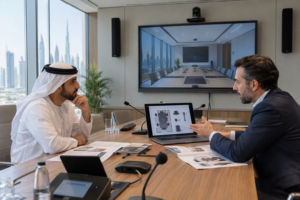
When planning an office audio-visual system, understanding the main costs can help you prepare a suitable budget. Top AV Companies in Dubai may provide different proposals because each office has different needs, room sizes, equipment, and installation requirements. The total cost depends on more than the price of screens and speakers. It can also include system design, wiring, software, installation, testing, and future support.
1. Size and Type of Office Space
The size of the office is one of the first factors to consider. A small meeting room may need only a display, a few speakers, a microphone, and a video conferencing camera. A large conference room may require several displays, multiple microphones, additional speakers, and more advanced control equipment.
The type of space also matters. A training room may need presentation equipment, while a boardroom may require video conferencing and clear audio for every person in the room.
Larger spaces often need more equipment and installation work. Before setting a budget, identify how each room will be used and how many people it needs to support.
2. Audio and Video Equipment
The equipment selected for an office has a direct effect on the total cost. Common items include displays, projectors, speakers, microphones, cameras, amplifiers, and video conferencing devices.
Prices can vary based on screen size, image quality, sound performance, connection options, and available features. For example, a large display with advanced collaboration features may cost more than a basic presentation screen.
It is important to choose equipment that matches the needs of the office. A small meeting room may not need the same equipment as a large conference hall. Comparing specifications can help you understand why different equipment options have different prices.
3. System Design and Planning
An office AV system needs proper planning before installation begins. The design should show where equipment will be placed, how devices will connect, and how users will control the system.
Planning may include room measurements, display positions, speaker placement, microphone coverage, cable routes, and power requirements. More complex spaces may need additional design work to make sure all components work together.
A clear design can also help reduce changes during installation. If the layout or equipment requirements change after work has started, extra labour and materials may be needed.
4. Wiring and Installation Work
Wiring is another important part of an office AV budget. Displays, cameras, speakers, microphones, and control devices may need different cables and connections.
The cost can depend on the distance between devices, the location of connection points, and the way cables must be installed. Offices with finished walls, false ceilings, or limited access may require more work to route cables neatly.
Wall mounting, ceiling mounting, equipment racks, and other installation tasks can also affect the final price. It is useful to check whether cables, mounting brackets, accessories, and installation labour are included in the proposal.
5. Video Conferencing and Control Systems
Many offices use AV systems for online meetings, presentations, and team collaboration. These systems may include cameras, microphones, speakers, displays, and conferencing software.
The cost depends on the number of rooms, the equipment required, and the features needed. A basic meeting setup may be simple, while a large conference room may require multiple cameras, advanced microphones, and connections to existing office systems.
Control systems can also affect the budget. Some setups use simple remote controls, while others use touch panels to manage lighting, displays, audio, and video sources. The more functions a system needs to manage, the more planning and configuration it may require.
6. Integration With Existing Equipment
An office may already have displays, speakers, network connections, or video conferencing equipment. Using some of these devices can reduce the need to purchase everything again.
However, existing equipment must be checked for compatibility. Older devices may not support the required video quality, connection types, software, or control features.
Extra adapters, updated cables, software changes, or replacement equipment may be needed to connect everything properly. Checking existing equipment before preparing a budget can help identify these costs early.
7. Testing, Training, and Support
After installation, the system needs to be tested to confirm that audio, video, connections, and controls work correctly. Testing may include checking microphones, adjusting speaker levels, testing cameras, and confirming that presentations and video calls run properly.
Some projects also include basic staff training. This helps employees understand how to start meetings, change display sources, adjust volume, and connect their devices.
Ongoing support and maintenance may create additional costs. Before approving a proposal, check whether testing, training, warranty coverage, and technical support are included or charged separately.
8. Future Expansion and Maintenance
Office needs can change over time. A company may add meeting rooms, increase staff numbers, or introduce new collaboration tools. An AV system that can support future changes may help reduce the need for major upgrades.
However, planning for expansion may require additional connections, suitable control equipment, or extra capacity. The right approach depends on the office budget and expected needs.
Regular maintenance can also help identify connection problems, software issues, and equipment faults. When comparing proposals from Top AV Companies in Dubai, review the equipment, installation work, system design, support terms, and future upgrade options to understand what is included in the total cost.