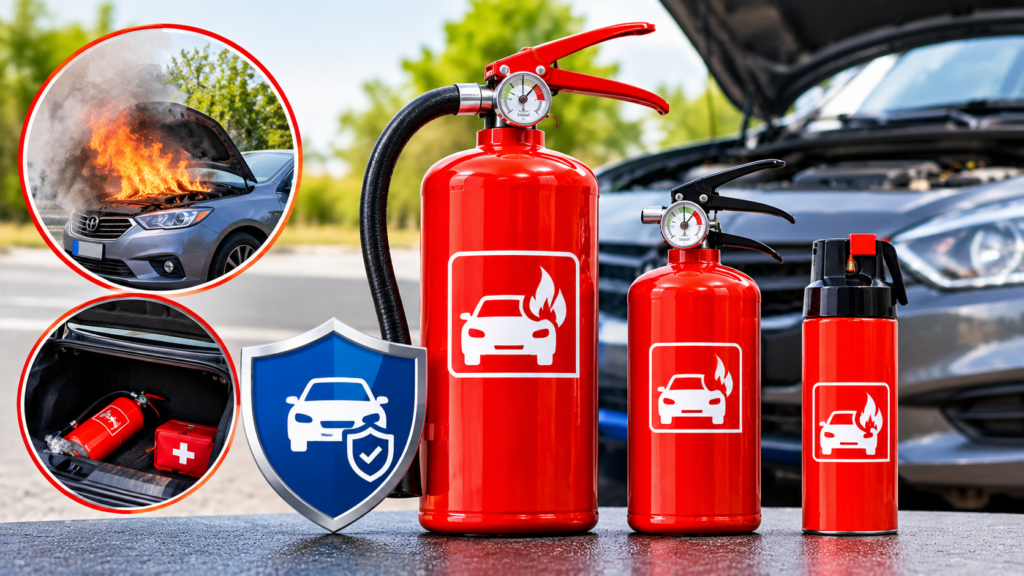
A vehicle carries several materials and components that can contribute to a fire, including fuel, engine oil, electrical wiring, batteries, and interior fabrics. Having a suitable Fire Extinguisher for car can provide an additional safety measure for certain small, developing fires. However, choosing one requires attention to its fire rating, size, storage arrangement, and operating instructions. Drivers should understand its limitations because personal safety and timely evacuation must always come before attempting to control flames.
Why Can a Car Catch Fire While Driving?
Vehicle fires can develop because of mechanical faults, damaged electrical wiring, fuel leaks, overheating components, or problems following a road accident. Poorly installed electrical accessories and neglected maintenance may also increase certain fire risks.
Drivers should pay attention to unusual burning smells, visible smoke, leaking fluids, or sudden electrical problems. These signs do not always mean a fire has started, but they should never be ignored. Having the vehicle inspected by a qualified mechanic can help identify problems before they become more serious.
Which Type of Extinguisher Is Suitable for a Car?
A multipurpose ABC dry chemical extinguisher is commonly considered for passenger vehicles because its approved rating can cover several common fire hazards, including combustible materials and flammable liquids. Certain models are also rated for use around energized electrical equipment. The exact suitability depends on the product label and its certification.
Drivers should not select an extinguisher simply because it is marketed for automotive use. Its fire classifications, capacity, operating instructions, and manufacturer specifications deserve careful attention. A model suitable for a small petrol vehicle may not provide sufficient protection for a commercial vehicle carrying specialised materials.
What Size and Weight Should Drivers Consider?
The extinguisher should be compact enough to fit securely inside the vehicle without interfering with passengers, driving controls, or essential storage space. A lightweight model may be easier to handle, but choosing the smallest available cylinder is not always the best decision.
Consider the vehicle’s size, likely fire hazards, and the extinguisher’s approved performance rating before making a purchase. The cylinder should also be suitable for the temperature conditions in which it will be stored. Always follow the manufacturer’s storage instructions because excessive heat can affect pressurised equipment.
How Should a Car Fire Extinguisher Be Stored Safely?
Storage is an important part of vehicle fire preparedness because an unsecured cylinder can become dangerous during sudden braking or a collision. A suitable mounting bracket should hold the extinguisher firmly while keeping it accessible to the driver or another occupant. Its location should not obstruct airbags, seatbelts, pedals, or passenger movement.
At larger transport facilities, a fire hydrant system provides a separate form of fire protection by supplying water through fixed pipes and hose connections for emergency response. It is not a replacement for a portable vehicle extinguisher, and drivers should not confuse building-level fire protection with equipment carried inside a car.
What Should You Check Before Buying an Automotive Extinguisher?
Product identification and construction quality can tell buyers a great deal about the equipment they are considering. Check that the cylinder has readable operating instructions, a clearly stated fire rating, manufacturer details, and relevant certification information. Its pressure indicator, where fitted, should also show the condition specified by the manufacturer.
The safety pin, tamper seal, hose, nozzle, and operating handle should be properly fitted and free from visible damage. Buyers should ask the supplier about the product’s service requirements and whether replacement parts or professional maintenance are available. These checks help distinguish a properly specified extinguisher from a product selected only for its appearance or low price.
What Should You Do If Your Car Starts Burning?
A vehicle fire requires immediate attention because flames and smoke can spread quickly. Pull over at a safe location when possible, switch off the engine, and ask everyone to leave the vehicle. Move a safe distance away from the car and passing traffic before contacting emergency services.
Do not open the bonnet if you suspect a fire underneath it, as introducing more oxygen can cause flames to intensify. Attempting to use an extinguisher should never delay evacuation or put anyone close to spreading flames. Only a small, contained fire should be considered for an extinguisher response, and only when the person has suitable training, a clear escape route, and a safe position.
Are Electric and Hybrid Vehicles Different in a Fire Emergency?
Electric and hybrid vehicles contain high-voltage electrical components and, in many cases, lithium-ion traction batteries. A fire involving these batteries can behave differently from a conventional engine-compartment fire and may produce hazardous smoke or reignite after the visible flames have been controlled.
A small portable extinguisher should not be considered a solution for a damaged or burning high-voltage battery. Occupants should leave the vehicle, move away from the smoke, and contact emergency responders. Drivers should also consult the vehicle manufacturer’s emergency guidance so they understand the precautions relevant to their particular model.
How Can Regular Inspection Improve Vehicle Fire Preparedness?
An extinguisher can lose its readiness through pressure loss, physical damage, corrosion, or deterioration of its components. Drivers should periodically check that it remains in its designated location and that the safety seal, pressure indicator, and external condition meet the manufacturer’s requirements.
Any extinguisher that has been discharged, even partially, should be assessed and serviced before being returned to use. Professional maintenance should follow the manufacturer’s instructions and applicable requirements. Keeping the equipment in good condition is an important part of responsible vehicle ownership.
Frequently Asked Questions
1. Which fire extinguisher is commonly recommended for a car?
A suitably rated ABC dry chemical extinguisher is commonly recommended for many passenger vehicles. Buyers should check its approved fire classifications and manufacturer instructions before purchasing.
2. Can a car fire extinguisher control an engine fire?
It may help control a small, accessible fire if the extinguisher is correctly rated and the user can operate it safely. If flames or smoke are spreading from the engine compartment, occupants should evacuate instead of attempting to fight the fire.
3. Where should a fire extinguisher be kept inside a car?
It should be secured in a suitable mounting bracket in an accessible location that does not interfere with passengers, vehicle controls, or safety equipment. Follow the vehicle and extinguisher manufacturers’ installation guidance.
4. Can the same extinguisher be used for petrol and electrical fires?
Some multipurpose models are rated for both flammable liquid and certain electrical fires. The approved classifications printed on the extinguisher determine its suitability.
5. Should an extinguisher be replaced after use?
A discharged extinguisher should be inspected and professionally serviced or replaced as appropriate before being considered ready for another emergency.
Conclusion
Everyday road safety includes preparing for unexpected situations that can develop from mechanical, electrical, or fuel-related problems. Selecting a suitable extinguisher involves checking its fire rating, construction, capacity, storage arrangement, and maintenance requirements. Drivers should also understand when evacuation is the safest response, particularly when a vehicle fire spreads or involves a high-voltage battery. Proper equipment, regular vehicle maintenance, and awareness of emergency procedures can support safer journeys.