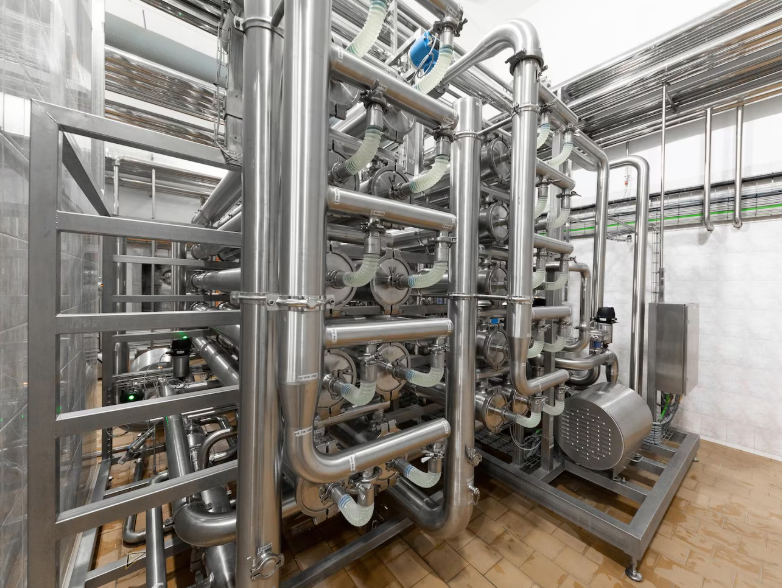
Most industrial overheating problems don’t start with alarms going off or equipment suddenly shutting down. It’s slower than that. Temperatures creep upward little by little, operators adjust settings to compensate, production keeps moving, and eventually the whole system starts feeling unstable.
That’s where equipment like a C300 heat exchanger becomes important. Not because it’s flashy or packed with complicated technology, but because stable heat transfer keeps industrial processes from drifting out of control.
In manufacturing plants, chemical processing facilities, and heavy industrial operations, temperature stability affects everything. Product quality, system efficiency, even equipment lifespan. Once cooling performance drops even slightly, the entire process starts reacting to it.
And honestly, most plants don’t notice the early signs quickly enough. By the time performance issues become obvious, the system has usually been struggling for a while already.
What makes this type of exchanger useful in demanding environments
There are dozens of exchanger designs floating around industrial markets now. Compact plate systems, air-cooled units, hybrid configurations. Every supplier claims theirs is more efficient. But the reason a C300 heat exchanger still holds its place is simple. It handles rough conditions without becoming fragile.
The design usually focuses on steady thermal performance under fluctuating loads. That matters because industrial systems rarely operate under stable conditions for long periods. Flow rates shift. Process temperatures change. Production demand moves up and down constantly.
This exchanger style is built to absorb some of that instability without losing effectiveness immediately.
It’s not the smallest system. Not the lightest either. But reliability matters more than compactness once you’re dealing with heavy industrial loads.
Sometimes durability wins over elegance. Industrial plants learn that lesson pretty fast.
How thermal efficiency slowly disappears without obvious warning signs
This is where things get frustrating.
A C300 heat exchanger can look completely normal from the outside while efficiency inside quietly drops month after month. Fouling starts forming on heat transfer surfaces. Internal flow patterns become uneven. Temperature transfer becomes less effective.
The system compensates at first. Pumps work harder. Operators increase flow rates. Cooling settings get adjusted slightly.
But every adjustment adds stress somewhere else.
Eventually energy usage rises, cooling consistency drops, and production quality starts moving around more than it should. The strange part is how gradual it feels. There’s rarely a dramatic failure at the beginning.
That slow performance decline is what makes industrial cooling issues so difficult to catch early.
Where nash vacuum pumps connect to the overall process balance
People sometimes separate cooling systems and vacuum systems like they operate independently. Real industrial systems don’t work that way.
nash vacuum pumps rely heavily on stable thermal conditions to maintain proper vacuum performance. The sealing liquid inside the pump absorbs heat continuously during operation. If surrounding cooling systems become inefficient, the pump temperature rises too.
And once temperatures climb, vacuum stability starts drifting.
At first it’s subtle. Slight pressure inconsistencies. Reduced vacuum levels. More energy consumption. Operators usually blame the pump itself before realizing the cooling system is part of the problem.
That’s the tricky part about industrial process systems. One weak area creates problems somewhere completely different.
Everything is connected, even when it doesn’t seem like it.
Why maintenance delays slowly create larger operational problems
Nobody intentionally ignores maintenance. Plants just get busy.
Production schedules tighten up. Downtime windows disappear. Equipment keeps operating because technically it’s still functioning. So maintenance gets pushed back a little longer every cycle.
With a C300 heat exchanger, delayed cleaning causes internal fouling to grow thicker over time. Heat transfer surfaces lose efficiency gradually. Flow resistance increases quietly.
The same pattern shows up with nash vacuum pumps. If sealing liquid quality drops or cooling becomes unstable, internal wear increases little by little.
The dangerous thing is how normal everything still appears while efficiency is slowly disappearing underneath the surface.
Industrial equipment almost always gives warning signs before major failures happen. The problem is those warnings usually look small until they become expensive.
How equipment design choices shape long-term system stability
A lot of operational problems actually begin during the equipment selection phase. Long before startup even happens.
Material quality matters more than people think. Tube design matters. Internal flow arrangement matters. Even small construction details become long-term performance differences later.
A properly designed C300 heat exchanger can tolerate fluctuating process loads much better than lower-grade alternatives built strictly around minimum specifications.
Same idea applies to nash vacuum pumps. Systems designed with realistic operating conditions in mind tend to last longer and operate more efficiently over time.
Cheap equipment sometimes works perfectly at startup. That’s what makes it tempting. The difference shows up later, once the process conditions become less predictable and maintenance pressure starts building.
And industrial systems always become less predictable eventually.
Why energy efficiency conversations often miss the bigger issue
Energy efficiency gets treated like a numbers game now. Everyone talks about reducing consumption, lowering operating costs, improving sustainability. Fair enough. Energy prices are brutal.
But real efficiency losses usually come from unstable system conditions rather than outdated equipment alone.
A partially fouled C300 heat exchanger forces pumps, motors, and cooling systems to work harder just to maintain production targets. Vacuum systems compensate for unstable process conditions by consuming more energy too.
The equipment still operates. Technically nothing is “broken.” But the overall process becomes increasingly inefficient.
That’s why focusing only on equipment ratings misses the bigger picture. Actual efficiency depends on long-term system balance, maintenance discipline, and realistic operating conditions.
Not just startup specifications sitting in a brochure somewhere.
Where industrial cooling and vacuum systems are heading next
The industry is evolving, slowly but definitely moving.
Monitoring technology is becoming more common. Sensors tracking thermal performance, pressure fluctuations, vibration patterns. Plants want earlier warnings before efficiency problems turn into production shutdowns.
Materials are improving too. Better corrosion resistance. Improved fouling resistance. Longer service life under demanding operating conditions.
nash vacuum pumps are also becoming more efficient in systems where temperature stability is properly maintained. Cooling integration matters more now because energy consumption is under constant review.
Still, none of the new technology replaces the basics. Good equipment selection matters. Proper maintenance matters. Understanding actual process behavior matters.
Industrial systems aren’t complicated because the equipment is complicated. They’re complicated because everything affects everything else.
That part never changes.
Conclusion
Industrial overheating problems rarely come from one dramatic equipment failure. Most of the time, they develop slowly through small efficiency losses that build over months of operation. The C300 heat exchanger plays a major role in maintaining thermal balance during demanding production cycles where consistent cooling matters.
At the same time, nash vacuum pumps depend heavily on stable operating temperatures to maintain proper vacuum performance and long-term reliability.
In the end, industrial process stability comes down to understanding how systems interact. Cooling performance, vacuum stability, maintenance schedules, equipment quality, all of it works together. Ignore one part long enough, and eventually the entire operation starts feeling the effects.
FAQs
What is a C300 heat exchanger used for?
It is used in industrial applications for efficient heat transfer and temperature control during heavy production operations.
Why does exchanger efficiency decrease over time?
Fouling, uneven flow distribution, corrosion, and delayed maintenance gradually reduce thermal performance.
How do nash vacuum pumps depend on cooling systems?
They rely on stable sealing liquid temperatures, which are directly affected by surrounding cooling efficiency.
What industries commonly use these systems?
Chemical processing, manufacturing, power generation, and heavy industrial plants frequently use both technologies.
How can industrial systems maintain long-term efficiency?
Regular maintenance, proper equipment integration, and continuous performance monitoring help maintain stable operation.