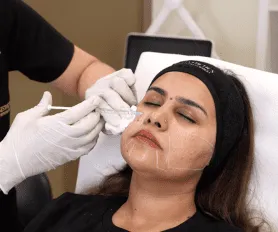
Do you agree that individuals of similar ages can show such different looks in skin?
There are always some of us whose skin looks fresh and elastic, whereas others develop wrinkles and uneven pigments at a young age. Of course, age plays its role, yet it is definitely not the sole determining factor.
What Are the Reasons Behind Premature Skin Ageing?
Genetics play their role. However, we cannot overlook the impact of sun exposure, active usage of cigarettes, insomnia, persistent stress, unbalanced nutrition, and other unhealthy lifestyle habits on the occurrence of wrinkles and other signs of skin ageing.(1)
It becomes crucial to recognize that skin ageing is a multi-level phenomenon. While visible changes affect outer layers, the processes occur inside the dermis as well – affecting such components as collagen, elastin, lipids, and cells, among other factors.
Skin Ageing Is Not Just About Getting Older
Many changes occur naturally due to ageing.
The natural production of collagen declines with age, which may lead to the skin becoming thinner and less elastic. The decline in skin hydration and skin barrier function might also affect the skin condition.
However, there is a flipside to the whole picture.
Extrinsic skin aging is referred to as the changes that are affected by external and lifestyle factors such as ultraviolet radiation, smoking, pollution, among others, which may cause the formation of oxidant species and collagen degradation.
It is for this reason that one aged 30 years might experience more visible signs of ageing than another individual at the same age.
What Does Nutrition Have to Do With Skin Ageing?
Your skin is in constant flux.
And in order to keep up, your skin needs amino acids, fatty acids, vitamins, minerals, and other nutrients. In case there is a lack of diversity in your nutrition, your skin may not receive all the necessary materials to maintain its architecture and protective function.
Protein is especially important since structural proteins such as collagen are produced out of amino acids.
But this does not mean that skin is about only one nutrient.
Vitamin C takes part in collagen synthesis and has antioxidant activity. Zinc is needed for normal cell activities and wound healing. Vitamins A and E take part in other important processes for maintaining skin integrity and its protection.
However, this does not mean that the intake of higher doses of one vitamin will make you look younger. Proper nutrition as a whole is more important than a perfectly optimized but unbalanced one.
Could Too Much Sugar Make Skin Age Faster?
This is where glycation starts to get exciting.
If glucose combines with proteins in our body, they might result in advanced glycation end-products, or AGEs. This product may build up and have an effect on protein function and structure.
Collagen is especially important in the context of AGEs since it is a long-lived protein in our skin.
Collagen may be modified by AGEs and it would then lose some of its flexibility and functionality. This is another link between metabolic status and the changes linked to skin aging.(2)
This does not mean that eating one dessert will suddenly cause wrinkles.
It is rather about the patterns in metabolism and repeated exposure to glucose.
Antioxidants: Why Do They Matter for Skin?
Reactive molecules are generated by your body as part of its natural metabolism.
It’s the state where there’s too much oxidative stress, or where antioxidants cannot keep up and create a balance.
Environmental factors may also contribute to oxidative stress. For example, exposure to ultraviolet radiation, cigarette smoke and pollutants can contribute to oxidative stress.(3)
That’s one reason why antioxidant-rich foods are so important in discussions about skin care.
Foods like fruits and vegetables are rich in compounds such as vitamin C and carotenoids. Nuts and seeds as well as vegetable oils can provide vitamin E.
The idea is not to focus on one so-called superfood. It’s better to have a diverse diet because of more nutrients.
Does Sun Exposure Make Skin Age Faster?
There is no doubt that if there is one environmental element that requires consideration above the rest, it would be ultraviolet radiation.
The reason for this is that UV radiation is capable of causing oxidative damage as well as triggering the process of collagen destruction and changes in skin architecture. This leads to wrinkles, pigmentation and lack of skin elasticity.
The phenomenon described above is known as photoaging.
And this is why it should be said that when protecting your skin from the adverse effects of ultraviolet radiation, one should remember that skin protection from sunburns is not the only thing.
What Does Sleep Have to Do With Skin?
The skin does not take a break once you go to bed.
Sleep has been linked to processes responsible for tissue repair and recovery. Sleep deprivation may alter the appearance of skin and impair its recovery from damage caused by exposure to environment.(4)
You will be able to see it within a few days of insufficient sleep: a lackluster look, tired looking eyes.
Short-term instances of poor sleep will not change your skin drastically. The problem is a long-term pattern of insufficient sleep.
Can Stress Affect How Your Skin Ages?
Stress is another component of the equation.
Chronic stress can impact the hormones and inflammation in the body. In addition, stress can indirectly impact the skin by way of impacting things like sleeping patterns, dietary patterns, physical activity and other behaviors.
That is why the aspects of lifestyle and aging of the skin cannot always be neatly separated into two categories.
The person who experiences ongoing stress will likely have poor sleeping habits, eat a lot of processed foods and exercise very little.
What About Smoking and Alcohol?
Smoking introduces many chemicals into the body which can cause oxidative stress and lead to blood vessel changes. The habit has also been known to produce typical skin changes such as early signs of wrinkles.(5)
Alcohol is more complex.
It may not instantly make your skin age fast just because you take it once in a while, but heavy and frequent alcohol consumption might bring about dehydration, lack of sleep, and nutritional problems, among others.
Lifestyle factors often add up rather than being as a result of a single action.
Can Exercise Help With Skin Ageing?
Exercise is usually discussed in terms of cardiovascular fitness, muscle strength and metabolic health. But the benefits extend further.
Regular physical activity supports circulation, metabolic health and overall wellbeing. It can also help regulate stress and improve sleep, both of which indirectly support skin health.
The important point is consistency.
You do not need an extreme workout routine for your skin. Regular movement that fits into your lifestyle is more realistic than occasional intense exercise followed by long periods of inactivity.
What Should You Eat for Healthier Skin?
Instead of constructing a diet that revolves around “beauty foods”, it may be more productive to consider diversity in nutrition.
Nutrition that helps your skin stay healthy can consist of:
- Protein: Eggs, seafood, meat and dairy products, as well as beans, soy and other high-protein foods contain the amino acids required for tissue repair.
- Sources of vitamin C: Citrus fruits, guava, amla, peppers and other fruits and vegetables are good sources of vitamin C.
- Colorful vegetables: Contain antioxidants, including carotenoids.
- Nuts and seeds: Contain vitamin E and healthy fats.
- Sources of omega-3s: Seafood, nuts and some seeds contain important fatty acids.
- Whole grains and beans: Provide fiber and various micronutrients.
The holistic approach is more important than any specific food.
Can Skin Supplements Prevent Skin Ageing?
This is the case when expectations should be more realistic.
Supplements may help when there are some shortages in certain nutrients in your diet but taking them is not supposed to be a shortcut to youthful skin appearance.
In relation to oral collagen supplements, for instance, there have been reports of their beneficial impact on skin hydration and elasticity improvement, yet the scientific research in this area is not always conclusive and the studies’ quality varies.(6)
This is where the skin health gummy can find its place in your skin care routine.
Health etc. Skin Health Gummies have been formulated by a dermatologist and include ingredients selected to promote different areas of skin nutrition instead of focusing on just one nutrient.
These include Ceramosides, vitamin C, collagen, glutathione and sodium hyaluronate.
Each of these ingredients has a specific function in relation to skin care. Vitamin C takes part in normal collagen formation, while collagen supplies amino acids contributing to the skin structure. Sodium hyaluronate is known for its skin hydration promoting effect while Ceramosides are included to promote skin barrier. Glutathione is the antioxidant compound taking part in the antioxidant defence system in the body.
What is crucial here is that a supplement is used in addition to, not in place of, a healthy diet and skincare routine.
It does not substitute the use of sunscreen, proper nutrition, good sleep, or any other elements of lifestyle which have an effect on the process of skin aging.
If someone needs supplements for their skin, it would be wise to try a dermatologist-formulated supplement combination.
So, Why Does Skin Age Faster?
It’s never a simple answer.
Skin aging will cause natural changes to collagen synthesis, skin thickness, and skin elasticity. However, there are additional elements that affect this process, such as sun exposure, smoking, oxidative stress, sleep deprivation, stress, dietary insufficiencies, and metabolism.
That is why early aging of skin should be viewed as a combination of processes.
You have no control over your age and genetic makeup, but you can definitely impact many external factors your skin is exposed to daily.
Conclusion
Healthy skin does not emerge from the use of any single product or food alone. A balanced diet provides the necessary nutrients for normal skin structure and renewal, whereas exercise, sufficient sleep, stress reduction and protection against ultraviolet light might help in minimizing some of the lifestyle elements that cause premature aging. The reasons behind the premature aging of the skin, therefore, require more than just the consideration of wrinkle formation. Other physiological factors include oxidative stress, collagen destruction and glycation. While supplements may be useful in case of an unbalanced diet, they should not be considered as an alternative to other skin care measures.
FAQ
What makes the skin age faster?
Intrinsic and extrinsic ageing affect skin ageing. Extrinsic factors are related to environmental and lifestyle issues. For example, sun exposure, smoking, oxidative stress, chronic stress, lack of sleep, nutritional deficiencies, and even certain lifestyle elements may lead to faster skin ageing.
Can dietary practices prevent skin ageing?
Balanced diet is necessary to supply your body with collagen and other essential nutrients responsible for protection from free radicals, antioxidant defence, cell functions, and proper skin barrier. No one product can stop ageing.
Which nutrients do I need for healthy skin?
Among nutrients that are responsible for skin functioning are protein, vitamin C, vitamin A, vitamin E, zinc, and essential fatty acids. Every person needs different nutrients, that is why the supplements will never replace a balanced diet.
Do skin gummies actually work?
It depends. Research into the efficiency of the oral collagen supplements showed that in some studies people had an increase in skin hydration and elasticity after using these products. But this information is not quite consistent and varies from study to study.
Are skin gummies better than skincare creams?
Their functions vary. Skincare creams act topically on the skin, whereas skin gummies contain nutrients or any other ingredients which are consumed orally. The two cannot be substituted for one another. An individual can use a combination of skincare topicals and nutritional supplements according to his needs.
When should you start taking skin supplements?
No specific age is recommended when it comes to the intake of skin supplements. Rather than attaining a certain age, the diet, health condition, and the concerns regarding the skin are more important factors. A supplement can be taken considering its formula and function instead of signs of skin aging.
References:
- Beyond photoaging: additional factors involved in the process of skin aging – 2018 Sep – https://pubmed.ncbi.nlm.nih.gov/30288075/
- Age-related changes in dermal collagen physical properties in human skin – 2014 Jul- https://pmc.ncbi.nlm.nih.gov/articles/PMC4129148/
- Cutaneous responses to environmental stressors – 2012 Oct – https://pmc.ncbi.nlm.nih.gov/articles/PMC3495295/
- Does poor sleep quality affect skin ageing? – 2015 Jan – https://pubmed.ncbi.nlm.nih.gov/25266053/
- Tobacco smoke causes premature skin aging – 2007 Dec – https://pubmed.ncbi.nlm.nih.gov/17951030/
- Effects of Oral Collagen for Skin Anti-Aging: A Systematic Review and Meta-Analysis – 2023 Apr – https://pubmed.ncbi.nlm.nih.gov/37432180/