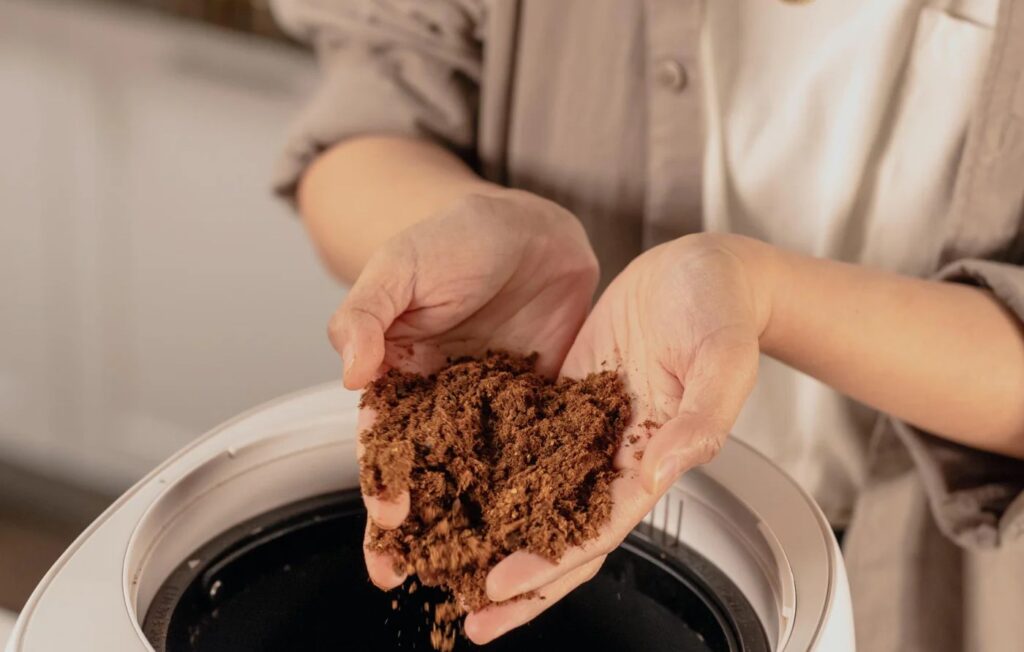
Anyone who has used an electric compost machine for more than a few weeks has noticed it: the output doesn’t look the same every time. Some batches come out fine and powdery, almost like coffee grounds. Others are chunkier, with visible fragments of eggshell or vegetable fiber. Occasionally, a batch feels slightly damp instead of bone dry. And the color shifts too, from light tan to deep brown, depending on what went in.
This isn’t a sign that something is wrong. It’s a sign that the composter is responding to what it was given. Understanding why the texture changes from batch to batch helps users get better results and use the finished material more effectively.
It Starts With What You Loaded
The single biggest factor in output texture is input composition. A batch heavy on coffee grounds and fruit peels produces a fine, dark, uniform output. A batch loaded with bread crusts, rice, and eggshells tends to come out lighter in color and slightly coarser. Fibrous vegetable scraps like broccoli stems and corn husks take longer to break down fully, which is why they sometimes appear as small visible pieces in the finished material.
Protein-heavy loads, such as batches with meat scraps or dairy, produce a different texture again. The output tends to be denser and slightly stickier than an all-produce batch. None of these variations mean the material is unusable. They just reflect the diversity of what went into the machine.
Moisture Content Matters More Than Most People Realize
The amount of water in the original scraps directly affects how the output looks and feels. Watermelon rinds, cucumbers, and leafy greens carry high moisture content. A load dominated by these items forces the composter to spend more time on the drying phase, and if the batch is particularly wet, the finished material may feel slightly damp rather than fully dry.
On the other end, a load of stale bread, dried pasta, and coffee grounds contains very little moisture. These batches process faster and produce a drier, more powdery output.
For the most consistent results, mixing wet and dry scraps in the same load balances the moisture and gives the machine a more predictable workload. A handful of bread or grains added to a wet-heavy batch makes a noticeable difference.
Mode Selection Changes the Outcome
The processing mode plays a direct part in what comes out. An electric countertop composter with multiple modes produces different textures depending on which one runs.
Express Mode typically prioritizes speed and volume reduction. The output is coarser and drier because the cycle focuses on rapid dehydration and grinding rather than extended breakdown. This material works best when added to an outdoor compost pile or stored for later use.
Modes that run at moderate temperatures for longer periods produce finer, darker output with more biological activity. The extended processing gives the electric countertop composter time to break scraps down more thoroughly, and the lower heat preserves beneficial microorganisms. This output is ready for direct use in potting soil, garden beds, and planters.
Grass-specific modes grind the material even finer, creating a texture suitable for lawn topdressing that breaks down quickly when scattered on turf.
How to Read Your Output
A quick visual and tactile check after each batch tells the story:
- Fine, dark, dry, and uniform: well-balanced load, fully processed. Ready for direct soil use.
- Coarse with visible fragments: fibrous or hard inputs like eggshells and vegetable stems. Still usable. Mix into soil where texture will break down over time.
- Slightly damp or clumpy: high-moisture load. Spread on a tray and air-dry for a few hours before storing or applying.
- Light tan and powdery: dry, starch-heavy input like bread and grains. Fully processed but lower in nutrient density than a mixed-scraps batch.
- Dense and dark: protein-heavy batch. Use at a slightly lower ratio when mixing into soil.
Consistency Comes With Practice
The first few weeks with any electric compost machine involve a learning curve. Loads vary, modes get tested, and the output reflects all of that experimentation. Over time, most users develop a natural sense of how to balance their scraps. Coffee grounds with vegetable peels. A few eggshells mixed with fruit scraps. Leftover rice tossed in with last night’s salad trimmings.
The output will never be perfectly identical from batch to batch, and it doesn’t need to be. Each texture is usable. The key is knowing what it means and where to apply it.