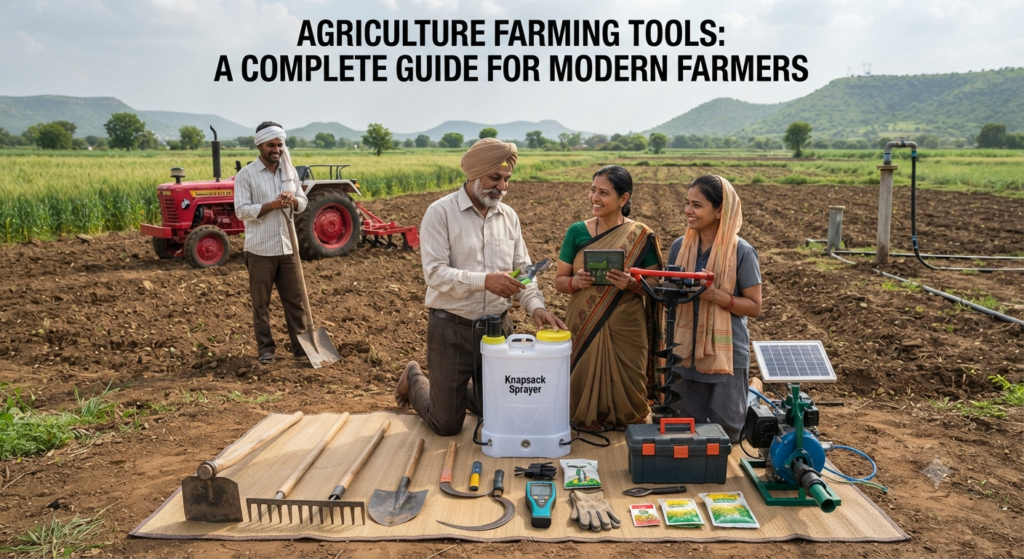
Modern agriculture depends on efficiency, precision, and the right equipment. As farming practices continue to evolve, farmers are increasingly using advanced machinery and practical equipment to reduce manual effort, save time, and improve crop production. Choosing the right Agriculture Farming Tools can make everyday farm operations more productive while helping farmers manage resources effectively.
From preparing the soil to planting, irrigation, crop protection, and harvesting, different tools serve specific purposes. Understanding their uses can help both experienced and new farmers make informed decisions about the equipment they need.
Why Farming Tools Are Important
Farming involves numerous activities that require accuracy and physical effort. Traditional methods may be suitable for certain tasks, but modern equipment can significantly improve speed and consistency.
The right Agriculture Farming Tools can help farmers:
- Reduce manual labor and operating time
- Improve soil preparation and planting accuracy
- Make irrigation more efficient
- Support better crop maintenance
- Reduce post-harvest losses
- Improve overall farm productivity
- Handle repetitive agricultural tasks more easily
Farm size, crop type, soil conditions, available labor, and budget all influence which tools are appropriate. Therefore, farmers should consider their specific requirements before investing in equipment.
Essential Tools for Soil Preparation
Soil preparation is one of the first steps in crop production. Properly prepared soil provides suitable conditions for seeds to germinate and roots to develop.
Common equipment used for soil preparation includes plows, harrows, cultivators, rotary tillers, and soil-leveling tools. Plows are generally used for turning and loosening soil, while harrows can help break soil clumps and create a smoother seedbed.
For smaller farms and specific tasks, hand-operated equipment can also be useful. Shovels, hoes, spades, rakes, and digging forks are simple but practical tools for preparing beds, removing weeds, and working around plants.
Planting and Seeding Equipment
Accurate planting can have a direct effect on crop establishment. Seeds need to be placed at suitable depths and spacing to support healthy growth.
Seed drills and planters help distribute seeds more consistently than manual broadcasting. Some modern planting machines can also place seeds at predetermined distances and depths, helping farmers achieve more uniform crop stands.
For vegetable gardens, nurseries, and smaller agricultural operations, handheld seeders and planting accessories can provide greater control without requiring large machinery.
Selecting suitable Agriculture Farming Tools for planting depends on the crop, field size, seed type, and planting method.
Irrigation and Water Management Tools
Water management is essential for maintaining healthy crops, particularly in regions where rainfall is inconsistent. Efficient irrigation equipment can help deliver water where and when it is needed.
Common options include drip irrigation systems, sprinklers, water pumps, pipes, hoses, and irrigation controllers. Drip systems can deliver water directly near plant roots, while sprinklers are useful for covering larger areas.
Farmers can also use moisture meters and other monitoring devices to understand soil conditions. Better water management can reduce unnecessary water consumption while supporting consistent crop growth.
Weed and Crop Maintenance Equipment
Weeds compete with crops for sunlight, water, nutrients, and growing space. Regular weed management is therefore an important part of crop care.
Hand hoes, weeders, cultivators, and mechanical weed-control equipment can be used depending on the farm’s scale and production method. Some farmers also use specialized equipment for row crops, allowing weeds to be removed between plants without disturbing the crop.
Pruning shears, secateurs, sprayers, and other maintenance equipment are useful for orchards, vegetable production, and horticultural operations.
Farmers should select tools that match the crop and avoid unnecessary damage to plants or soil.
Crop Protection Equipment
Protecting crops from pests and diseases is another important responsibility. Sprayers are commonly used to apply approved crop-protection products, fertilizers, or other agricultural treatments.
Manual backpack sprayers can be practical for small fields, while motorized or tractor-mounted sprayers may be more appropriate for larger farms. Equipment should be calibrated properly to ensure even application.
Farmers should always follow product labels, safety instructions, and applicable agricultural regulations when handling crop-protection substances. Protective clothing and appropriate safety equipment are also important during application.
Harvesting Tools and Equipment
Harvesting is a critical stage because crop quality can be affected by delays or improper handling. The appropriate harvesting equipment depends heavily on the type of crop.
For some crops, farmers may use sickles, knives, pruning tools, or harvesting baskets. Larger agricultural operations may use combine harvesters, forage harvesters, or specialized machines designed for particular crops.
Modern Agriculture Farming Tools can reduce harvesting time and help farmers handle larger quantities of produce efficiently. However, machinery should be selected according to field conditions, crop characteristics, and expected production volume.
Post-Harvest Handling and Storage
Agricultural work does not end when crops are harvested. Cleaning, sorting, grading, drying, packaging, and storage are equally important for maintaining quality.
Grain cleaners, dryers, weighing equipment, storage containers, and handling machinery can help reduce losses after harvesting. For fruits and vegetables, crates and appropriate handling equipment can reduce bruising and physical damage.
Farmers can also benefit from equipment that improves sorting and packaging efficiency, particularly when supplying produce to markets or commercial buyers.
How to Choose the Right Farming Tools
Choosing agricultural equipment requires more than simply selecting the most advanced option. Farmers should evaluate their actual operational needs.
Consider the following factors before purchasing:
Farm Size
Large farms may benefit from mechanized equipment, while smaller farms may find hand-operated or compact tools more practical.
Crop Type
Different crops require different planting, maintenance, and harvesting methods. Equipment should be compatible with the crop being cultivated.
Soil and Field Conditions
Soil texture, terrain, moisture levels, and field accessibility can affect equipment performance.
Cost and Maintenance
Purchase price is only one part of the total cost. Fuel, repairs, replacement parts, storage, and maintenance should also be considered.
Ease of Use
Equipment that is simple to operate and maintain can save time and reduce operational difficulties.
Reliable suppliers such as F2DF can be considered when farmers are researching equipment options and looking for tools suited to different agricultural applications.
Benefits of Modern Agricultural Equipment
Modern equipment has changed how many farming operations approach daily tasks. Mechanization can reduce physical workload while helping farmers complete repetitive activities more consistently.
Precision-oriented equipment can also support more efficient use of seeds, water, fertilizers, and other inputs. When properly selected and maintained, Agriculture Farming Tools can contribute to improved productivity and more organized farm operations.
However, technology should complement good agricultural practices rather than replace them. Soil management, crop rotation, responsible water use, pest monitoring, and proper field planning remain essential.
Maintenance Tips for Farming Equipment
Regular maintenance can extend equipment life and reduce unexpected breakdowns. Farmers should clean tools after use and inspect them for damage or excessive wear.
Moving components should be lubricated according to manufacturer recommendations, while blades should be sharpened or replaced when necessary. Motorized equipment should receive scheduled servicing, including checks of filters, belts, fluids, and other important components.
Proper storage is equally important. Keeping equipment protected from excessive moisture, dust, and weather exposure can help prevent corrosion and deterioration.
F2DF emphasizes the importance of having suitable equipment for agricultural tasks, making informed selection and proper maintenance valuable parts of a productive farming operation.
The Future of Farming Tools
Agriculture is becoming increasingly technology-driven. Automation, GPS guidance, sensors, drones, smart irrigation, and data-based farm management are changing how farmers monitor and manage their fields.
Future Agriculture Farming Tools are likely to focus increasingly on precision, automation, resource efficiency, and ease of operation. These developments may help farmers make better use of available land and inputs while reducing unnecessary work.
Nevertheless, the most useful equipment will depend on each farm’s specific requirements. Farmers should evaluate practical benefits rather than adopting technology simply because it is new.
Conclusion
The right tools can make agricultural work more organized, efficient, and manageable. From soil preparation and planting to irrigation, crop maintenance, harvesting, and post-harvest handling, every stage of farming requires equipment suited to its specific purpose.
Understanding the different types of Agriculture Farming Tools allows farmers to make better purchasing and operational decisions. By considering farm size, crop requirements, field conditions, maintenance needs, and budget, farmers can select equipment that supports long-term productivity.
As agricultural technology continues to develop, combining reliable tools with responsible farming practices will remain essential for building efficient and sustainable farming operations.
FAQs
Q1. What are Agriculture Farming Tools?
Agriculture Farming Tools are equipment and implements used for different farming activities, including soil preparation, planting, irrigation, weed control, crop protection, harvesting, and post-harvest handling.
Q2. Which farming tools are essential for small farms?
Small farms may benefit from practical equipment such as hoes, spades, rakes, cultivators, seeders, pruning tools, sprayers, irrigation equipment, and harvesting tools. The ideal selection depends on the crops and farm size.
Q3. How do modern farming tools improve productivity?
Modern equipment can reduce manual labor, speed up repetitive operations, improve accuracy, and support more efficient use of resources such as water, seeds, and fertilizers.
Q4. How should farmers maintain agricultural tools?
Tools should be cleaned after use, inspected regularly, stored properly, and serviced according to manufacturer recommendations. Damaged or worn components should be repaired or replaced promptly.
Q5. How do farmers choose the right agricultural equipment?
Farmers should consider crop type, farm size, soil conditions, workload, equipment cost, maintenance requirements, availability of spare parts, and ease of operation before making a purchase.