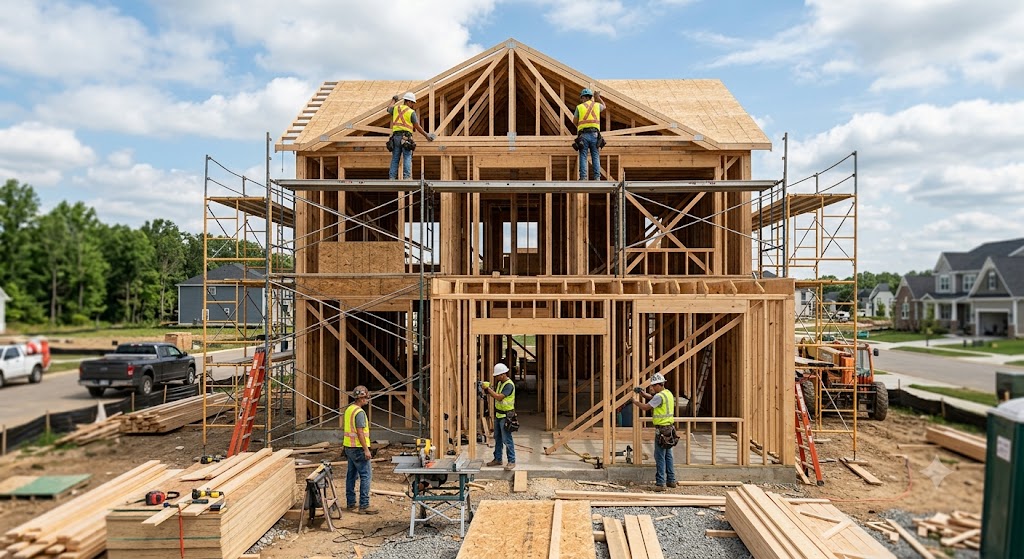
Building a new home in Iowa City gives you the opportunity to create a property around your lifestyle rather than adapting your routines to an existing layout. From choosing a lot to planning the kitchen, bedrooms, storage, and outdoor areas, each decision affects how comfortable and functional your home feels. Careful planning also helps control construction costs and reduces unnecessary changes once work begins.
Working with experienced Iowa City home builders starts with identifying what matters most to you. Consider your household size, daily routines, work requirements, storage needs, preferred architectural style, and plans for the future. Creating these priorities before discussing floor plans gives you a clearer framework for evaluating designs and construction options.
Evaluate the Building Site and Lot Before the Floor Plan
The building lot influences many aspects of construction. Soil conditions, drainage, slope, access, utility connections, and property orientation should be evaluated before finalizing the home’s design. A lot that requires extensive grading or additional site preparation can affect the overall project budget.
A lot survey can help establish property boundaries, elevations, easements, setbacks, and other site information needed for planning. Soil testing can also identify conditions that may affect foundation design and site preparation. Depending on the property and project requirements, these assessments may involve surveyors, geotechnical professionals, engineers, or other specialists. Before proceeding, clarify which evaluations are required, who will arrange them, and whether their costs are included in the project budget or handled separately.
Think about how the home will sit on the property as well. Window placement, driveway access, garage positioning, outdoor living areas, and natural light should work together. Planning these elements early creates a more functional relationship between the house and its surroundings.
Understand Your Home Builder Options
Home builders generally work within different approaches, including production, semi-custom, and custom building. A production builder typically offers a defined selection of floor plans, finishes, and options, while a semi-custom builder may provide more flexibility to modify layouts and selections. A custom builder generally works more extensively around the homeowner’s individual design requirements.
Understanding these differences can help you compare the level of design flexibility, material selection, communication, scheduling, and decision-making involved before choosing a builder.
Design for Everyday Living in Iowa City
A practical floor plan should reflect how you actually use your home. Rather than choosing rooms based only on square footage, consider how people move between spaces throughout the day. A well-planned kitchen should provide adequate work surfaces and storage, while living areas should accommodate furniture without creating unnecessary traffic paths.
Storage deserves particular attention during the design phase. Walk-in closets, pantry shelving, mudroom storage, linen closets, and garage organization can help keep frequently used belongings accessible without cluttering living spaces.
Focus on Energy Efficiency
Iowa experiences significant seasonal temperature changes, making energy-conscious construction an important consideration. Insulation, air sealing, windows, doors, and heating and cooling systems all influence indoor comfort and energy consumption.
Ask about the planned insulation R-values for each building assembly and how the building envelope will be sealed. A blower door test can provide a measurement of the home’s air leakage after construction. You can also ask whether the home will receive a HERS index rating, which provides a standardized way to compare a home’s energy performance. Specific performance targets and requirements should be confirmed with the client and project team before publication or construction planning.
Properly installed insulation works best when combined with effective air sealing. Energy-efficient windows and appropriately sized HVAC equipment also support consistent indoor temperatures.
Select Materials With Maintenance in Mind
The materials chosen for your new home affect both appearance and long-term upkeep. When comparing flooring, siding, roofing, countertops, cabinetry, and exterior finishes, consider durability alongside appearance.
For exterior materials, think about exposure to precipitation, temperature changes, wind, and seasonal maintenance. Inside the home, select surfaces that suit your household’s activity level. Durable flooring in high-traffic areas and easy-to-clean surfaces in kitchens and bathrooms provide practical benefits over time.
Keep Construction Decisions Organized
Clear communication helps keep a building project moving efficiently. Before construction begins, understand the process for approving design changes, selecting finishes, reviewing progress, and addressing questions. Written documentation of important decisions also helps everyone work from the same information.
Ask how allowances are handled for items that have not been fully selected or priced when the contract is established. Understand the process for change orders, including how changes are documented, approved, and priced before work proceeds. It is also useful to understand the project’s draw schedule so you know how construction payments are expected to be released.
Keep a record of selected materials, product specifications, colors, fixtures, and approved changes. This organization becomes particularly useful when multiple decisions are being made during different construction stages.
Before signing, also review the builder’s warranty structure, including what is covered, the length of coverage, and how warranty requests are submitted and handled.
Build for Your Future Needs
A new home should support more than your current routine. Consider future furniture arrangements, additional storage, home office requirements, electrical outlets, lighting, internet connectivity, and accessibility.
Planning these details during construction is typically more practical than making major modifications after the home is finished. A little forward thinking can make the property more adaptable as your needs change.
Plan Your Iowa City Home Construction Carefully
Building a home in Iowa City requires thoughtful decisions about the property, layout, energy efficiency, materials, and construction process. Start by defining your priorities, establish a realistic budget, and review important design details before construction begins. When you are ready to move forward, speak with qualified Iowa City home builders about your plans and create a construction strategy that fits your needs, property, and long-term goals.
Source URL: Iowa City Home Builders: Planning a Comfortable and Efficient New Home