Allopurinol
For millions of individuals worldwide, Allopurinol serves as the primary line of defense against painful gout flares, kidney stones, and hyperuricemia caused by cancer therapies. As a xanthine oxidase inhibitor, this medication functions by decreasing the production of uric acid in the body. However, managing this highly effective therapy becomes immensely complex when a patient concurrently suffers from compromised kidney function.
Because the kidneys are the primary route for clearing this medication from your system, baseline or developing renal impairment demands cautious treatment strategies.
In this clinical guide, we will break down the biological necessity of an Allopurinol renal dosage plan, outline standard adjustment protocols based on renal function, and highlight how to safely meet your therapeutic targets in 2026.
What is Allopurinol Renal Dosage?
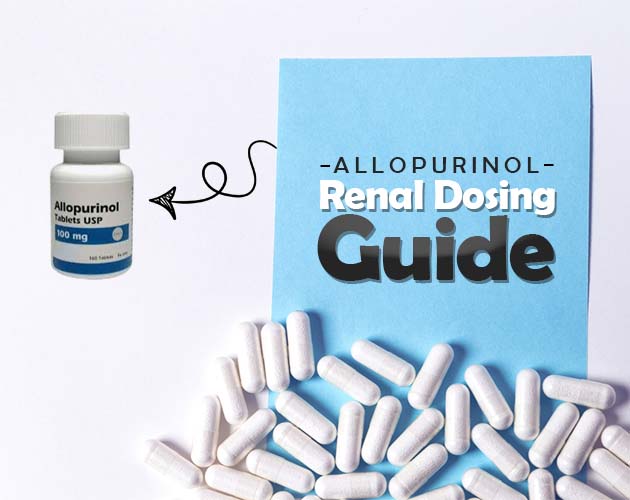
An Allopurinol renal dosage plan is a medically supervised schedule that scales back the initial and maintenance doses of the drug based on a patient’s level of kidney impairment.
When the kidneys struggle to filter waste, the drug’s active metabolite, oxypurinol, rapidly accumulates in the bloodstream. Oxypurinol has a normal half-life of 18 to 30 hours, but severe renal failure can stretch that timeline out to a full week. This toxic accumulation dramatically elevates the risk of severe, life-threatening adverse reactions, making tailored adjustments critical.
Standard Renal Dosage Guidelines
Medical consensus emphasizes starting with a very low initial dose and gradually titrating upward based on a patient’s calculated Creatinine Clearance (CrCl) or Estimated Glomerular Filtration Rate (eGFR).
Initial Starting Doses
- Normal Kidney Function: Usually starts at 100 mg daily and scales up weekly until uric acid targets are met.
- Chronic Kidney Disease (CKD Stage 3 or worse): Recommended starting dose drops to 50 mg daily to prevent initial system shock and minimize hypersensitivity syndromes.
Maintenance Dosing According to CrCl/eGFR Ranges
While clinical strategies vary between conservative restriction and modern target-based titration, traditional guidelines dictate the following upper limits during initial treatment phases:
- CrCl 30 to 60 mL/min: Typically adjusted to 50 mg to 100 mg daily.
- CrCl 10 to 20 mL/min: Limited to a maximum of 100 mg to 200 mg daily.
- CrCl Less than 10 mL/min: Must not exceed 100 mg daily, or may be given at alternate-day intervals.
- Extreme Renal Impairment (<3 mL/min): Requires extended intervals, such as 100 mg administered twice a week or less.
The Danger of Overdosing: Allopurinol (AHS)
The primary reason healthcare professionals meticulously track renal dosing is to prevent Allopurinol Hypersensitivity Syndrome (AHS) or Severe Cutaneous Adverse Reactions (SCARs). Though rare, this condition carries a high mortality rate and typically manifests within the first 6 to 8 weeks of starting therapy.
Red Flag Symptoms of AHS Include:
- Severe skin peeling, blistering, or widespread toxic rashes.
- High fever and persistent chills.
- Acute worsening of liver functions or sudden jaundice.
- Rapidly accelerating renal failure.
Impaired kidney function paired with an unadjusted, high starting dose is a primary clinical trigger for this immune-mediated reaction. However, modern research shows that if a patient successfully tolerates their initial low dose, the maintenance dose can often be carefully titrated higher to control severe gout, provided close blood monitoring is maintained.
Best Practices for Safe Allopurinol Management
If you are taking this medication while managing chronic kidney disease, always incorporate these expert-backed compliance behaviors:
- Stay Fully Hydrated: Unless on a fluid restriction for advanced heart or kidney failure, strive for a daily fluid intake sufficient to produce at least 2 liters of urine output to keep the kidneys flushed.
- Take Post-Meals: This medication is much better tolerated by the gastrointestinal tract if consumed directly after a meal.
- Never Stop During an Acute Flare: If you experience a sudden gout attack, do not stop or start your routine dosage. Fluctuating uric acid levels can drastically worsen or prolong the acute episode.
- Do Not Double Missed Doses: If a daily dose is skipped, skip it entirely and proceed with your regular schedule the following day.
Frequently Asked Questions
What happens if you don’t reduce Allopurinol for kidney disease?
Failing to adjust the dosage causes the active byproduct, oxypurinol, to stay trapped in the bloodstream. This greatly increases systemic toxicity, putting you at risk for life-threatening hypersensitivity syndromes, bone marrow suppression, and accelerated liver damage.
Can Allopurinol actually help protect the kidneys?
There is ongoing clinical discussion regarding this. While high uric acid itself can cause tissue damage and promote CKD development, utilizing a balanced, renal-adjusted dose to lower extreme hyperuricemia may help decrease vascular oxidative stress, though comprehensive trials are still verifying long-term renoprotective impacts.
Is there an alternative if I cannot tolerate Allopurinol?
Yes. If your kidney function is low and your uric acid remains dangerously high on conservative doses, or if you display early sensitivity, clinicians may switch your treatment to febuxostat, which relies less heavily on renal clearance and can be safely utilized in many patients with reduced eGFR.
How often should my kidney function be checked while on therapy?
During the initial stages of starting the medication or whenever a dose titration occurs, blood tests checking your serum creatinine, eGFR, and uric acid levels should be performed frequently (often every few weeks) to catch any metabolic abnormalities.
Conclusion
Managing your Allopurinol regimen alongside kidney issues requires a careful clinical balancing act. While limiting your initial exposure protects you from dangerous toxic buildup, your medical team must eventually find a maintenance level that successfully lowers your uric acid without overtaxing your renal filters. By paying close attention to your body’s signs, remaining hydrated, and keeping up with regular clinical tracking, you can maximize your treatment benefits safely