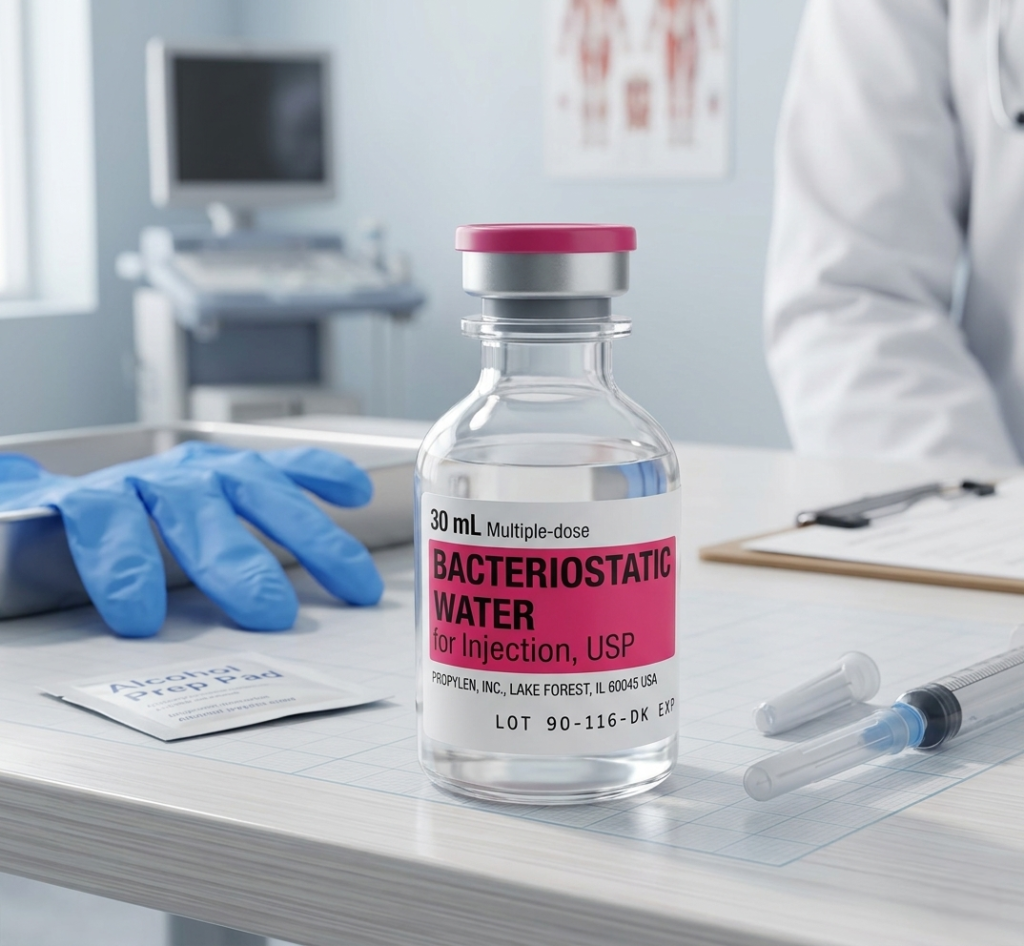
Bacteriostatic water for injection (BWFI) is sterile water that contains 0.9% benzyl alcohol as a preservative. The benzyl alcohol prevents bacterial growth, which allows the solution to remain usable for multiple withdrawals from the same vial.
Manufacturers prepare this water under strict sterile conditions that comply with United States Pharmacopeia (USP) standards. The FDA regulates its production for medical use in the United States. Unlike plain sterile water, bacteriostatic water supports multi-dose applications because it inhibits microbial contamination after the first puncture.
Healthcare providers frequently use it in hospitals, clinics, and compounding pharmacies. In peptide therapy and research settings, practitioners rely on it to reconstitute lyophilized (freeze-dried) peptides before subcutaneous injection.
Because peptides often arrive in powdered form to preserve stability, users must mix them with a sterile diluent before administration. Bacteriostatic water offers both sterility and extended usability, which makes it a preferred choice in many clinical scenarios.
Why Bacteriostatic Water Is Used for Peptides
Peptides are delicate amino acid chains that can degrade when exposed to bacteria, improper handling, or repeated vial access. Once you puncture a vial, you increase the risk of contamination. The benzyl alcohol in bacteriostatic water reduces that risk by slowing bacterial growth.
Clinicians commonly use it for compounds such as:
- Semaglutide
- Tirzepatide
- HCG (human chorionic gonadotropin)
- BPC-157
- CJC-1295
Many peptide protocols require multiple doses drawn from the same vial over days or weeks. A preservative-free solution would require single-use disposal, which increases cost and waste. BWFI supports practical multi-dose treatment plans while maintaining safety standards.
Medical providers also prefer it because it aligns with aseptic technique practices taught in nursing and pharmacy programs. When handled correctly, it helps maintain solution integrity throughout the usage period.
Sterile Water vs Bacteriostatic Water: Key Differences
Although both options appear similar, they serve different purposes.
Sterile Water for Injection:
- Contains no preservatives
- Intended for single-use applications
- Must be discarded after first puncture
- Preferred for neonates or patients sensitive to benzyl alcohol
Bacteriostatic Water:
- Contains 0.9% benzyl alcohol
- Supports multiple withdrawals
- Reduces bacterial growth
- Typically stored up to 28 days after opening
The presence of benzyl alcohol makes the critical difference. While it inhibits bacterial proliferation, certain populations, especially newborns, should avoid exposure due to toxicity concerns.
In peptide therapy for adults, providers frequently choose bacteriostatic water because it balances safety with convenience. However, users should always follow medical guidance rather than self-administer without supervision.
How to Reconstitute Peptides with Bacteriostatic Water
Reconstituting peptides requires careful handling. Even small errors in measurement or sanitation can compromise the solution.
Supplies You’ll Need
- Lyophilized peptide vial
- Bacteriostatic water vial
- Alcohol prep pads
- Insulin syringe or sterile mixing syringe
- Sharps disposal container
Ensure that all materials remain sealed and within expiration dates before starting.
Step-by-Step Reconstitution Process
- Wash your hands thoroughly.
- Clean both vial stoppers with alcohol pads.
- Draw the desired amount of bacteriostatic water into the syringe.
- Insert the needle into the peptide vial.
- Slowly inject the water down the inside wall of the vial. Avoid spraying directly onto the powder.
- Gently swirl the vial until the powder fully dissolves. Do not shake vigorously, as shaking may damage fragile peptide chains.
The solution should appear clear. If it looks cloudy or contains particles, discard it.
Dosage Calculation Basics
Correct dosing depends on the amount of peptide in the vial and the volume of water added. For example:
If you have a 5 mg vial and add 2 mL of bacteriostatic water, each 0.1 mL (10 units on an insulin syringe) contains 0.25 mg.
Many dosing errors occur due to simple math mistakes. Double-check calculations or consult a licensed provider before administering any injection.
Storage Guidelines and Shelf Life
After reconstitution, store the peptide vial in a refrigerator between 2°C and 8°C (36°F to 46°F). Avoid freezing unless the manufacturer specifically instructs otherwise.
Most healthcare professionals recommend using bacteriostatic water within 28 days of first puncture. Peptide stability varies depending on the compound, so always review clinical or pharmacy guidelines.
Keep vials protected from light and excessive heat. Label the vial with the reconstitution date to prevent accidental extended use.
Safety Considerations and Common Mistakes
Although bacteriostatic water reduces contamination risk, it does not eliminate it entirely. Users must follow strict aseptic technique.
Common mistakes include:
- Reusing needles
- Skipping alcohol swabs
- Shaking the vial aggressively
- Miscalculating dosage
- Storing at room temperature
Never share vials between individuals. Even with preservative content, cross-contamination can transmit infections.
If you notice redness, swelling, or unusual pain at the injection site, seek medical advice promptly.
Clinical and Research Applications
In clinical settings, licensed providers use bacteriostatic water for hormone therapies, metabolic treatments, and certain injectable medications. Compounding pharmacies often prepare customized peptide blends under sterile ISO-classified environments.
In research laboratories, scientists use it to prepare peptide solutions for controlled experimental models. These settings follow institutional biosafety and regulatory protocols to ensure integrity and compliance.
Frequently Asked Questions (FAQs)
1. Can I use sterile water instead of bacteriostatic water for peptides?
Yes, but you must discard sterile water after one use. It does not contain preservatives for multi-dose safety.
2. How long does bacteriostatic water last after opening?
Most guidelines recommend discarding it after 28 days from the first puncture.
3. Is benzyl alcohol safe in bacteriostatic water?
In small amounts for adults, it is generally considered safe. However, it is not recommended for neonates.
4. Do I need a prescription to buy bacteriostatic water?
Regulations vary by country and supplier. In many regions, you need a prescription for medical-grade products.
5. Why should I avoid shaking peptides during mixing?
Shaking can denature fragile peptide chains and reduce effectiveness.
6. Can I store reconstituted peptides at room temperature?
Most peptides require refrigeration after mixing to maintain stability.