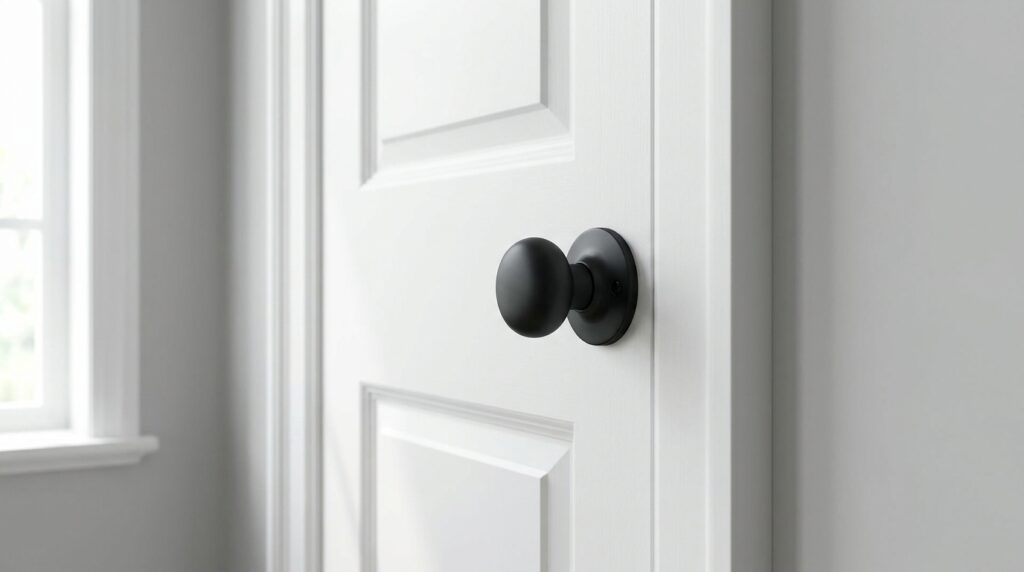
A door knob with a removable latch plate is a versatile type of residential lockset that allows you to detach or swap the latch faceplate depending on your door configuration. In traditional setups, the latch plate is permanently attached and requires chiseling into the door edge. With removable systems, you can switch between a standard faceplate latch and a drive-in latch without replacing the entire knob.
Most modern cylindrical locksets from brands like Schlage, Kwikset, and Yale include this flexible feature. Manufacturers design them to accommodate both standard door preparations and retrofit installations.
Homeowners and contractors prefer these models because they simplify installation, especially when working with pre-drilled doors or replacing older hardware. Instead of modifying the door, you adapt the latch to fit the existing bore hole.
This small feature significantly improves compatibility and ease of use, particularly in DIY home improvement projects.
How Removable Latch Plates Work
A removable latch plate system allows the latch mechanism to function in two configurations: with a faceplate or as a drive-in latch.
Drive-In Latch vs Faceplate Latch
A faceplate latch includes a rectangular metal plate that screws into the edge of the door. This requires a mortised (chiseled) recess for a flush finish.
A drive-in latch, on the other hand, has a round collar. You simply insert it into a circular hole without chiseling. The pressure-fit design holds it securely in place.
Removable latch plates let you detach the rectangular plate and convert the mechanism into a drive-in latch using a sleeve or collar.
Adjustable Backset Explained
Most modern door knobs also include an adjustable backset, typically 2-3/8 inches or 2-3/4 inches. The backset measures the distance from the door edge to the center of the bore hole.
An adjustable latch ensures universal compatibility with standard residential door preparations in North America.
Benefits of Choosing a Door Knob with a Removable Latch Plate
This type of door hardware offers several practical advantages:
- Greater installation flexibility
- Compatibility with existing bore holes
- Reduced need for chiseling or carpentry
- Faster door knob replacement
- Ideal for rental properties and renovations
For DIY homeowners, this flexibility minimizes errors. If the door edge lacks a mortised cutout, you can use the drive-in configuration. If a rectangular recess already exists, attach the faceplate and secure it with screws.
Contractors also appreciate the adaptability. During renovation projects, you often encounter inconsistent door preparations. A universal latch saves time and prevents unnecessary door modifications.
Additionally, many ANSI/BHMA Grade 2 and Grade 3 residential locksets now include removable latch plates as a standard feature. That means you don’t have to sacrifice durability for convenience.
When Should You Use a Removable Latch Plate?
You should consider this type of door knob in the following scenarios:
- Replacing old hardware without altering the door
- Installing knobs on pre-drilled slab doors
- Upgrading interior doors in apartments
- Fixing misaligned or damaged latch plates
- Switching from a mortised setup to a simpler configuration
For example, if you purchase a new interior door that only has a circular edge bore, a traditional faceplate latch won’t fit unless you chisel the door. A removable latch plate eliminates that extra step.
It’s also useful in high-turnover rental properties where quick replacements matter. Maintenance teams can swap hardware efficiently without specialized woodworking tools.
Step-by-Step Installation Guide
Installing a door knob with a removable latch plate is straightforward. Follow these steps for a smooth process:
- Measure the Backset
Check whether your door requires a 2-3/8” or 2-3/4” backset. Adjust the latch accordingly. - Determine Latch Type
Inspect the door edge.- If there is a rectangular mortise, use the faceplate latch.
- If there is only a round hole, remove the faceplate and attach the drive-in collar.
- Insert the Latch
Slide the latch into the edge bore. Ensure the beveled side faces the door jamb so it retracts properly when closing. - Secure the Latch (If Using Faceplate)
Align the plate with the mortise and fasten it with screws. - Install the Knob Assembly
Insert the exterior knob through the latch mechanism. Attach the interior knob and tighten the mounting screws. - Test the Mechanism
Turn the knob and ensure the latch retracts smoothly. Close the door to verify alignment with the strike plate.
Most installations take under 20 minutes with a screwdriver. If you’re replacing an existing knob, the process becomes even faster.
How to Remove or Replace a Latch Plate
Removing a latch plate is simple:
- Unscrew the faceplate from the door edge
- Pull the latch assembly out
- Twist or slide off the rectangular plate
- Attach the drive-in collar if needed
Always check manufacturer instructions, as slight variations exist between brands like Baldwin and Defiant. Avoid forcing components, since that can damage the latch housing.
Choosing the Right Door Knob: What to Look For
When selecting a door knob with a removable latch plate, focus on:
1. ANSI/BHMA Grade
Grade 1 offers commercial durability. Grade 2 suits high-traffic residential doors. Grade 3 works for standard interior use.
2. Material and Finish
Look for solid brass, stainless steel, or zinc alloy. Popular finishes include satin nickel, matte black, and oil-rubbed bronze.
3. Function Type
Choose from:
- Passage knobs (hallways)
- Privacy knobs (bedrooms/bathrooms)
- Keyed entry knobs (exterior doors)
- Dummy knobs (decorative use)
4. Brand Reputation
Trusted manufacturers like Schlage, Yale, and Kwikset provide tested, certified hardware that meets residential security standards.
5. Warranty Coverage
Many reputable brands offer limited lifetime mechanical warranties.
Common Problems and Troubleshooting
Latch doesn’t retract smoothly
Check alignment and confirm the beveled edge faces the jamb.
Door won’t close fully
The strike plate may need adjustment.
Loose knob after installation
Tighten mounting screws evenly and ensure proper alignment.
Latch feels stuck after plate removal
Verify the drive-in collar sits flush and isn’t tilted.
Proper installation usually prevents most functional issues.
Frequently Asked Questions (FAQs)
1. What is the difference between a drive-in latch and a faceplate latch?
A drive-in latch fits into a round hole without screws, while a faceplate latch requires a rectangular mortised cutout and screws into the door edge.
2. Can I convert any door knob into a drive-in latch model?
No. Only door knobs designed with removable latch plates allow conversion.
3. Are removable latch plates secure?
Yes. When properly installed, they meet residential security standards and perform as securely as fixed latch systems.
4. Do all modern door knobs have adjustable backsets?
Most modern residential cylindrical locksets include adjustable backsets, but always confirm before purchasing.
5. Is a removable latch plate suitable for exterior doors?
Yes, if the lockset meets ANSI Grade 1 or Grade 2 standards for security.
6. Do I need special tools to install one?
Typically, you only need a screwdriver. No chiseling is required if you use the drive-in configuration.