A parking lot is usually the first thing a customer sees. Long before anyone walks through the front door, they’ve already judged the business by the cracks, puddles, and faded lines they drove over to get there.
That’s why property owners spend real time choosing a Concrete Parking Lot Contractor in Houston, TX. The region’s heat, heavy rain, and shifting clay soils make paving here different from many other parts of the country. A lot that looks fine on day one can start failing within a few years if the work wasn’t planned for local conditions.
This guide covers what goes into a durable concrete parking lot, why more Houston-area owners are choosing concrete, and what separates a solid project from a costly one.
Why Houston Is a Tough Place to Pave
Few cities put pavement through as much stress as Houston. Summer surface temperatures can climb well past 140 degrees. Then a tropical storm drops several inches of rain in a single afternoon.
Below the surface sits another challenge. Much of the Gulf Coast region rests on expansive clay soil. This soil swells when it’s wet and shrinks when it dries, and that constant movement pushes and pulls on anything built on top of it.
A parking lot has to handle all of this while carrying cars, delivery vans, and sometimes fully loaded trucks. When a lot fails early, it’s rarely because of bad luck. It’s usually because the base, drainage, or thickness didn’t match what the site actually needed.
What Good Concrete Parking Lot Work Looks Like
Most of the work that decides how long a parking lot lasts happens before any concrete is poured. Experienced contractors often say the slab is only as good as what’s underneath it.
Subgrade preparation comes first. On clay-heavy sites, crews often treat the soil with lime or cement to make it more stable and less likely to move. Skipping this step is one of the most common reasons lots crack and heave.
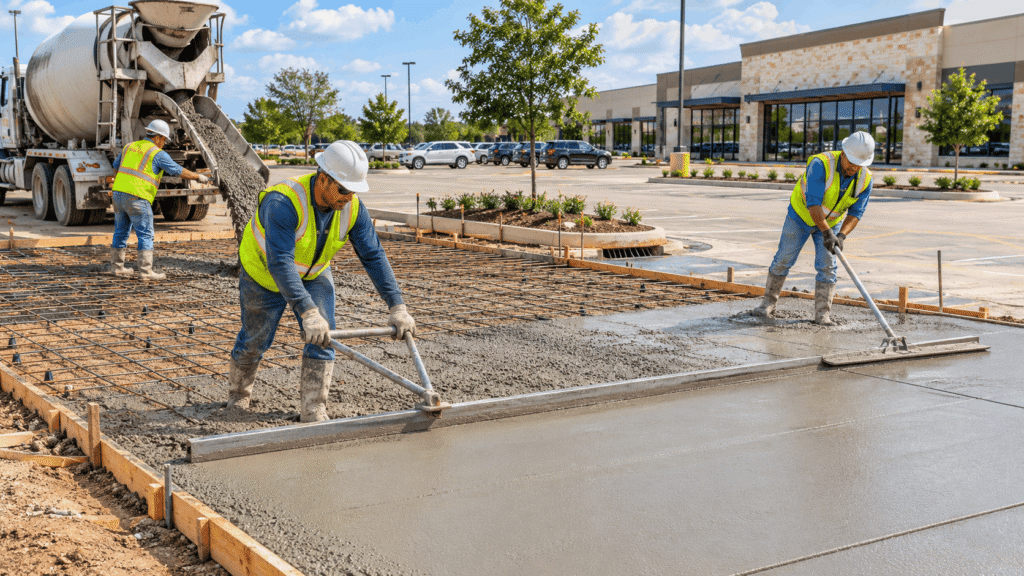
Thickness and reinforcement come next. A lot for passenger cars might use five to six inches of concrete. Areas with dumpster trucks, fire lanes, or delivery traffic often need seven inches or more, plus steel rebar or fiber reinforcement.
Drainage design matters just as much. Houston’s flat ground means water doesn’t run off on its own. A well-built lot is sloped carefully toward drains so water doesn’t pond, seep into joints, or weaken the base over time. Many commercial sites also need to meet local stormwater and detention rules.
Joint placement is the final piece. Concrete will crack as it shrinks. Control joints, cut at planned spots, tell it where to crack so the lines stay neat instead of wandering across the surface. Sealing those joints keeps water and debris out.
Pouring in the Heat
Timing is a bigger deal in Southeast Texas than many people realize. Concrete that dries too quickly in high heat can lose strength and develop surface cracks.
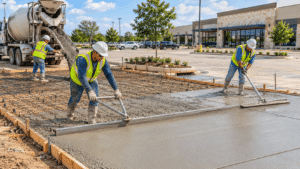
To prevent this, many crews start pours before sunrise during summer months. They may also use additives that slow the setting time, along with curing compounds or wet coverings that hold moisture in. These small choices often make a big difference in how the surface holds up years later.
Why Many Property Owners Choose Concrete
Asphalt has long been the default for parking lots because it’s cheaper upfront. But in a hot climate, the long-term math often looks different.
Concrete doesn’t soften in the summer sun. Asphalt can rut and grow sticky under heavy loads on hot days, while concrete stays firm. For lots that see trucks or constant traffic, that difference shows up quickly.
Concrete also tends to last longer. A properly built lot can serve for 25 to 30 years or more with fairly simple care, such as cleaning and resealing joints. Asphalt usually needs sealcoating every few years and resurfacing more often.
There’s also a comfort factor. Concrete’s lighter color reflects more sunlight, which keeps the surface cooler. It also brightens the lot at night, which can help with visibility and safety, and sometimes reduces how much lighting a site needs.
Finally, appearance plays a role. A clean, bright concrete lot with crisp striping makes a strong first impression for retail centers, medical offices, and restaurants.
Real-World Situations Where It Matters
Picture a small shopping center where the asphalt lot near the entrance has turned into a patchwork of potholes. Every heavy rain leaves standing water by the storefronts. Shoppers start avoiding the spaces closest to the doors, and tenants begin to complain.
In cases like this, owners often replace high-traffic zones with concrete first, such as entrances, drive lanes, and loading areas. This targeted approach spreads out costs while fixing the spots that take the most abuse.
Churches and schools face a different problem. Their lots sit mostly empty during the week, then fill completely within minutes on certain days. They need surfaces that hold up without constant upkeep, plus clear striping and accessible parking that meets ADA standards.
Warehouses and distribution sites have the toughest demands. Semi-trucks turning in tight circles can grind asphalt apart. Thicker, reinforced concrete pads in truck courts and dock areas are now common across the region’s industrial corridors.
Growth in the suburbs has added another layer. As Fort Bend County keeps expanding, demand for Concrete Construction Services in Sugar Land, TX has risen alongside new medical buildings, retail strips, and office parks. Many of these projects face the same clay soils and drainage issues found closer to the city’s core.
What Owners Look for in a Contractor
When comparing options for a Concrete Parking Lot Contractor in Houston, TX, property managers tend to focus on a few practical things. Local experience tops the list, since a crew that knows regional soil and weather will plan for them from the start.
Owners also look for clear, detailed bids. A good estimate spells out concrete thickness, reinforcement type, base preparation, and drainage work. Vague bids often leave room for shortcuts.
Licensing, insurance, and familiarity with city permitting also matter. So does a willingness to walk the site and explain the plan in plain language.
Many established regional firms, such as Cross Construction Services, handle everything from new parking lots to broader commercial concrete projects. Owners comparing companies that provide Concrete Construction Services in Sugar Land, TX and the wider metro area often find that asking about past projects on similar soil and traffic conditions reveals the most.
The Bottom Line
A parking lot may not be the most exciting part of a property, but it works harder than almost anything else on the site. In a place with intense heat, sudden storms, and restless soil, the quality of the work below the surface decides how long it lasts.
Understanding the basics of base prep, thickness, drainage, and curing helps owners ask better questions. And better questions usually lead to a lot that stays smooth, safe, and good-looking for decades.
Frequently Asked Questions
How much does a concrete parking lot cost in Houston?
Costs vary based on size, thickness, soil prep, and drainage needs. Most commercial projects are priced per square foot, and reinforced or heavy-duty areas cost more than standard car parking.
How long does a concrete parking lot last?
A well-built concrete lot often lasts 25 to 30 years or more. Regular cleaning and resealing joints can help extend its life.
Is concrete or asphalt better for a parking lot in Houston?
Asphalt is cheaper upfront, but concrete handles heat and heavy loads better and needs less maintenance. Many owners find concrete costs less over the full life of the lot.
How soon can cars drive on a new concrete parking lot?
Light foot traffic is usually fine after a day or two. Most contractors recommend waiting about seven days for cars and longer for heavy trucks, depending on the mix and weather.