B2B Procurement Guide | Sangam Surgicals | India
Hospitals can lose time and money over a single unsuitable instrument. A forceps that does not match the procedure, an incompatible connector, or an unclear replacement policy can turn an otherwise routine purchase into a procurement problem. Choosing Urology Instruments requires more than comparing quotations; buyers must check specifications, intended use, supplier reliability, and the cost of maintaining stock.
For wholesalers, procurement managers, and brand owners, the objective is straightforward: buy instruments that meet clinical requirements, arrive with the correct documentation, and remain commercially viable over repeated orders.
Specifications: What Modern Hospitals Actually Need
Urology departments perform diagnostic and surgical procedures involving the urinary tract and, in some cases, the male reproductive system. Instrument selection should reflect the procedures performed, equipment compatibility, and the hospital’s approved purchasing specifications.
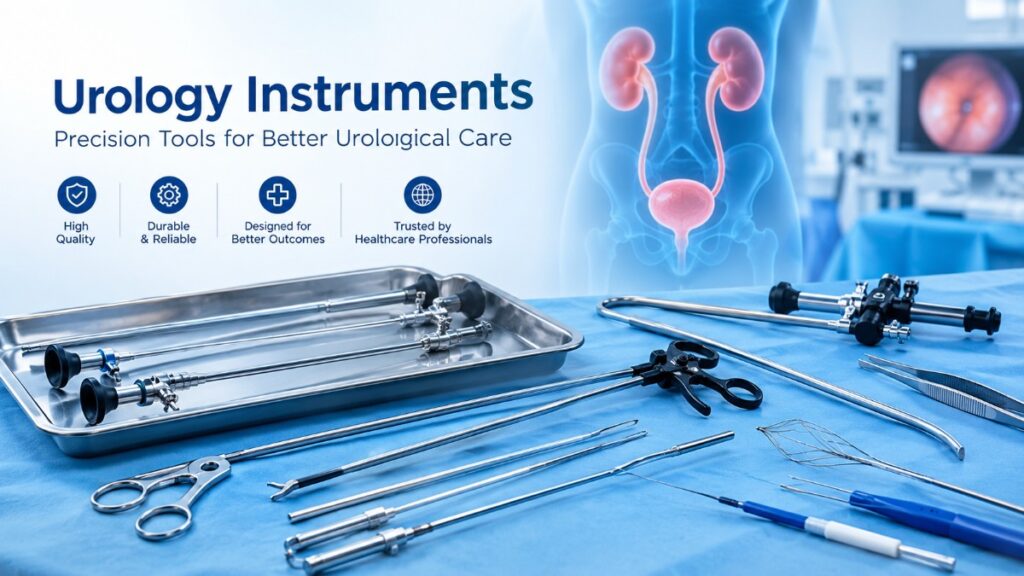
Types of Urology Instruments
- Endoscopic instruments: Used in procedures involving visual examination and access through natural passages.
- Resectoscopes and working elements: Used in relevant endoscopic procedures, including transurethral interventions.
- Grasping and biopsy forceps: Selected according to the intended procedure, working channel, and tissue-handling requirements.
- Dilation instruments and urethral accessories: Chosen according to the procedure, size requirements, and applicable clinical protocols.
- Surgical accessories: Include compatible components needed for the intended instrument system.
The Spec Detail Most Buyers Skip
A product name is not a specification. Check working length, diameter, material, connection type, compatibility, sterilization instructions, and reusable or single-use status. For reusable instruments, confirm the manufacturer’s validated cleaning and reprocessing instructions.
Hospitals should also verify applicable regulatory requirements and documentation before approving a purchase. India’s Medical Devices Rules, 2017, provide a regulatory framework for medical devices, with requirements depending on the device and its classification.
Objective: Five Checks Before Approving a Supplier
Evaluate Urology Instruments Manufacturers against these five criteria before placing a bulk order.
- Specification accuracy: Good answer: the supplier confirms dimensions, materials, and compatibility in writing. Bad answer: “Standard size will fit.”
- Quality documentation: Request applicable certificates, inspection records, and regulatory documents. Bad answer: a certificate with no clear scope or validity.
- Sample inspection: Examine fit, finish, movement, and workmanship where sampling is appropriate. Bad answer: pressure to approve a large order without checking a sample.
- Delivery commitments: Ask for a written dispatch schedule and packaging details. Bad answer: vague promises with no date or escalation process.
- After-sales policy: Confirm how shortages, defects, and incorrect items are handled. Bad answer: “We’ll discuss it if a problem occurs.”
Nobody benefits from a cheap quotation that creates expensive disputes after delivery.
Benefits: How the Right Purchase Protects Margins
The right Urology Instruments can help hospitals and distributors control avoidable costs in six ways:
- Fewer compatibility errors: Written specifications reduce unsuitable purchases and return expenses.
- More predictable inventory: Planned replenishment reduces emergency procurement and excess stock.
- Lower lifecycle costs: Reusable instruments should be assessed against validated reprocessing requirements and expected service life.
- Better budget control: Compare total ownership costs, not just the quoted unit price.
- Reduced documentation delays: Complete records make internal purchasing reviews easier.
- Stronger customer relationships: Distributors who communicate availability and specifications clearly can reduce buyer uncertainty.
Here’s the difficult part: comparing instruments across suppliers is often harder than comparing prices because product descriptions may use different naming conventions, specifications, and package contents.
Availability: Finding Urology Instruments Suppliers in India
India’s medical-device market serves hospitals, distributors, and healthcare procurement networks across multiple regions. However, stock availability, dispatch times, and transport costs vary by product and destination.
When assessing Urology Instruments Suppliers, ask whether they can fulfil repeat orders and identify each item’s exact specification. Urology Instruments Suppliers in India should also clarify packaging, applicable documentation, and delivery terms before the purchase order is issued.
Similarly, Urology Instruments Wholesalers and Urology Instruments Wholesalers in India should check demand patterns, minimum order quantities, and stock turnover before committing working capital. Urology Instruments Dealers and Urology Instruments Dealers in India should confirm product details before reselling to hospitals.
About Sangam Surgicals
At Sangam Surgicals, we work with B2B buyers seeking medical instruments for their supply and procurement requirements. Our stated business credentials include ISO certification and exports to 31 countries.
We understand that a product listing alone cannot settle a purchasing decision. Buyers need to confirm specifications, quantities, availability, and documentation before approving an order.
Request a Urology Instruments Quotation
Planning a hospital purchase or wholesale order? We invite you to contact our team with the details below.
Please ask our team to confirm the current MOQ, stock availability, quotation validity, and expected response and dispatch times before placing your order.
Conclusion
Selecting Urology Instruments requires careful attention to specifications, documentation, supplier reliability, and lifecycle costs. Hospitals and distributors should evaluate Urology Instruments Manufacturers on written commitments rather than price alone. Start your next procurement cycle with a clear specification sheet and build a supply relationship that supports future demand.
Frequently Asked Questions
1. What should hospitals check before buying Urology Instruments?
Check dimensions, intended use, compatibility, material, reprocessing instructions, documentation, and delivery terms. The exact requirements depend on the instrument and procedure.
2. How do I evaluate Urology Instruments Manufacturers in India?
Compare product specifications, applicable regulatory documentation, inspection procedures, and after-sales policies. Urology Instruments Manufacturers in India may differ in product range and capabilities, so verify each requirement rather than relying on general claims.
3. How can buyers identify reliable Urology Instruments Suppliers?
Request written quotations, product details, and realistic delivery commitments. Urology Instruments Suppliers should answer technical questions clearly; however, a quotation alone does not prove product quality.
4. Are Urology Instruments Suppliers in India suitable for bulk procurement?
They can be, provided stock availability, documentation, pricing, and repeat-order capacity match your requirements. Confirm the MOQ and delivery schedule before making a commitment.
5. What should Urology Instruments Wholesalers consider?
Review demand, storage requirements, margins, and replenishment timelines. Urology Instruments Wholesalers in India should also account for slow-moving sizes and model-specific inventory risks.