In today’s competitive digital landscape, having a professional website is essential for businesses looking to establish their online presence and attract potential customers. However, managing website content, updating information, and maintaining a consistent online experience can become challenging without the right technology. This is where choosing an experienced CMS Website Development Company makes a difference.
A Content Management System (CMS) allows businesses to create, edit, organize, and publish website content without requiring extensive technical knowledge. Whether you operate a small business, an e-commerce store, or a large enterprise, a well-developed CMS website can simplify content management and support long-term business growth.
With professional CMS website development services from NetClues, businesses can create customized, responsive, and scalable websites designed around their specific requirements.
What Is a Content Management System (CMS)?
A Content Management System is a software platform that enables users to manage digital content through an accessible administrative interface. It allows businesses to update website pages, publish blogs, upload images, manage products, and organize information without manually editing website code for every change.
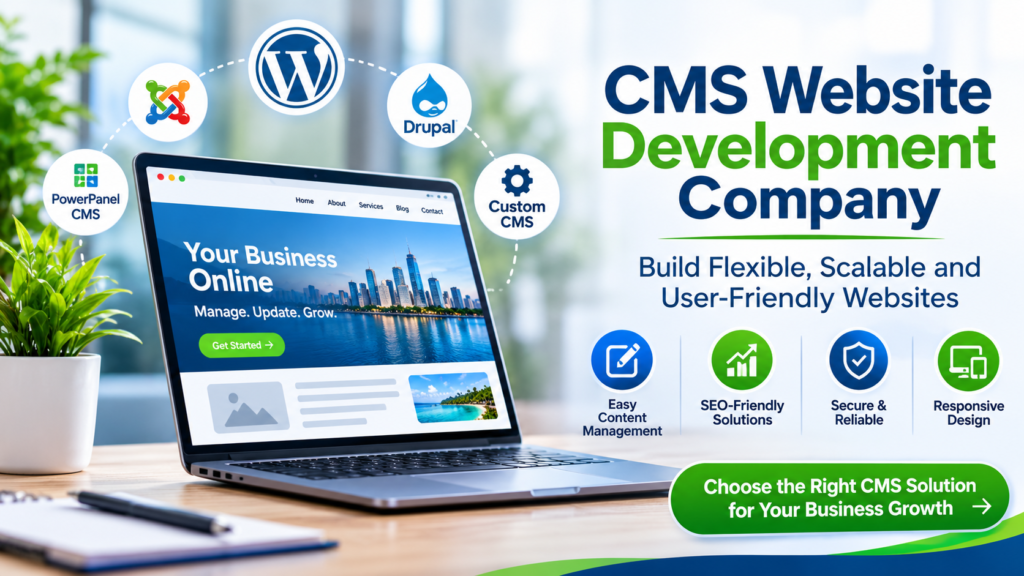
Popular CMS platforms include WordPress, Joomla, and Drupal. Businesses can also choose custom-built CMS solutions when their requirements go beyond the capabilities of standard platforms.
A professional CMS website development company helps identify the right platform, customize its functionality, and build a website that aligns with business objectives.
Why Does Your Business Need a CMS Website?
A CMS-powered website provides several advantages that help businesses manage their online operations more effectively.
1. Easy Website Content Management
One of the biggest advantages of CMS development is the ability to update website content quickly. Business owners and marketing teams can edit text, publish articles, upload images, and manage website pages through an easy-to-use dashboard.
2. Improved SEO Management
CMS platforms provide tools and integrations that support search engine optimization. Businesses can manage page titles, meta descriptions, URLs, headings, and website content to improve their search visibility.
3. Cost-Effective Website Maintenance
A CMS reduces the need for developer involvement in routine content updates. This can help businesses save time and resources while keeping their websites current.
4. Flexible Customization
Businesses can customize website designs, layouts, themes, plugins, and functionalities according to their requirements. Custom CMS development also allows more specialized features and workflows.
5. Scalability and Flexibility
As businesses grow, their websites may require additional pages, features, integrations, and functionality. A scalable CMS architecture makes it easier to accommodate these changing requirements.
6. Better Team Collaboration
CMS platforms can provide user roles and permissions that allow different team members to manage content according to their responsibilities. Editorial workflows can also help organize content review and publishing.
Different Types of CMS Website Development Services
Every business has different website requirements. A reliable CMS website development company offers solutions that support different industries, content requirements, and business models.
WordPress CMS Development
WordPress is one of the most popular content management systems for business websites, blogs, and online platforms. It offers a wide selection of themes, plugins, and customization options.
WordPress development services can include custom theme development, plugin integration, website redesign, performance optimization, and e-commerce functionality.
Joomla CMS Development
Joomla is an open-source CMS that provides flexibility for building content-rich websites and web applications. Its extensions, templates, and user management features make it suitable for projects requiring structured content and customized functionality.
Drupal CMS Development
Drupal is a flexible CMS platform designed to support complex websites and advanced content management requirements. Its modular architecture allows developers to build customized solutions with extensive functionality and structured content workflows.
Custom CMS Development
Custom CMS development is ideal for businesses that require specialized functionality or workflows that standard platforms may not fully support.
A custom solution can include tailored dashboards, user permissions, content publishing workflows, API integrations, and advanced business features.
Enterprise CMS Development
Enterprise CMS solutions help large organizations manage substantial amounts of digital content across multiple departments, websites, and communication channels.
These solutions can support centralized content management, advanced access controls, integrations, and structured publishing processes.
Headless CMS Development
Headless CMS architecture separates the content management backend from the frontend presentation layer. This allows businesses to manage content centrally and distribute it across websites, mobile applications, and other digital platforms through APIs.
Essential Features of a Professional CMS Website
A successful CMS website should provide functionality that makes content management simple while delivering a smooth experience for visitors.
Some important features include:
- User-Friendly Dashboard: An intuitive administrative interface for managing website content.
- Responsive Website Design: Layouts that adapt to desktops, tablets, and smartphones.
- SEO-Friendly Structure: Tools for managing metadata, URLs, headings, and content.
- Secure User Management: Roles and permissions to control access to website features.
- Content Publishing Tools: Options to create, edit, schedule, and publish content.
- Third-Party Integrations: Connections with CRM systems, payment gateways, analytics platforms, and other tools.
- Performance Optimization: Efficient loading and optimized website functionality.
- Backup and Recovery: Processes to protect website information and support recovery.
- Multilingual Capabilities: Options for managing content in multiple languages.
- E-commerce Integration: Features for managing products, orders, and online transactions.
How to Choose the Right CMS Platform for Your Business?
Selecting a CMS platform is an important decision because it influences website functionality, flexibility, and future maintenance.
Consider these factors before choosing a solution:
Understand Your Business Requirements
Identify the purpose of your website and the type of content you need to manage. A simple business website may require a different CMS than a large e-commerce platform or enterprise portal.
Evaluate Customization Options
Choose a platform that supports the design, integrations, and features required for your project.
Consider Security
Evaluate security updates, access management, authentication, backup options, and available security integrations.
Check SEO Capabilities
Look for features that support clean URLs, metadata management, responsive design, structured content, and website performance.
Evaluate Scalability
Make sure the CMS can support future website expansion, additional content, and new functionality.
Review Maintenance Requirements
Understand how updates, backups, extensions, and ongoing technical support will be managed.
The CMS Website Development Process
Professional CMS development follows a structured process to ensure that the final website meets business expectations.
Step 1: Requirement Analysis
The development team understands your business goals, target audience, website structure, design preferences, and functional requirements.
Step 2: CMS Platform Selection
Based on project requirements, developers recommend an appropriate CMS platform, such as WordPress, Joomla, Drupal, or a custom solution.
Step 3: Website Design and Planning
Designers prepare the website structure, wireframes, page layouts, and visual elements to create a consistent user experience.
Step 4: CMS Development and Customization
Developers configure the selected CMS, customize themes, build required modules, and integrate third-party services.
Step 5: Content Integration
Website content, images, videos, product information, and other resources are added and organized.
Step 6: Testing and Optimization
The website is tested for functionality, responsiveness, compatibility, security, and performance before launch.
Step 7: Deployment and Maintenance
After approval, the website is launched. Regular maintenance, updates, backups, and performance monitoring help keep it running smoothly.
Why Choose NetClues as Your CMS Website Development Company?
Choosing an experienced development partner is essential for building a CMS website that supports your business objectives.
NetClues offers CMS website development solutions designed to help businesses create flexible, manageable, and scalable digital platforms.
Here are some reasons to consider NetClues:
Customized CMS Solutions
NetClues develops CMS-powered websites based on individual business requirements, helping organizations create websites with relevant features and functionality.
Multiple CMS Platform Expertise
The team works with platforms such as WordPress, Joomla, and Drupal, along with its proprietary PowerPanel CMS solution.
Custom Functionality and Integrations
Businesses can benefit from customized website features, external API integrations, and content management workflows designed around their operations.
Responsive and User-Friendly Websites
CMS development focuses on creating websites that offer convenient navigation and accessible experiences across different devices.
SEO-Friendly Development
A well-structured website supports essential SEO practices, including content organization, metadata management, and search-friendly page structures.
Ongoing Support and Maintenance
Website maintenance helps businesses keep their CMS platforms updated, secure, and functional as their requirements evolve.
Future Trends in CMS Website Development
CMS technology continues to evolve as businesses look for more flexible and engaging digital experiences.
Some important trends include:
AI-Powered Content Management
Artificial intelligence can help businesses organize content, generate recommendations, automate repetitive tasks, and improve content workflows.
Headless CMS Architecture
Headless CMS solutions provide greater flexibility by separating content management from website presentation and supporting multiple digital channels.
Mobile-First Website Experiences
With users accessing websites through different mobile devices, responsive and mobile-friendly CMS development remains essential.
Enhanced Website Security
Businesses are increasingly focusing on secure authentication, regular updates, access controls, and data protection.
Personalized Digital Experiences
Modern CMS solutions can support personalized content experiences based on user preferences, behavior, and audience requirements.
Frequently Asked Questions (FAQs)
1. What does a CMS website development company do?
A CMS website development company designs, develops, customizes, and maintains websites using content management systems. Services can include platform setup, custom theme development, plugin integration, website migration, and ongoing support.
2. Which CMS platform is best for business websites?
The best CMS depends on your business requirements. WordPress is popular for business websites and blogs, Joomla offers flexible content management, and Drupal supports complex and highly customized websites.
3. What are the benefits of custom CMS development?
Custom CMS development provides greater control over website functionality, user permissions, content workflows, integrations, and design. It is useful for businesses with specialized requirements.
4. Is a CMS website SEO-friendly?
Yes. Many CMS platforms support SEO features such as customizable page titles, meta descriptions, clean URLs, headings, and SEO plugins. Proper technical implementation and quality content are also important.
5. How much does CMS website development cost?
The cost depends on the selected platform, website complexity, design requirements, integrations, custom functionality, and maintenance needs. A development company can provide an estimate after understanding your project requirements.
6. Can I update my CMS website without coding knowledge?
Yes. Most CMS platforms provide administrative dashboards that allow users to edit pages, publish blogs, upload images, and manage website content without writing code.
7. Does NetClues provide custom CMS development?
Yes. NetClues offers custom CMS development and works with platforms including WordPress, Joomla, Drupal, and its PowerPanel CMS solution.
Conclusion
A professional CMS website makes it easier for businesses to manage digital content, maintain their online presence, and adapt to changing customer expectations. From WordPress and Drupal development to custom CMS solutions and headless architecture, choosing the right platform can make a significant difference in your website’s long-term success.
Partnering with an experienced CMS Website Development Company helps ensure that your website is designed around your business needs, offers a user-friendly experience, and supports future growth.
NetClues provides customized CMS website development solutions to help businesses build flexible, scalable, and easy-to-manage websites.
Ready to build or upgrade your business website? Contact NetClues today and explore the right CMS development solution for your business.