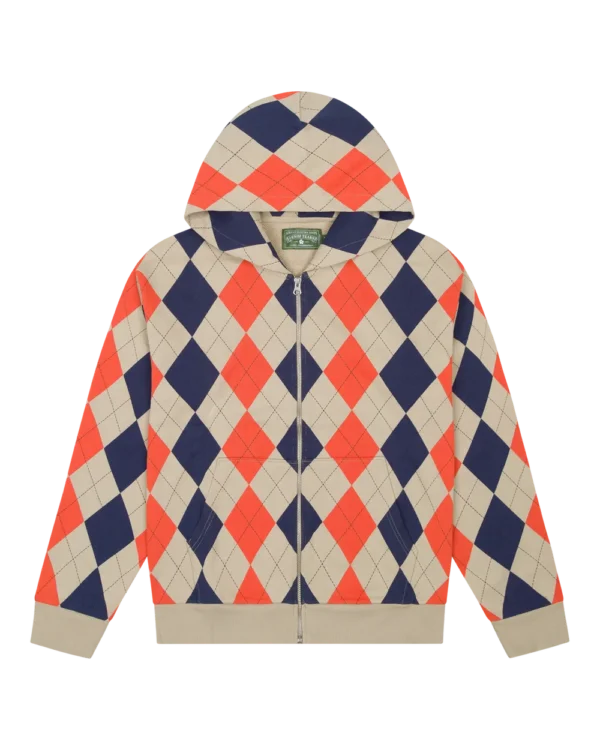
Denim Tears: The Complete Guide to Tremaine Emory’s
Denim Tears: The Complete Guide to Tremaine Emory’s Storytelling Streetwear Brand
Introduction:
Some brands chase trends. Denim Tears chases history.
Founded in 2019 by Tremaine Emory, Denim Tears isn’t just another streetwear label competing for hype. It’s a platform that uses clothing as a Trojan horse to explore the African Diaspora’s story—the pain, the resilience, and the overlooked narratives that shaped America. Every piece carries weight. Every design choice has intention.
If you’ve seen the cotton wreath motif on a hoodie or pair of jeans and wondered what it means, you’re in the right place. This guide breaks down everything you need to know about Denim Tears—the brand, the founder, the collaborations, and why it matters.
Who Is Tremaine Emory?
Tremaine Emory was born in Atlanta, Georgia in 1981 and raised in Jamaica, Queens, New York. Before Denim Tears, he built a reputation as a cultural catalyst. He worked retail at Marc Jacobs. He served as art director-at-large for Stüssy. He was brand director at Yeezy and creative director of GOOD Music.
In 2015, Emory co-founded No Vacancy Inn with Ade “Acyde” Odunlami and Brock Korsan—a creative collective that started with parties and DJ sets before expanding into clothing. That project established Emory as someone who could move between fashion, music, and art without missing a beat.
His network reads like a who’s who of contemporary culture: Virgil Abloh, Frank Ocean, Andre 3000, Theaster Gates, Hank Willis Thomas. But Emory wasn’t just collecting famous friends. He was building the perspective that would eventually become Denim Tears Clothing.
The Birth of Denim Tears: 2019 and the 400-Year Reckoning
Denim Tears launched in 2019—400 years after the first enslaved Africans arrived in Point Comfort, Virginia. That timing wasn’t accidental. Emory has said the brand’s name refers to his grandmother, who wore a denim apron while working, and to the collective struggle of African Americans.
The brand’s mission statement is direct: to illustrate the full breadth of Black American history through unique perspectives on the voices and events that shaped the African Diaspora. This isn’t marketing language. It’s the actual operating principle behind every collection.
Emory has described his approach as using “the art of visual storytelling and clothing as a trojan horse” to traverse the intersection between fashion, music, and culture. The clothes are the entry point. The history is the destination.
The Cotton Wreath: Understanding Denim Tears’ Signature Motif
You can’t talk about Denim Tear without talking about the cotton wreath. It’s the brand’s most recognizable symbol, appearing on denim, hoodies, sweatpants, accessories, and more.
But what does it mean?
The cotton wreath symbolizes the intertwined past and future experiences of Black Americans. It references the cotton industry—the economic engine built on enslaved labor—and the ongoing story of Black life in America. The circular form suggests continuity, a connection between generations that can’t be broken.
Emory’s own family history informed the motif. His ancestors were enslaved laborers, cotton pickers, and, later, cotton-field owners. That complexity—the full arc of a family’s relationship to a single crop—is embedded in the design.
The wreath has evolved over time. It’s appeared as an all-over print, as appliqué, as rhinestone embellishment, and as jacquard texture. Each iteration keeps the core meaning while pushing the visual language forward.
Denim Tears Collaborations: When Emory Says Yes
Emory has said he only works with brands he believes can support his activism. That principle has guided a collaboration slate that’s as impressive as it is selective.
Levi’s: The Foundational Partnership
The Levi’s x Denim Tears collaboration began in 2019 and became the foundation of the brand’s identity. The first season featured the cotton wreath motif on vintage denim, trucker jackets, and wide-brimmed plantation hats—the latter “replicated and recontextualized after those worn in the fields during the assiduous cotton-picking process”.
Season 2 explored the Gullah Geechee people and their forced labor in indigo dye production. Season 3 turned to Black biker culture and Martin Dixon’s book Brooklyn Kings. Each chapter added depth to the story.
Dior Tears: Luxury Meets History
In late 2022, Dior Homme designer Kim Jones invited Emory to guest-design a capsule collection. Presented at Cairo’s Grand Egyptian Museum, Dior Tears referenced Black Ivy League students of the 1950s and ‘60s and paid tribute to James Baldwin and Miles Davis. Key items included remixed Saddle Bags, Dior Lingots, and B33 sneakers.
Converse: When Timing Became Statement
Emory chose Chuck 70 Hi and Low silhouettes for his Converse project, featuring a print influenced by Marcus Garvey’s pan-African flag and David Hammons’ African-American Flag. The release became associated with the 2020 racial justice protests—not because Emory planned it that way, but because he refused to compromise on timing and demands.
ASICS: Georgia Red Clay
The ASICS collaboration reworked Gel MC Plus sneakers in “Georgia Red Clay” and “Cream,” with “dirty” markings referencing the unpaved roads Emory played on as a child in Harlem, Georgia. It’s a personal story rendered in footwear.
Dr. Martens: The Windrush Generation
For Dr. Martens, Emory took on the 1460 boot and Penton loafer, adding a subversive Union Jack in Jamaican flag colors by artist Chris Ofili. The design honored the Windrush generation—Caribbean emigrants who rebuilt postwar Britain only to face discrimination and wrongful deportation.
Denim Tears in Museums: When Fashion Becomes Art
Denim Tears pieces are part of the permanent collection at The Metropolitan Museum of Art’s Costume Institute. The Tyson Beckford sweater—a reinterpretation of a Ralph Lauren knit with David Hammons’ African-American Flag—was included in the 2021 “America: A Lexicon of Fashion” exhibit.
In September 2026, the SCAD Museum of Art opened “Denim Tears From the Pool of Black Genius,” the first solo exhibition and retrospective dedicated to Emory’s creative practice. The show places his work alongside pieces by Arthur Jafa, Hank Willis Thomas, and Hammons—underscoring that Emory’s fashion output was always meant to be in conversation with the culture at large.
As Amanda Garfinkel, associate curator at The Met, put it: “What attracts us most to Tremaine’s work is the strength of his point of view and his mission to highlight the stories and histories of Black Americans”.
The Business of Denim Tears: Growth Without Compromise
Denim Tears operates differently from most streetwear brands. It has no investors. It has one retail partner—Dover Street Market—where it sells via concession. And yet, according to the brand, it generates “tens of millions” in annual revenue and has doubled sales every year since 2019.
On StockX, sales of Denim Tears items grew 290% in 2024 compared to 2023. In the first half of 2025, products sold for 31% above retail on average, up from 21% the previous year.
The brand opened its first flagship, African Diaspora Goods, at 176 Spring Street in New York, and a second location in Atlanta’s Lenox Square. A Tokyo store is planned for 2026, with eventual plans for Chicago, Houston, Philadelphia, Portland, and Los Angeles.
Denim Tears Denim SS26: The Latest Chapter
The Spring/Summer 2026 collection marked the return of the Denim Tears Denim program, anchored by a campaign featuring Ms. Lauryn Hill and her children Zion, Selah, Joshua, John, Sara, and Micah. Photographed by Liam MacRae, the family appears together in looks from the full collection—a visual statement about lineage and closeness.
The collection introduced the Jacquard Cotton Wreath, a textured application of the signature motif on trucker jackets, baggy jeans, bucket hats, denim caps, and tote bags. Washes ranged from dirty and light-blue to faded and distressed. Core styles returned in heavyweight 14 oz denim, while a 13 oz Japanese Selvedge option offered an unwashed alternative woven on traditional shuttle looms.
All pieces are cut, sewn, and washed in the United States. That commitment to domestic production isn’t just about quality—it’s about maintaining control over a process that carries historical weight.
Authenticating Denim Tears: How to Spot Fakes
Denim Tears’ scarcity and resale value have made it a target for counterfeiters. The brand has responded by adopting EON’s digital identities for product authentication.
Each authentic product now carries a woven verifiable QR code. Scanning it with your phone directs you to a page where you can confirm the item’s authenticity in a few steps. The codes are generated at the point of production using overt and covert authentication methods, backed by AI that evaluates data in real time.
StockX, which lists over 400 Denim Tears items, has joined EON Exchange to leverage these digital identities for streamlined verification.
For buyers, here’s what to check:
Embroidery quality: Authentic cotton wreath embroidery is dense, even, and slightly raised. Replicas often have loose threads, uneven lines, or incomplete coverage.
Fabric weight: Levi’s collaborations use heavyweight, often raw denim with real structure. Counterfeits tend to be thinner, shinier, and sometimes carry a chemical smell.
Labels and tags: Genuine care labels are crisply printed and securely sewn. Fakes often have blurry printing, mismatched fonts, or crooked attachment.
Hardware: Authentic zippers and buttons feel solid and operate smoothly. Counterfeit hardware is lighter and prone to sticking.
Why Denim Tears Matters in 2026
The brand has stirred controversy. Emory’s 2023 exit from Supreme—where he alleged “systematic racism” after being prevented from using Arthur Jafa images on apparel—sparked debate about the commercialization of Black trauma. Some critics have questioned whether selling $2,800 cashmere sweatsuits with Swarovski crystal wreaths can coexist with a message about enslaved labor.
Emory’s response has been consistent: the only provocative thing is that these stories haven’t been told before. The lack of knowledge is the provocation.
Jonathan M. Square, assistant professor of Black visual culture at Parsons School of Design, offered a perspective that captures why the brand resonates: “He’s taken some important stands, he hasn’t played it safe, and sticks to his values. We’re in a moment where people want to support a project and a brand that’s aligned with their values”.
Denim Tears isn’t for everyone. It’s not trying to be. It’s a brand with a point of view, a history, and a purpose. And in a market saturated with empty hype, that distinction matters.
Frequently Asked Questions About Denim Tears
1. What does Denim Tears stand for?
Denim Tears is a streetwear brand that explores Black American history and the African Diaspora through clothing, founded by Tremaine Emory in 2019.
2. Who founded Denim Tears?
Tremaine Emory, a creative director and designer born in Atlanta and raised in Jamaica, Queens.
3. What does the cotton wreath mean?
It symbolizes the intertwined past and future of Black Americans, referencing the cotton industry and enslaved labor.
4. When did Denim Tears launch?
The brand launched in 2019, 400 years after the first enslaved Africans arrived in America.
5. What is Denim Tears’ most famous collaboration?
The Levi’s x Denim Tears partnership, which began in 2019 and has produced multiple seasons.
6. Is Denim Tears sold in stores?
Yes, at African Diaspora Goods in New York and Denim Tears Atlanta in Lenox Square, plus select retailers like Dover Street Market.
7. How can I tell if Denim Tears is authentic?
Scan the woven QR code on the product using EON’s digital identity system, and check embroidery quality, fabric weight, and label details.
8. Who has Denim Tears collaborated with?
Levi’s, Dior, Converse, ASICS, Dr. Martens, Stüssy, UGG, and more.
9. Is Denim Tears in any museums?
Yes, pieces are in The Met’s Costume Institute permanent collection and have been exhibited at SCAD Museum of Art.
10. What is Denim Tears Denim SS26?
The Spring/Summer 2026 collection marking the return of the full denim program, featuring the Jacquard Cotton Wreath and a campaign with Ms. Lauryn Hill and her children.
Final Thoughts:
Denim Tears occupies a rare space in fashion. It’s commercially successful without investors. It’s critically acclaimed without chasing trends. It’s politically engaged without being preachy.
Tremaine Emory built something that matters. The cotton wreath isn’t just a logo—it’s a reminder. The clothes aren’t just products—they’re entry points into history that too often goes untold.
Whether you’re here because you love the designs, because you connect with the mission, or because you’re trying to authenticate a purchase, one thing is clear: Denim Tears is telling a story worth hearing.