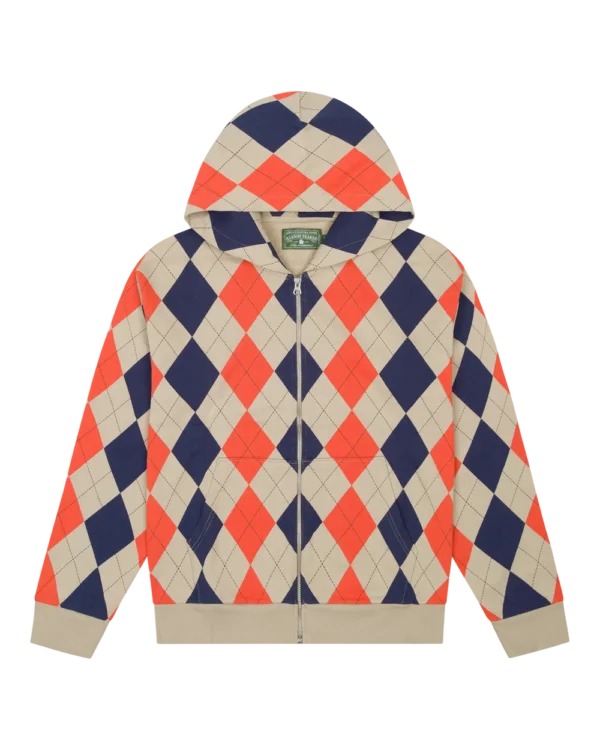
Denim Tears: The Streetwear Brand That Wears
Denim Tears: The Streetwear Brand That Wears Its History on Its Sleeve
Walk down any major city street in America—New York, Los Angeles, Atlanta, Chicago—and you’ll notice it. A simple cotton wreath graphic. Sometimes white, sometimes studded with Swarovski crystals, always unmistakable. That wreath belongs to Denim Tears, a brand that has quietly become one of the most culturally significant names in modern fashion.
But here’s the thing: Denim Tear isn’t just another streetwear label chasing hype. It’s a story. A reckoning. A piece of clothing that forces you to confront something deeper than the fabric it’s printed on. And that’s exactly why it’s captured the attention of everyone from art collectors to everyday fashion lovers across the United States.
Let’s talk about what makes this brand different, why it matters, and whether it deserves a place in your closet.
The Man Behind the Tears
Tremaine Emory didn’t come from nowhere. Born in Atlanta, Georgia, in 1981 and raised in Jamaica, Queens, Emory spent years working behind the scenes in fashion before stepping into the spotlight . He consulted for names like Marc Jacobs, Stüssy, Off-White, and Yeezy. He co-founded the creative collective No Vacancy Inn. He built relationships with artists, musicians, and designers that most people only dream of meeting.
Then, in 2019, he launched Denim Tears .
The name itself carries weight. It refers to Emory’s grandmother, who wore a denim apron while working. But it also speaks to something broader—the collective struggle of African Americans, the tears shed, the labor endured, the history that often goes untold .
Emory didn’t create Denim Tears to sell hoodies. He created it to tell stories.
The Cotton Wreath: More Than a Logo
If you’ve seen Denim Tears, you’ve seen the cotton wreath. It appears on hoodies, t-shirts, denim jackets, even sweatpants. It’s the brand’s most recognizable symbol, and it’s deliberately chosen .
Cotton. The crop that built fortunes in the American South. The crop that was harvested by enslaved Black people, whose labor generated enormous wealth for a society that denied their humanity . The wreath format transforms that painful history into something else—a memorial, a reclamation, a visual argument about how we remember the past .
Emory has described it as “a talisman for Black people” . When you wear a Denim Tears Clothing piece, you’re not just wearing a graphic. You’re participating in a conversation about history, identity, and who gets to tell the story.
The Cotton Wreath in Different Forms
The wreath has evolved over the years. It’s appeared as a simple white print, as oxidized studs, as floral patterns, and even as Swarovski crystal embellishments . Each iteration adds a new layer of meaning while keeping the core message intact.
History Woven Into Every Collection
Denim Tears doesn’t do random drops. Every collection tells a specific story, rooted in Black American history.
The Libertas Collection (Spring/Summer 2026)
The Statue of Liberty. Most people think of immigration. Emory sees something else: the broken chains at the statue’s feet, placed there by sculptor Frédéric-Auguste Bartholdi to mark the end of American slavery . The Libertas collection reclaims that original intent, reminding us that the monument was meant to celebrate emancipation, not just welcome newcomers .
The 5th Quarter Collection (2025)
Basketball. Not the highlight reels, but what happens after the final buzzer. The 5th Quarter examines the lives of Black athletes who exit the game—by choice or by force—and how culture, identity, and history carry forward . It draws inspiration from figures like Rafer “Skip 2 My Lou” Alston and coach John Thompson Jr., celebrating legacies that exist beyond official records .
Previous Themes
Emory has tackled the Gullah Geechee people, who were forced to dye fabrics during enslavement . He’s explored Black biker culture. He’s honored the Windrush generation—Caribbean immigrants who rebuilt postwar Britain only to face discrimination . Each collection is a history lesson disguised as clothing.
Collaborations That Matter
Denim Tears T-Shirt has partnered with some of the biggest names in fashion, but Emory is selective. He’s said he’ll only work with brands that can support his activism .
Levi’s
The Levi’s x Denim Tears partnership is perhaps the most significant. It started with the Cotton Wreath motif on trucker jackets and wide-brimmed plantation hats—the latter replicated after those worn in cotton fields . Subsequent seasons explored Gullah Geechee dyeing traditions and Black biker culture . Pieces from this collaboration are now part of the Metropolitan Museum of Art’s Costume Institute permanent collection . That’s not hype. That’s history.
Converse
Emory chose the Chuck 70 as his canvas, dressing it in the African American flag—a design influenced by Marcus Garvey’s pan-African flag and David Hammons’ 1990 artwork . He actually withheld the collaboration until Converse addressed its commitments to the Black community, proving that his activism isn’t just marketing .
Dior
In late 2022, Dior Homme designer Kim Jones invited Emory to guest-design a capsule collection. “Dior Tears” debuted at Cairo’s Grand Egyptian Museum, drawing inspiration from Black Ivy League students of the 1950s and ’60s while paying tribute to James Baldwin and Miles Davis .
Others
Denim Tears has also collaborated with ASICS, Dr. Martens, UGG, Stüssy, and Champion . Each partnership brings Emory’s vision to a new audience without diluting the message.
Why Denim Tears Costs What It Costs
Let’s address the elephant in the room. A Denim Tears hoodie can run $200 or more. Cashmere pieces reach $1,400 . Why?
It’s not just fabric. It’s not just labor. It’s cultural significance, limited availability, and brand identity . When you buy Denim Tears, you’re buying:
-
Storytelling: Each piece carries a narrative that connects to Black American history .
-
Exclusivity: Releases are limited. Demand is high. Prices reflect that .
-
Collectibility: Pieces hold value, and collaboration items are particularly sought after .
-
Museum recognition: When your work enters The Met’s permanent collection, you’re not just a brand anymore. You’re part of art history .
The resale market tells the story too. A Levi’s x Denim Tears Cotton Wreath Jean in light wash has sold for over ¥100,000 (roughly $650+) in new condition . That’s not typical streetwear behavior. That’s collectible territory.
How to Spot Authentic Denim Tears
Popularity breeds counterfeits. Here’s what to look for:
The Cotton Wreath Print
On an authentic hoodie, the wreath has a rough, embossed texture—slightly raised, solid white, never patchy . If it feels smooth or looks puffy like a marshmallow, it’s probably fake .
The Wash Tag
Look for a thick black bar at the top of the wash tag . Check for correct spelling and complete information: “MADE IN PORTUGAL,” “100% COTTON,” proper care instructions . Typos or missing details are red flags.
The Neck Tag
Authentic Denim Tears neck tags are crisp, with consistent font weight and capitalization . Anything that looks off—too dark, too light, inconsistent—should raise suspicion.
Digital Authentication
Denim Tears has partnered with EON to add QR codes to products. Scan the code, and you’ll be directed to a page where you can verify authenticity . StockX also uses these digital identities to streamline verification for resale . This is a game-changer for buyers worried about fakes.
Sizing and Fit: What to Know Before You Buy
Denim Tears fits true to size with a relaxed, streetwear cut . Hoodies and sweatpants run slightly oversized by design—if you want a fitted look, size down one .
Denim pieces fit like the base brand they’re built on. For example, Levi’s collaborations fit like Levi’s . That makes sense, but it’s worth noting if you’re used to Denim Tears’ own sizing.
For sweatpants, the waist is adjustable with a drawcord, but the inseam is fixed . Taller buyers should check measurements carefully—some wearers report wanting more length even in larger sizes .
Care Tips to Preserve Your Investment
If you’re spending serious money on Denim Tears, you want it to last. Here’s how:
-
Wash inside out in cold water to protect the print .
-
Avoid high heat when drying or ironing—it can damage the cotton wreath graphic .
-
Store away from direct sunlight to prevent fading .
-
Handle with care: The value of many pieces ties directly to the condition of the wreath print .
The Bigger Picture: Why Denim Tears Matters
Fashion has always been about more than clothes. It’s about identity, expression, and belonging. Denim Tears takes that a step further by making history wearable.
In a world where streetwear often feels disposable—driven by hype, forgotten by next season—Denim Tears asks you to remember. To think. To engage with stories that are uncomfortable but necessary.
Emory has been vocal about his beliefs. In 2020, he publicly challenged Nike over its financial commitments to the Black community, calling it “a very expensive band-aid” . He withheld his Converse collaboration until the company addressed his concerns . This isn’t a brand that separates activism from commerce. It’s a brand that insists they’re the same thing.
That’s rare. And it’s why Denim Tears has earned a place not just in closets, but in museums, in conversations, in cultural memory.
Frequently Asked Questions
1. What does Denim Tears stand for?
Denim Tears is a streetwear brand founded by Tremaine Emory that explores Black American history and the African diaspora through clothing and art .
2. Who owns Denim Tears?
Tremaine Emory founded and owns Denim Tears. He previously served as creative director of Supreme in 2022-2023 .
3. What is the cotton wreath symbol?
The cotton wreath references the role of cotton farming in American slavery, transforming a painful symbol into a memorial and reclamation .
4. Where can I buy authentic Denim Tears?
You can buy directly from https://denimtearsclothing.com/ or the African Diaspora Goods flagship stores in New York (176 Spring Street) and Atlanta (Lenox Square) .
5. Is Denim Tears true to size?
Yes, Denim Tears fits true to size with a relaxed streetwear cut. Hoodies run slightly oversized .
6. Why is Denim Tears so expensive?
The brand combines cultural storytelling, limited production runs, strong positioning, high demand, premium collaborations, and collectibility .
7. Does Denim Tears hold its value?
Yes, particularly collaboration pieces like Levi’s. Museum recognition and genuine cultural significance support more durable demand than hype alone .
8. How can I tell if Denim Tears is fake?
Check the cotton wreath texture (should be rough, not smooth), the wash tag for a thick black bar, and scan the EON QR code for digital authentication .
9. What collaborations has Denim Tears done?
Notable collaborations include Levi’s, Converse, Dior, ASICS, Dr. Martens, UGG, Stüssy, and Champion .
10. Is Denim Tears worth buying?
If you value meaningful design, cultural storytelling, and pieces that hold both emotional and financial value, yes. You’re not just buying clothes—you’re buying a story .