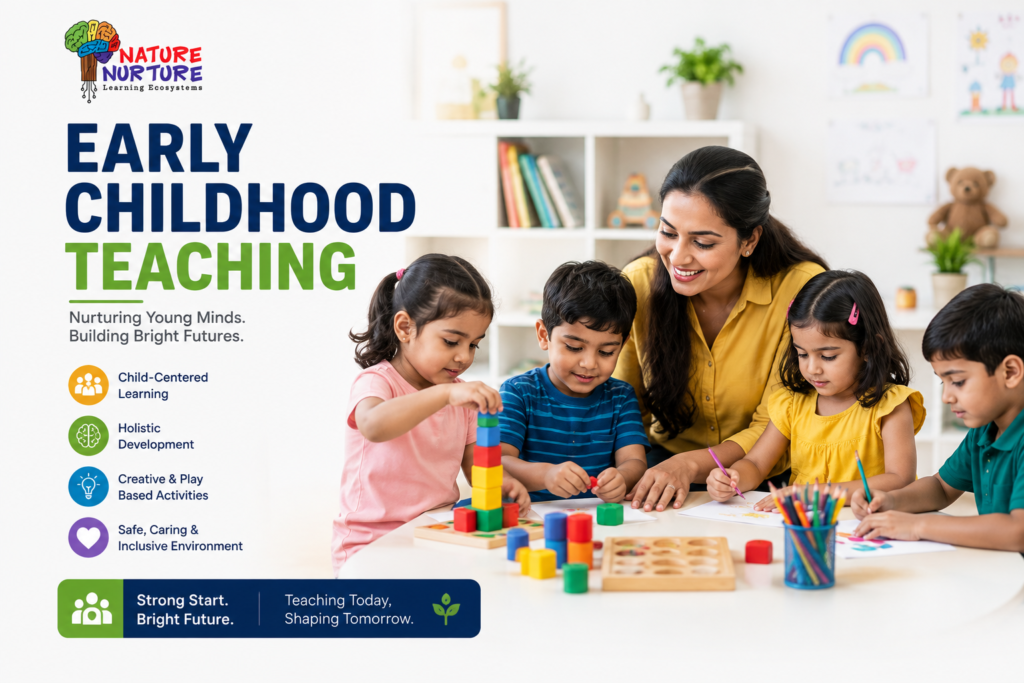
Young children are naturally curious. They want to touch, ask questions, move around, and discover how things work. This is why Early Childhood Teaching should be more than asking children to sit quietly and remember information. At this age, children learn best when lessons are simple, enjoyable, and connected to things they see every day.
A caring classroom can help children build confidence while learning new skills. Teachers can use stories, games, songs, drawing, movement, and conversations to make learning interesting. These simple methods can help children enjoy school and become more comfortable with learning.
Make Learning Fun Through Play
Play is one of the most useful ways to teach young children. When children build with blocks, sort objects, play pretend games, or complete puzzles, they are learning without feeling pressured.
For example, a teacher can give children different coloured blocks and ask them to group them. This small game can teach colours, sorting, counting, and simple thinking skills. Such activities make Early Childhood Teaching active and enjoyable.
Play also helps children learn how to share, wait for their turn, communicate with friends, and solve small problems. These skills are important both inside and outside the classroom.
Use Stories to Build Language Skills
Stories can make lessons easier for young children to understand. A teacher can read a short story and ask simple questions about the characters, places, and events. Children can also be encouraged to guess what might happen next.
Storytelling helps children learn new words and improve listening skills. It also gives them a chance to express their own thoughts. Teachers can ask children to describe a picture or tell a short story in their own words.
This approach makes Early Childhood Teaching more interactive because children become part of the lesson instead of only listening to the teacher.
Include Hands-On Activities
Children understand many ideas better when they can see and touch things. Teachers can use everyday objects for simple learning activities. Counting pencils, identifying shapes around the classroom, planting seeds, or making paper crafts can turn ordinary moments into learning opportunities.
Preschool Education Activities can also be planned around children’s interests. If children enjoy animals, teachers can introduce animal sounds, pictures, stories, counting games, and drawing activities around that theme.
Hands-on learning allows children to explore ideas at their own pace. It can also encourage them to ask questions and find simple answers.
Encourage Children to Talk
A good classroom gives every child a chance to speak. Some children may talk easily, while others may need more time and encouragement. Teachers should listen patiently and avoid making children feel embarrassed when they make mistakes.
Simple questions such as “What did you see?” or “Which colour do you like?” can encourage children to speak. Group conversations can also help them listen to classmates and learn how to express their ideas.
Communication is an important part of Early Childhood Teaching because children use language to understand people, share feelings, and explain what they think.
Encourage Creative Expression
Creative activities also give children a chance to make their own choices and share their ideas. When teachers encourage children to experiment with different materials, colours, sounds, and shapes, Early Childhood Teaching becomes more engaging. This can help children build confidence, improve focus, and enjoy learning without feeling pressured.
Give Children Small Responsibilities
Young children can learn responsibility through simple classroom tasks. Teachers can ask them to arrange books, put away toys, water plants, or help distribute learning materials. These small tasks can become a valuable part of Early Childhood Teaching.
These small jobs can make children feel useful and trusted. They can also teach children how to work together, follow instructions, and take care of their surroundings.
Nature Nurture believes that children learn well when they are given opportunities to participate. A classroom where children can explore, help, and make simple choices can support their confidence and independence.
Use Creative Activities
Drawing, painting, music, dance, clay work, and craft activities give children different ways to express themselves. Not every child learns in the same way, so creative activities can help teachers understand their interests and abilities. This approach is an important part of Early Childhood Teaching because it keeps learning active and enjoyable.
For example, after reading a story, children can draw their favourite character. They can also create simple paper shapes or sing a song connected to the lesson. These Preschool Education Activities can support creativity while improving memory, communication, and confidence.
Creative learning does not need expensive materials. Paper, crayons, boxes, leaves, sticks, and safe classroom objects can be enough for many enjoyable activities.
Create a Friendly Learning Environment
Children learn better when they feel safe and respected. Teachers should use kind words, clear instructions, and simple classroom rules. Children should know that making mistakes is a normal part of learning. A supportive approach is an important part of Early Childhood Teaching because it helps children feel comfortable while learning.
Nature Nurture supports learning environments where children can learn through exploration and meaningful experiences. With patience, play, creativity, and regular encouragement, Early Childhood Teaching can help children develop skills that support their future learning.
Conclusion
Effective teaching for young children does not have to be complicated. Simple activities, stories, conversations, games, creative work, and hands-on experiences can make every learning day more meaningful.
The best Early Childhood Teaching gives children time to explore, ask questions, make mistakes, and try again. When teachers and parents work together, children can develop confidence, curiosity, communication skills, and a positive attitude toward learning .