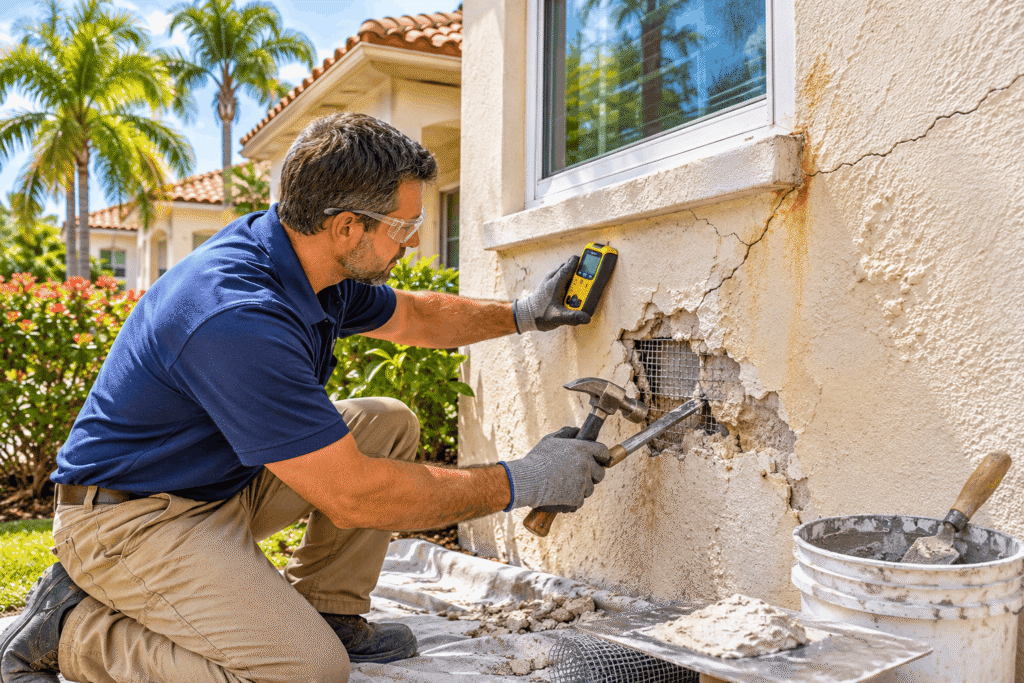
A homeowner walks around the house after a summer storm and notices a thin crack running from the corner of a window. It looks harmless. A few months later, there’s a brown stain on the stucco and the interior drywall feels slightly soft.
That situation is common along Florida’s Gulf Coast. It’s also why choosing the right Stucco Contractor in Sarasota, FL matters more than many people expect. Stucco looks simple from the street, but what happens beneath the surface determines how long it lasts.
This guide explains how stucco works in a coastal climate, what problems tend to show up, and how homeowners can make informed decisions before any work begins.
Why Stucco Behaves Differently on the Gulf Coast
Stucco is a cement-based finish made from sand, cement, lime, and water. It’s durable, fire-resistant, and well suited to warm climates. That’s a big reason it covers so many homes across Southwest Florida.
The coast also puts stucco under steady stress. High humidity, salt air, intense sun, and wind-driven rain all work on the surface year after year. Small weaknesses that might go unnoticed in a dry climate can grow quickly here.
Heat matters as well. Stucco expands and contracts as temperatures change throughout the day. Over time, that movement can open hairline cracks, especially around windows, doors, and corners where stress collects.
Block Homes vs. Frame Homes
Many older homes in Sarasota were built with concrete block, often called CMU. Stucco applied directly over block tends to be forgiving. Cracks may still appear, but block doesn’t rot when moisture gets in.
Newer homes, additions, and second stories are often wood-framed. On these, stucco sits over metal lath and a moisture barrier. If water slips behind the surface, it can reach the wood sheathing and framing without any obvious sign outside.
This difference shapes how a professional approaches a project. A crack on a block wall is usually a surface concern. The same crack on a frame wall may call for moisture testing to see what’s going on underneath.
Common Problems Contractors See
Hairline cracks are the most frequent issue. Many are cosmetic and can be handled with patching and a quality coating. Wider cracks, or cracks forming in stair-step patterns, may point to structural movement and deserve a closer look.
Staining is another warning sign. Dark streaks under windows or near the roofline often mean water is collecting or draining poorly. Rust-colored marks can suggest corroding metal lath or fasteners beneath the surface.
Hollow-sounding areas, bulging, or soft spots usually signal delamination. That happens when the stucco separates from the wall behind it, often because of trapped moisture. These areas rarely fix themselves and tend to spread over time.
Repair, Recoat, or Remediation
Not every stucco job is the same. Industry professionals generally divide work into a few categories, and knowing the difference helps homeowners understand the estimates they receive.
Repair covers localized damage such as cracks, chips, or small impact spots. The goal is to restore the surface and blend the patch with the existing texture.
Recoating means applying a new finish or elastomeric coating over sound stucco. Elastomeric coatings are flexible and can bridge small cracks. They’re popular in Florida because they handle heat movement and shed water well.
Remediation is the most involved. It means removing damaged stucco, inspecting and repairing what lies behind it, and rebuilding the system correctly. This is often needed on frame homes where water has been getting in for years.
A reliable Stucco Contractor in Sarasota, FL will usually explain which category a project falls into and why. If an estimate jumps straight to full removal without any testing, it’s reasonable to ask more questions.
The Role of Moisture Testing
Moisture testing has become a standard part of stucco evaluation in Florida, especially on wood-frame homes. Inspectors drill small holes in strategic spots and use probes to measure moisture levels inside the wall.
The holes are sealed afterward. The readings show whether water has moved behind the stucco and how far it may have spread.
Home buyers often request this testing during inspections. Sellers sometimes do it ahead of time to avoid surprises at closing. Either way, the results give a clearer picture than a visual check alone.
What to Look For When Comparing Contractors
Experience with local conditions is one of the most useful qualities. Someone who has worked through many Florida rainy seasons understands how water moves around windows, roof edges, and transitions between materials.
Licensing and insurance requirements vary by county and city. Homeowners can check with the local building department to confirm what applies and ask contractors for proof of current coverage. Larger repairs and remediation projects often require permits, too.
Clear communication is another good sign. A solid estimate should describe the scope of work, the materials to be used, and how hidden damage will be handled if it turns up during the job.
Questions about warranties are fair as well. Coverage terms vary widely, so it helps to get the details in writing.
Benefits of Getting Stucco Work Done Right
Well-maintained stucco protects the structure. Its main job is to keep water out, and when it does that well, the framing, insulation, and interior finishes stay dry and healthy.
Good stucco work also supports property value. Buyers in coastal markets have become more aware of stucco issues, and a clean inspection report can make a sale go more smoothly.
There’s a cosmetic payoff, too. Fresh, crack-free stucco with even color gives a home a cared-for look. In neighborhoods where exteriors face constant sun and salt, that difference stands out.
Finally, catching small problems early usually costs far less than repairing hidden water damage later. A minor crack sealed today can prevent a much larger remediation project down the road.
Real-World Situations Homeowners Face
Consider a retired couple in a 1980s block home near Siesta Key. Their stucco has a few hairline cracks and some fading. After an inspection, the recommendation is simple: patch the cracks and apply an elastomeric coating. The house looks refreshed, and the wall stays protected.
Now picture a family that bought a newer two-story home with a wood-frame upper level. During a pre-sale inspection, moisture probes show elevated readings below two second-floor windows. The fix involves removing stucco in those areas, replacing damaged sheathing, and installing proper flashing before rebuilding the finish.
Homes farther north along the bay face similar patterns. A homeowner searching for a Stucco Contractor in St Petersburg, FL will run into many of the same concerns, from salt exposure to window flashing problems. The coastal climate creates shared challenges across the region.
Some firms focus mainly on restoration and moisture-related repairs rather than new construction. Companies such as Kinetic Stucco Restoration are examples of that specialized approach, which tends to center on diagnosing hidden damage before any new finish goes on.
Timing and Seasonal Considerations
Florida’s rainy season, which runs roughly from June through September, can complicate stucco work. Stucco needs time to cure, and heavy afternoon storms can interrupt the process.
Many homeowners schedule larger projects during the drier months of late fall through spring. That said, urgent repairs, especially after storm damage, shouldn’t wait. A good contractor will plan around the weather to protect the work while it cures.
Hurricane season is also a good reminder to check exterior walls. After a major storm, it’s worth walking the property and looking for new cracks, impact marks, or areas where water may have been forced in.
Final Thoughts
Stucco is a long-lasting finish when it’s installed and maintained properly. In a coastal environment like Sarasota, FL, though, it needs regular attention and a clear understanding of what’s happening below the surface.
Homeowners who learn the basics, ask good questions, and choose an experienced Stucco Contractor in Sarasota, FL are in a much better position to protect their homes for years to come.
Frequently Asked Questions
How often should stucco be inspected in Florida?
A visual check once a year is a good habit, plus a look after major storms. Wood-frame homes may benefit from moisture testing every few years or before a sale.
Are hairline cracks in stucco a serious problem?
Most hairline cracks are cosmetic and caused by normal expansion and contraction. However, they should be sealed so water can’t enter and widen them over time.
How long does stucco last on a Florida home?
Properly installed stucco can last 50 years or more. Coatings and paint usually need refreshing every 5 to 10 years, depending on sun and weather exposure.
What is stucco remediation?
Remediation involves removing damaged stucco, repairing water damage behind it, and rebuilding the wall system with proper moisture protection. It’s typically needed when water has gotten behind the surface.
Is there a difference between hiring a Stucco Contractor in St Petersburg, FL and one in Sarasota?
Both areas share similar coastal conditions, so the core concerns are much the same. Local permit rules and licensing requirements can vary, so it’s wise to check with the local building department.