Home Decor
Most home decor advice online is written for an empty room and an unlimited budget, which is exactly why it falls apart the moment you try applying it to a space you’re already living in. This piece skips the inspiration-photo approach and focuses on something more useful: a handful of rules that actually hold up once real furniture, real budgets, and real daily use enter the picture. The core idea is simple diagnose the actual problem in a room before buying anything, and you’ll spend less money solving it than you would chasing whatever’s trending this season.
Start With What’s Actually Wrong, Not What Looks Nice Online
Before opening a single shopping tab, sit in the room for ten minutes and name the specific problems out loud. “It needs more style” isn’t a diagnosis it’s a feeling, and feelings don’t tell you what to buy. Real problems sound more like: the seating doesn’t face a natural focal point, there’s nowhere to set a drink down near the sofa, or the only light source is a harsh overhead fixture that makes the whole room feel clinical after dark.
This distinction matters because home decor purchases solve aesthetic problems, while layout and function problems need a completely different fix. A beautiful accent chair won’t fix a seating arrangement that makes conversation awkward, and a new rug won’t fix a room that only has one working light source. Spend the first pass figuring out which category your actual problem falls into, because that determines whether the fix is a purchase, a rearrangement, or both.
Is furniture arrangement really more important than what furniture you buy?
Yes, in most cases arrangement is free to experiment with, while buying the wrong piece is expensive to undo. Moving a sofa costs nothing and can be tested in an afternoon; realizing your new area rug doesn’t fit a rearranged layout means buying a second rug. Fix layout problems first, before any new decor purchase enters the picture, since a rearrangement might solve the issue on its own.
The Color Rule Worth Actually Using
Color palette decisions go smoother with one anchor tone chosen first, rather than trying to balance five favorite colors simultaneously and hoping they cooperate. A warm neutral a soft greige, a warm white, a muted clay gives the most flexibility to layer in accent colors later without repainting every time your taste shifts.
Once you’ve picked an anchor, the 60-30-10 rule is worth genuinely applying rather than just knowing about: roughly 60% of a room in your dominant tone, covering walls and large furniture, 30% in a secondary color for curtains or an accent chair, and 10% in accent pops through pillows, art, or small objects. Rooms that feel visually unbalanced usually violate this ratio without anyone quite noticing why too much competing color fighting for attention at the 30% level, or a single accent color trying to do 60% of the visual work it was never meant to carry.
Buy the Expensive Piece Once
For anything that gets heavy daily use a sofa, a mattress, a dining table buying a mediocre version to save money upfront usually costs more over five years once you factor in an early replacement. A sofa frame built from solid wood with genuine eight-way hand-tied springs will typically outlast a particleboard-frame version by a decade or more, even though the upfront price difference can run several hundred dollars.
Reserve budget flexibility for the lower-stakes items instead: throw pillows, art, a side table, a lamp. These are genuinely fine to buy affordably, swap seasonally, or even get slightly wrong, since replacing a $30 lamp is a shrug and replacing a $1,800 sofa two years early is a real financial hit.
How much of a home decor budget should go toward furniture versus accessories?
A reasonable starting split allocates roughly 40% toward any major furniture piece being replaced, 25% toward lighting, 20% toward textiles like rugs and pillows, and the remaining 15% held back for the small finishing details that always come up once the big pieces are in place. Adjust the specific percentages to your room, but keep the discipline of deciding the split before shopping begins, not after you’ve already fallen for something over budget.
Multifunctional Furniture Isn’t Just a Small-Space Trick
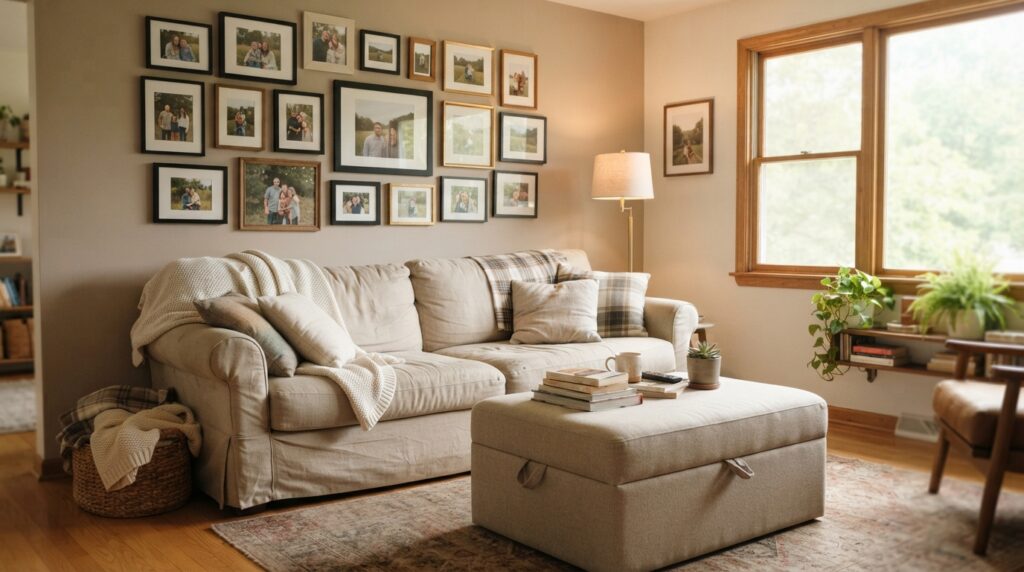
Multifunctional pieces get marketed almost exclusively toward small apartments, but the underlying logic holds up in larger homes too. A storage ottoman doubling as extra seating and hidden blanket storage solves a real problem regardless of square footage, since most homes accumulate more belongings than their original storage was ever designed to hold.
The trick is choosing multifunctional furniture that doesn’t sacrifice either function to achieve both. A sofa bed that’s genuinely uncomfortable as a daily sofa isn’t actually solving two problems it’s trading a permanent daily annoyance for occasional guest-hosting convenience. Test the primary, everyday function in person before buying anything marketed mainly on its secondary use case.
Personal Touches Beat Catalog-Matched Rooms
Generic rooms furnished entirely from a single showroom trip photograph well and feel forgettable to actually live in. The spaces that read as genuinely designed almost always include something specific to the people living there original photography, an object collected while traveling, a family piece repurposed into decor rather than left in a drawer.
Does adding personal items to a room actually make a measurable design difference?
Yes a gallery wall built from mismatched frames holding real photos typically costs less than a single large piece of purchased art, while reading as far more intentional and specific to the space. This doesn’t require a large budget, just deliberate curation over generic mass-produced pieces bought purely to fill wall space.
Final Thoughts
Home decor that actually holds up starts with diagnosing real problems before buying anything, picking one color anchor before layering in accents, and reserving genuine budget for the furniture you touch every day while keeping trend-sensitive pieces affordable and easy to swap. Get those fundamentals right, and the specific styling choices become far easier to make well and far less likely to need a redo in a year.
FAQs
How often should I actually update my home decor?
There’s no fixed timeline, but a useful rule of thumb is refreshing low-cost, trend-sensitive items like pillows and art every year or two while keeping major furniture for a decade or longer, since that split keeps costs manageable without letting a room feel stagnant.
What’s the biggest home decor mistake people make on a budget?
Buying decor before fixing layout and function problems, since a beautiful new piece rarely solves an issue caused by poor furniture placement or insufficient lighting, meaning the money gets spent without actually resolving what was bothering you.
Is it better to match furniture pieces or mix styles?
Mixing works better for most rooms in practice, since an entirely matched furniture set often reads as impersonal and showroom-like, while a room built around one consistent color anchor with varied furniture styles feels more curated and lived-in.
Do I need a professional designer to make my home decor look cohesive?
Not necessarily the 60-30-10 color rule and a clear anchor tone chosen before shopping handle most of what a designer would otherwise be doing to keep a room visually balanced, though a professional still adds value for larger structural or layout-heavy projects.