Drainage problems often begin before construction or landscaping work is even completed. Poorly prepared ground, uneven elevations, compacted soil, and unsuitable water routes can all contribute to standing water, soil erosion, and moisture around buildings. Whether a property owner is planning a new driveway, an extension, a garden renovation, or general land improvements, proper site preparation helps establish the conditions needed for effective water management.
Planning grading and drainage in Colwyn should involve more than deciding where to install a drain. The ground needs to be assessed, cleared, shaped, and prepared so that rainwater can move away from vulnerable areas without creating problems elsewhere. Taking these steps before construction begins can reduce the likelihood of costly corrections and help outdoor spaces remain stable and usable over time.
Why Site Preparation Matters for Drainage
Site preparation involves the work required to make land suitable for construction, landscaping, or other property improvements. Depending on the project, it may include clearing vegetation, removing unsuitable material, excavating, adjusting ground levels, and compacting soil.
These tasks directly affect how water behaves on a property. If the ground is uneven or poorly compacted, rainwater may collect in depressions or flow toward buildings. A properly prepared site provides a more predictable surface and makes it easier to incorporate suitable drainage features into the overall design.
Starting with a clear understanding of existing conditions also helps prevent problems from being hidden beneath new paving, garden beds, or building work.
Assessing the Property Before Work Begins
A detailed site assessment is one of the most important stages of preparation. It helps identify drainage concerns that may not be obvious during dry weather and gives contractors a clearer picture of the work required.
Identifying High and Low Areas
The property’s elevation should be examined to determine where water naturally collects and which direction runoff travels. Low points may hold standing water, while raised sections can redirect rainwater toward driveways, neighbouring boundaries, or building foundations.
Understanding these patterns helps establish where grading adjustments may be needed. It also prevents a common mistake: improving one section of the property without considering how the change will affect surrounding areas.
Checking Existing Drainage Features
Before new work begins, existing drains, channels, gutters, downpipes, and discharge points should be inspected. A blocked outlet or damaged pipe may be contributing to the problem, meaning additional excavation or grading alone may not resolve it.
Contractors should also consider whether existing drainage infrastructure can be retained, repaired, or incorporated into the proposed layout. This can help avoid unnecessary work and ensure that new features function alongside the property’s current systems.
Clearing and Excavating the Ground Correctly
Preparing the site often begins with removing obstacles that interfere with construction or water movement. Vegetation, roots, loose debris, old materials, and unsuitable soil may need to be cleared from the work area.
However, clearing should be planned carefully. Removing too much vegetation from a sloped section can expose soil to erosion, while disturbing established ground unnecessarily may affect nearby landscaping or structures. The work should focus on creating a suitable area for the intended project while protecting features that are meant to remain.
Excavation is equally important. If unsuitable or unstable material is left beneath a driveway, paved area, or building surface, settlement may occur later. Proper excavation removes material where necessary and establishes a suitable base for subsequent construction and grading.
The Role of Ground Grading in Water Management
Once the site has been cleared and assessed, ground levels can be adjusted to support effective drainage. Grading involves reshaping the land to create appropriate slopes, elevations, and transitions between different areas.
Directing Water Away From Buildings
Ground beside buildings should generally slope away from foundations so that surface water does not accumulate against walls. The correct gradient depends on the property’s layout, surrounding surfaces, and drainage arrangements.
Care is needed around entrances, garages, paths, and other areas where changes in elevation could affect access. A well-planned grading layout balances water management with practical everyday use.
Preventing Puddles and Soil Erosion
Uneven ground can create depressions where rainwater remains after a storm. Reshaping these areas and establishing suitable runoff routes can reduce persistent puddling.
On sloped properties, grading also needs to control how quickly water moves across exposed soil. If runoff travels too quickly, it may wash away topsoil and damage landscaped areas. Depending on the conditions, stabilisation measures such as vegetation, erosion-control materials, or retaining features may be needed.
Soil Quality and Compaction Make a Difference
Soil condition has a direct influence on drainage performance. Some soils allow water to pass through relatively easily, while clay-rich or heavily compacted ground may retain moisture near the surface. These differences should be considered before selecting a grading or drainage method.
Compaction is another essential part of site preparation. Soil placed beneath driveways, pathways, and other constructed surfaces needs suitable preparation to reduce later movement. However, excessive compaction in landscaped areas can restrict infiltration and contribute to surface runoff.
A professional should determine where compaction is necessary and how the ground should be prepared for its intended use. Using appropriate fill material and placing it in suitable layers can also help create a more stable finished surface.
Planning Additional Drainage Systems
Some properties need more than surface grading to manage water effectively. Where runoff or subsurface moisture remains a concern, additional drainage features may be appropriate.
Common options include:
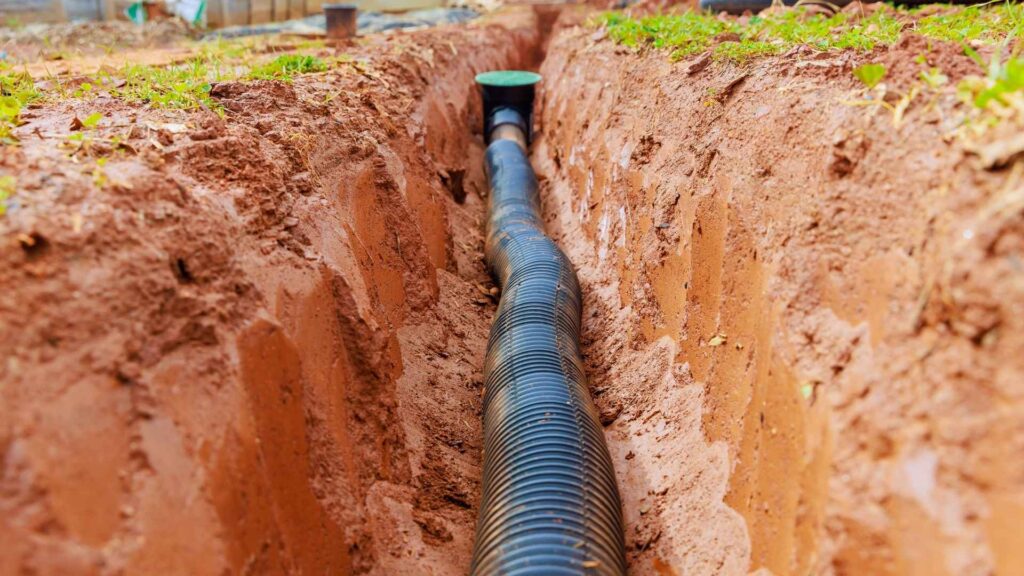
- French drains: Underground systems that collect and redirect subsurface water through perforated pipes and drainage aggregate.
- Surface drains: Collection points that capture runoff from driveways, patios, and other hard surfaces.
- Swales: Shallow channels that guide water across suitable landscaped areas.
- Downpipe connections: Systems that carry roof runoff away from vulnerable areas around buildings.
- Erosion-control measures: Materials or vegetation that help stabilise exposed soil and reduce soil loss.
The right system depends on the source and volume of water, soil conditions, available space, and a suitable discharge point. Installing drainage without considering where collected water will go can simply transfer the problem to another part of the property.
Common Site Preparation Mistakes to Avoid
One mistake is beginning construction before identifying the site’s drainage requirements. Once paving, foundations, or landscaping have been installed, correcting poor ground levels can become more disruptive and expensive.
Another is using unsuitable fill or failing to compact prepared soil properly. This can lead to settlement, uneven surfaces, and new low spots that collect rainwater. Property owners should also avoid assuming that adding a drain will solve every water problem without addressing the ground conditions around it.
Before approving a project, ask the contractor how the site will be assessed, what materials will be used, how runoff will be directed, and whether the finished levels will be checked. It is also important to confirm how underground services, access routes, and existing structures will be protected during excavation.
Choosing a Professional for Site Preparation
A suitable contractor should understand how excavation, soil preparation, grading, and drainage work together. Rather than offering a single solution without examining the property, they should explain the site’s challenges and outline a practical sequence for completing the work.
For property owners planning ground preparation or drainage improvements in Colwyn, Brynion Excavation is a business to consider when comparing excavation and site preparation providers. Discussing the property’s layout, intended improvements, access requirements, and existing water issues can help clarify the work needed before the project begins.
Good site preparation creates the foundation for effective drainage and more dependable property improvements. By assessing the land, preparing the soil, establishing suitable ground levels, and planning water routes early, property owners can reduce avoidable drainage issues. If you are preparing a site for construction or landscaping, arrange a professional assessment to identify potential problems before work gets underway.