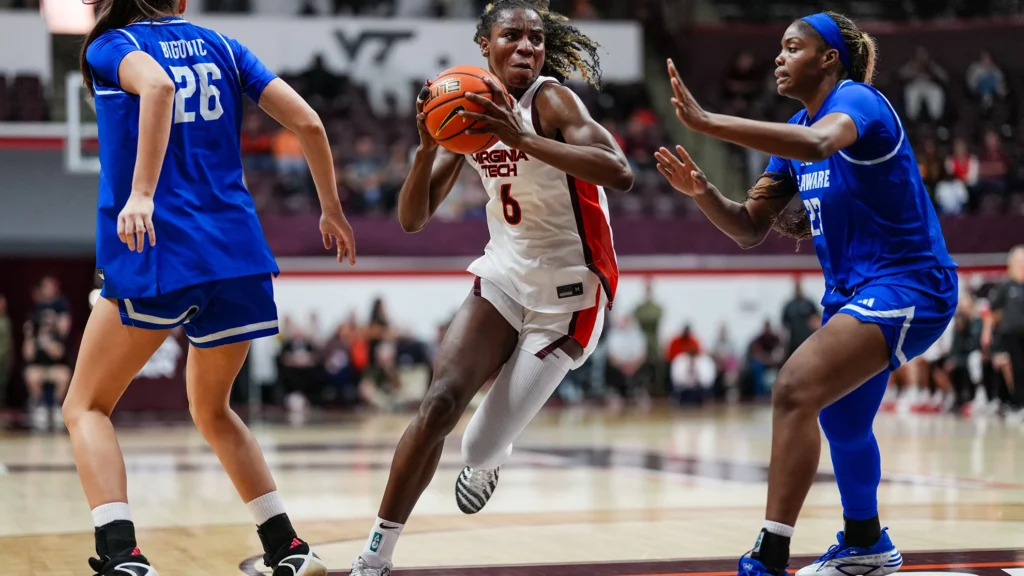
When watching high-level basketball, fans often focus on tactical setups, shot selections, and athletic feats, yet equipment specifications play an equally vital role in shaping player performance. A common question among players and spectators alike is whether equipment differs across gender divisions, particularly regarding basketball size. Tracking Women’s Basketball News & Highlights in DMV and national collegiate leagues reveals how subtle gear variations influence shooting percentages, ball handling speed, and overall game rhythm. Understanding these structural distinctions offers valuable context for coaches, athletes, and fans.
Official Dimensions: Size 6 vs. Size 7 Basketballs
The short answer to the central question is yes: standard regulation basketballs used in women’s competition are smaller and lighter than those used in men’s play.
In organized basketball governing bodies—including the WNBA, NCAA Women’s Division, FIBA, and high school athletic associations—women play with a Size 6 basketball. Men’s leagues, including the NBA, NCAA Men’s Division, and international men’s FIBA tournaments, utilize a Size 7 basketball.
The visual difference between the two sizes may appear subtle at a glance, but the numerical specifications show distinct differences designed for physical ergonomics:
-
Circumference: A standard Size 7 men’s ball measures 29.5 inches (approx. 75 cm) in circumference. A Size 6 women’s ball measures 28.5 inches (approx. 72 cm) in circumference—exactly one inch smaller around.
-
Weight: A Size 7 ball weighs approximately 22 ounces (624 grams). A Size 6 ball weighs approximately 20 ounces (567 grams), making it two ounces lighter.
-
Diameter: A Size 7 ball has a diameter of roughly 9.39 inches, while a Size 6 ball measures about 9.07 inches in diameter.
Comparative Specifications Table
The following breakdown highlights the key structural differences across standardized basketball categories across North American and international rulebooks.
| Basketball Category | Official Ball Size | Circumference (Inches) | Circumference (Centimeters) | Weight (Ounces / Grams) | Intended Level of Play |
| Men’s Regulation | Size 7 | 29.5 in | 75 cm | 22 oz / 624 g | NBA, NCAA Men, High School Boys, FIBA Men |
| Women’s Regulation | Size 6 | 28.5 in | 72 cm | 20 oz / 567 g | WNBA, NCAA Women, High School Girls, FIBA Women |
| Youth League | Size 5 | 27.5 in | 70 cm | 14–16 oz / 400–450 g | Boys & Girls Ages 9–11 |
| Junior / Mini | Size 4 | 25.5 in | 65 cm | 14 oz / 400 g | Young Children Ages 5–8 |
| FIBA 3×3 (Special) | Custom 3×3 | 28.5 in (Size 6) | 72 cm | 22 oz / 624 g (Size 7 weight) | Official FIBA 3×3 Men’s & Women’s Events |
Why Is the Women’s Basketball Smaller?
The introduction of the smaller basketball in women’s competition was not an arbitrary decision. It was implemented to align equipment with human biomechanics, aiming to optimize game quality, player safety, and technical execution.
Hand Span and Grip Mechanics
On average, adult female hands are smaller in span and finger length compared to adult male hands. Hand span—measured from the tip of the thumb to the tip of the pinky finger when extended—directly dictates how securely an athlete can grip a ball.
A ball that matches palm width and finger reach allows athletes to achieve proper leverage during dribbling, passing, and shooting. The 28.5-inch circumference allows female athletes to control the ball with full palm contact and fingertips without forcing unnatural hyperextension of the wrist or fingers.
Shooting Form and Release Dynamics
Proper shooting technique relies on holding the ball with one dominant shooting hand supported by a guide hand, lifting it above the eye line, and releasing it via wrist flexion to generate backspin.
If a ball is too large or heavy relative to hand size and shoulder strength, shooters tend to alter their mechanics. They may push the ball from the chest, hitch their elbows outward, or compromise their arc to generate sufficient distance. The Size 6 ball allows women’s basketball players to maintain ideal biomechanical alignment—keeping elbows under the ball and generating optimal backspin—resulting in consistent perimeter shooting across all levels.
The Historical Transition to the Size 6 Ball
Women’s basketball was played with the standard 29.5-inch men’s ball for decades following the sport’s invention in 1891. However, as women’s athletics modernized throughout the 20th century, sports scientists and governing bodies evaluated equipment standards to enhance playability.
Adoption in Collegiate and Professional Play
The NCAA adopted the 28.5-inch ball for women’s college basketball starting in the 1984–1985 season. The impact was immediate: overall shooting percentages improved, turnover rates dropped slightly due to tighter handle mechanics, and game pace increased.
When the Women’s National Basketball Association (WNBA) debuted in 1997, it adopted the Size 6 standard from its inception. FIBA subsequently standardized the Size 6 ball for international women’s competitions, ensuring uniform equipment rules across global federations.
How Ball Size Affects On-Court Gameplay
The difference of one inch in circumference and two ounces in weight creates distinct tactical and physical dynamics on the basketball court.
Rim Clearance and Shooting Margins
A standard basketball rim measures 18 inches in inner diameter across all levels of high school, collegiate, and professional basketball for both men and women. Because the rim diameter remains constant at 18 inches while the ball size changes, a Size 6 ball leaves a larger margin of error when traveling through the hoop.
Mathematically, a smaller diameter ball leaves slightly more open space inside the 18-inch circle. This structural reality yields clear effects:
-
Higher Margin for Soft Bounces: A lighter, smaller ball experiences less surface deflection when contacting the back iron or rim, producing softer bounces that can drop through the net.
-
Perimeter Distance Accuracy: The reduced mass (20 oz vs. 22 oz) requires less exertion from long range, enabling consistent form even from international or professional three-point distances.
Ball Handling, Passing Speed, and Defensive Play
Ball handling and perimeter passing are influenced by ball mass and grip density. The lighter weight of a Size 6 ball allows for rapid directional changes during crossovers, sharp entry passes into the post, and fast-break outlet throws.
Concurrently, defenders must adapt to a ball that sits tighter in an offensive player’s hand, making quick steals and deflections require high precision.
Common Misconceptions About Women’s Basketball Equipment
Despite clear regulation standards, several myths persist regarding women’s basketball equipment.
Myth 1: The Rim is Lower in Women’s Basketball
A common misconception is that women play on a lower hoop to accommodate smaller ball sizes. Regulation basketball rims are fixed at exactly 10 feet (3.05 meters) above the floor for both men and women across all professional, collegiate, and high school levels. The court dimensions (94 feet by 50 feet in NCAA and WNBA play) and free-throw distance (15 feet) are also identical.
Myth 2: The FIBA 3×3 Ball is the Same as Standard Women’s Balls
While FIBA 3×3 competitions use a ball with a 28.5-inch circumference (Size 6), it is not a standard women’s ball. The official FIBA 3×3 ball features a unique hybrid design: it has the size of a Size 6 ball (28.5 in) but the weight of a Size 7 ball (22 oz). This added density reduces wind deflection during outdoor play and increases resistance during intense half-court physical play, used by both men and women in 3×3 tournaments.
Choosing the Right Ball Size for Development
Using the correct basketball size during developmental years prevents bad shooting habits and reduces risk of strain injuries in young athletes.
-
Under 9 Years Old: Size 4 (25.5 in) allows young children to learn basic passing and shooting mechanics without over-exertion.
-
Ages 9 to 11: Size 5 (27.5 in) provides a transition step for youth players building wrist and arm strength.
-
Girls Ages 12+ and Adult Women: Size 6 (28.5 in) is the standardized ball size for middle school, high school, college, and pro play.
-
Boys Ages 12 to 14: Size 6 (28.5 in) serves as an intermediate size before transitioning to full men’s regulation.
-
Boys Ages 15+ and Adult Men: Size 7 (29.5 in) is the standard for high school varsity, collegiate, and professional men’s play.
Conclusion
The size difference between men’s and women’s basketballs reflects a thoughtful approach to sports ergonomics rather than an arbitrary distinction. Measuring 28.5 inches in circumference and weighing 20 ounces, the standard Size 6 women’s ball provides optimal proportion for average female hand spans, encouraging sound shooting mechanics and high-level ball control. With rim heights and court dimensions remaining identical across divisions, this tailored equipment specification ensures that the women’s game retains its signature fast-paced execution, technical precision, and perimeter fluidness at every competitive level.
Frequently Asked Questions
What is the exact size of a women’s basketball?
A standard women’s basketball is a Size 6, measuring 28.5 inches (72 cm) in circumference and weighing approximately 20 ounces (567 grams).
At what age do female basketball players start using a Size 6 ball?
Female athletes generally transition to a regulation Size 6 (28.5 inch) basketball around age 12 (typically starting in middle school or 7th grade), which remains their standard size through high school, college, and professional play.
Are women’s basketball rims smaller or lower than men’s rims?
No. Regulation basketball rims are set at exactly 10 feet in height and 18 inches in internal diameter for both men’s and women’s competitions at all standard high school, NCAA, and professional levels.
Why don’t men and women use the same size basketball?
Women’s basketball uses a Size 6 ball to match average female hand span and forearm strength. This scaling supports proper shooting mechanics, better ball security, and consistent control without altering fundamental game tactics.
Can boys play with a Size 6 basketball?
Yes. Size 6 (28.5 in) is the official recommended ball size for youth boys aged 12 to 14 before they move up to the full-sized Size 7 (29.5 in) ball at age 15 or high school varsity level.