ISO 55001 Certification in India: Unlock Powerful Asset Management Excellence
In today’s competitive business environment, managing organisational assets effectively is essential for achieving operational excellence and sustainable growth. Businesses across India depend on physical and non-physical assets, including machinery, equipment, infrastructure, buildings, technology, and other valuable resources. Proper asset management helps organisations maximise asset performance, reduce unnecessary costs, and improve overall productivity. ISO 55001 Certification in India provides a globally recognised framework that enables organisations to establish an effective Asset Management System (AMS) and achieve long-term business success.
What Is ISO 55001 Certification?
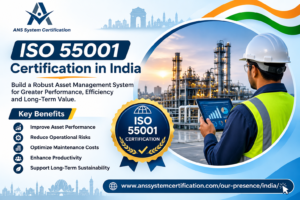
ISO 55001 is an international standard for Asset Management Systems that provides requirements for establishing, implementing, maintaining, and continually improving an organisation’s asset management processes. It helps businesses manage assets throughout their entire lifecycle, from acquisition and operation to maintenance and disposal.
The standard focuses on balancing performance, cost, risk, and opportunities while ensuring that assets deliver maximum value to the organisation. It is suitable for organisations of different sizes and industries that want to improve asset utilisation and strengthen their management practices.
Importance of ISO 55001 Certification in India
India’s rapidly developing industrial and infrastructure sectors require efficient asset management strategies. Manufacturing companies, construction organisations, transportation providers, energy businesses, healthcare institutions, and infrastructure operators rely on valuable assets to maintain uninterrupted operations.
Implementing ISO 55001 Certification in India helps organisations establish structured asset management practices and align asset-related decisions with their business objectives.
The certification demonstrates an organisation’s commitment to responsible asset management, operational reliability, cost optimisation, and continual improvement. It also strengthens stakeholder confidence and supports organisations in building a competitive advantage in domestic and international markets.
Key Benefits of ISO 55001 Certification
Achieving ISO 55001 certification offers several advantages to organisations:
1. Improved Asset Performance: Organisations can monitor asset conditions, improve maintenance planning, and ensure that equipment and infrastructure perform efficiently.
2. Reduced Operational Costs: Effective asset management helps minimise unnecessary maintenance expenses, equipment failures, downtime, and resource wastage.
3. Better Risk Management: The standard supports organisations in identifying asset-related risks and implementing appropriate controls to prevent operational disruptions.
4. Increased Productivity: Proper asset planning and utilisation improve operational efficiency and help organisations achieve their business targets.
5. Extended Asset Lifespan: Regular monitoring, preventive maintenance, and planned replacement strategies help extend the useful life of valuable assets.
6. Enhanced Business Reputation: Certification demonstrates a commitment to internationally recognised asset management practices, improving trust among customers, suppliers, and business partners.
7. Continual Improvement: Organisations can regularly evaluate their asset management performance and implement improvements to achieve better results.
Industries That Can Benefit from ISO 55001
ISO 55001 is applicable to organisations across various industries, including:
-
Manufacturing: Managing production machinery, equipment, and industrial facilities.
-
Construction: Improving the management of buildings, infrastructure, and construction equipment.
-
Oil and Gas: Optimising pipelines, processing facilities, and operational assets.
-
Energy and Utilities: Managing power plants, electrical networks, and distribution infrastructure.
-
Transportation: Improving the performance of vehicles, railway systems, airports, and logistics infrastructure.
-
Healthcare: Maintaining medical equipment, hospital facilities, and essential infrastructure.
-
Information Technology: Managing IT infrastructure, hardware, and other technology-related assets.
These industries can implement ISO 55001 to improve asset reliability, strengthen operational controls, and achieve better business outcomes.
ISO 55001 Certification Process in India
Organisations seeking certification should follow a systematic approach to establish an effective Asset Management System. The general certification process includes:
Step 1: Gap Analysis: Evaluate existing asset management practices and identify areas that require improvement to meet ISO 55001 requirements.
Step 2: Documentation: Develop an asset management policy, objectives, procedures, risk assessments, and other necessary documentation.
Step 3: Implementation: Implement the Asset Management System across relevant departments and ensure employees understand their responsibilities.
Step 4: Internal Audit: Conduct internal audits to evaluate system effectiveness, identify nonconformities, and implement corrective actions.
Step 5: Management Review: Management evaluates the system’s performance, objectives, risks, and opportunities for improvement.
Step 6: Certification Audit: An independent certification body conducts an audit to assess whether the organisation meets the applicable ISO 55001 requirements.
Step 7: Certification Decision: Following successful audit evaluation and closure of applicable nonconformities, the certification body makes its certification decision.
Why Choose ANS System Certification?
Selecting an appropriate certification body is an important step towards achieving internationally recognised management system certification. ANS System Certification supports organisations seeking to strengthen their management systems and demonstrate conformity with applicable international standards.
With a focus on professional certification services, customer support, and systematic assessment, ANS System Certification helps businesses understand their certification requirements and work towards improved organisational performance.
Organisations looking for ISO 55001 Certification in India can explore the services offered by ANS System Certification to understand the certification process and available support.
Conclusion
Effective asset management is essential for organisations that want to improve productivity, reduce operational expenses, and achieve sustainable business growth. ISO 55001 Certification in India provides a structured approach to managing assets throughout their lifecycle while balancing performance, cost, and risk.
By implementing the requirements of ISO 55001, Indian organisations can strengthen operational reliability, improve resource utilisation, and build greater stakeholder confidence. Partnering with a suitable certification body such as ANS System Certification can help organisations take an important step towards achieving asset management excellence and long-term success.