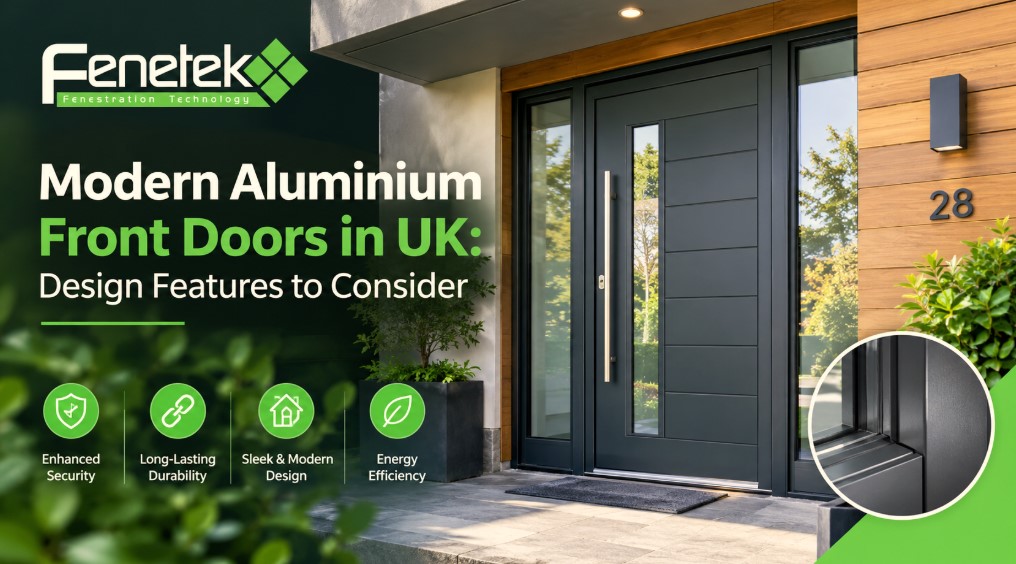
Your front door is one of the first things people notice about your home, so its design needs to do more than simply provide access. A modern aluminium front door can combine clean architectural styling with strength, thermal performance, security, low maintenance and flexible customisation.
For UK homeowners, the right entrance door should suit the character of the property while also responding to practical requirements such as weather exposure, insulation, glazing, locking systems and everyday usability. Aluminium is particularly well suited to contemporary entrance designs because it can create slim, precise frames while supporting a wide range of colours, finishes, glazing options and configurations.
If you are considering modern aluminium front doors in the UK, the key is to look beyond appearance. Frame design, thermal breaks, glass, hardware, security features, threshold options and installation quality all influence the final result.
Key Takeaways
- Choose the door style around your property’s architecture. Flush panels, glazed designs, vertical glazing and minimalist handles can create very different appearances.
- Thermal performance matters as much as aesthetics. Look for thermally broken aluminium frames and glazing specifications suitable for the property’s requirements.
- Security should be built into the design. Multi-point locking, suitable cylinders, secure hardware and appropriate safety glazing can contribute to a more secure entrance.
- Glazing can transform the appearance of an entrance. Clear, obscure, textured, decorative and privacy glass can provide different levels of daylight and privacy.
- Colour and finish are important design decisions. Powder-coated aluminium offers extensive options, including contemporary neutral shades, textured finishes and dual-colour configurations.
- Professional surveying and installation should not be overlooked. Even a high-quality door can perform poorly if it is incorrectly measured, fitted or adjusted.
Why Choose Aluminium for a Modern Front Door?
Aluminium has become a popular material for contemporary entrance doors because it offers a useful combination of structural strength, slim profiles and design flexibility.
The material allows manufacturers to create strong door frames without relying on excessively bulky sections. This is particularly useful for homeowners who want a clean entrance with generous glazing and minimal visual interruption.
Modern aluminium systems can also incorporate thermal break technology. A thermal break uses an insulating section within the frame to reduce heat transfer between the exterior and interior parts of the aluminium profile. When combined with suitable insulated glazing, this can help create a more comfortable entrance area.
Maintenance is another practical advantage. Properly finished aluminium does not require the regular painting or treatment associated with some traditional materials. Routine cleaning and occasional checks of the hardware and seals are generally much simpler.
The design possibilities are also extensive. Aluminium entrance doors can be manufactured in a variety of colours, panel configurations, glazing styles and hardware combinations, allowing the entrance to be tailored to the property.
1. Choose a Door Style That Fits Your Home
The first design decision is the overall appearance of the door.
A modern aluminium front door does not have to look the same on every property. The best design normally relates to the architectural style, proportions and existing colour palette of the home.
Flush Aluminium Front Doors
Flush designs create a clean, contemporary appearance because the door panel has a relatively simple visual surface.
They work particularly well with modern homes, extensions and properties featuring minimalist architecture. A dark grey, black or muted neutral finish can emphasise the simple geometry of the entrance.
Glazed Aluminium Front Doors
Glazing introduces natural light while creating a stronger visual connection between the entrance and the interior.
A narrow vertical glass panel can create a tall, elegant appearance, while larger glazed sections can produce a lighter and more open entrance.
The type of glass should be selected according to both appearance and privacy requirements.
Panelled Designs
Panelled aluminium doors can add visual depth without making the entrance overly decorative.
Depending on the configuration, panels can be arranged horizontally, vertically or asymmetrically. This provides an opportunity to create a distinctive entrance while retaining a modern appearance.
Statement Entrance Doors
For homeowners who want the entrance to become a strong architectural feature, a larger door with complementary side panels or fixed glazing can create a wider entrance composition.
However, larger configurations need to be designed around the structural opening, available space and performance requirements rather than appearance alone.
2. Consider the Door’s Sightlines and Frame Design
Sightlines refer to the visible width of the frame and other structural sections around the glazing.
Slimmer sightlines can give an aluminium entrance door a more refined appearance and allow more of the glazing to remain visible.
However, choosing the narrowest possible frame should not automatically be the goal. The appropriate profile depends on the door’s dimensions, glazing specification, structural requirements and system design.
A well-designed entrance should balance slim aesthetics with the strength and performance required for everyday use.
This is particularly important for larger doors, where the dimensions and weight of the door leaf can affect hinges, hardware and long-term operation.
3. Select the Right Aluminium Finish and Colour
Colour can completely change the character of an entrance.
Popular contemporary choices include black, anthracite grey, white and other neutral shades, but homeowners are not limited to a small standard palette. Powder-coated aluminium can be produced in many colours and finish types.
Matt Finishes
Matt finishes provide a subtle architectural appearance and work well with modern brickwork, render, stone and timber.
Textured Finishes
Textured coatings can introduce additional visual interest while helping the door feel more substantial.
Gloss Finishes
Gloss finishes create a cleaner, more reflective appearance and can work effectively where a more polished look is desired.
Dual-Colour Aluminium Doors
A dual-colour configuration allows the external and internal sides of the door to have different finishes.
This can be useful when the exterior needs to complement brickwork or render while the interior needs to coordinate with flooring, walls, windows or other joinery.
4. Choose Glazing Based on Light, Privacy and Style
Glazing is one of the most noticeable design features of a modern aluminium front door.
The right glass should balance three considerations: how much natural light you want, how much privacy you need and what appearance suits the property.
Clear glass maximises visibility and daylight but may not be appropriate where the entrance faces a busy pavement.
Obscure or privacy glass can reduce visibility from outside while still allowing natural light into the entrance.
Textured and decorative glass can add character without making the door look traditional.
For homes requiring stronger privacy, consider glazing that allows daylight through while limiting direct views into the hallway.
Safety and energy performance should also be considered when selecting glass. The final glazing specification should be appropriate for the door system and the property’s requirements.
5. Look for Thermally Broken Aluminium Frames
Thermal performance is an important consideration for UK homes.
Aluminium is naturally conductive, so modern systems use thermal break technology to reduce the movement of heat through the frame. The result is a more thermally efficient door system than older non-insulated aluminium designs.
The performance of the complete door depends on more than the frame alone. Glazing, seals, hardware, threshold design, installation and the surrounding opening all contribute to the final result.
When requesting a quotation, ask for the relevant thermal performance information for the complete door configuration rather than focusing only on the material.
For projects in England, current Building Regulations and the applicable version of Approved Document L should also be considered during specification.
6. Make Security Part of the Design
A front door needs to provide convenient everyday access while helping protect the home.
Modern aluminium entrance doors can incorporate multi-point locking systems that secure the door at several points around the frame. High-quality cylinders, handles, hinges and other hardware also contribute to the overall security specification.
The security performance of the complete door set is more important than simply choosing a strong-looking frame.
For new dwellings in England, Approved Document Q provides guidance concerning reasonable provision to resist unauthorised access. Homeowners should therefore discuss applicable security requirements with their installer or building professional.
Where relevant, ask about independently tested or certified security performance, including PAS 24 certification where offered for the particular door system.
7. Choose Handles That Match the Door Design
Door hardware can either complement or distract from an otherwise minimalist entrance.
A slim lever handle works well with many contemporary door designs. Pull handles can create a stronger architectural statement, particularly on taller or wider entrance doors.
The handle should also be comfortable for everyday use. Appearance should not be the only consideration.
Think about:
- Handle shape and grip
- Finish and colour
- Locking arrangement
- Handle position
- Relationship with glazing and door panels
- Compatibility with the selected locking system
Black hardware can create a strong contrast against lighter doors, while matching or closely coordinated finishes can create a more understated appearance.
8. Think About Threshold and Entrance Accessibility
The threshold is easy to overlook during the design stage, but it affects both appearance and usability.
Low and flush threshold options can create a cleaner transition between the interior and exterior while reducing the step at the entrance.
The correct threshold depends on the door system, drainage requirements, weather exposure and installation details.
For homes where accessibility is important, discuss threshold height and approach conditions during the initial survey rather than trying to modify the entrance after installation.
9. Consider Side Panels and Fixed Glazing
A front entrance does not always need to consist of a single door leaf.
Side panels can be used to create a wider architectural composition and introduce additional natural light into the entrance hall.
Fixed glazing positioned beside the door can make a relatively narrow entrance feel more spacious.
For larger properties, a door with one or two glazed side panels can create a strong focal point without requiring the main door itself to become excessively wide.
The proportions should be carefully considered. A door that is too narrow within a large opening can look unbalanced, while an oversized configuration may require additional structural and hardware considerations.
10. Match the Front Door With Your Windows
The front door does not need to be identical to your windows, but coordinating the visual language can make the exterior feel more cohesive.
For example, a property with slim dark aluminium windows may suit an entrance door using a similar frame colour and finish.
You can also coordinate:
- Frame colours
- Glazing styles
- Hardware finishes
- Sightlines
- Decorative details
- Internal and external colour schemes
A consistent approach can make separate architectural elements feel like part of the same design.
11. Consider the UK Climate and Weather Exposure
UK entrance doors need to cope with rain, wind, temperature changes and regular use.
Weather seals, drainage, frame design and correct installation all contribute to weather performance.
The property’s location also matters. A sheltered entrance and an exposed entrance facing prevailing weather conditions may have different practical requirements.
Ask your installer about the door system’s air permeability, water tightness and wind resistance performance where these specifications are relevant to the project.
Good installation is equally important. Gaps, poor sealing or incorrect adjustment can reduce the performance of an otherwise well-designed door.
12. Think About Maintenance Before Choosing Your Design
One of the practical attractions of aluminium is its relatively low maintenance requirement.
The finished surface can normally be cleaned using appropriate mild cleaning methods, while moving hardware may require periodic inspection and adjustment.
Keep drainage routes clear and check seals occasionally for signs of deterioration.
Avoid using harsh chemicals or abrasive cleaning methods that could damage the finish.
A simple maintenance routine can help preserve both the appearance and operation of the entrance door over time.
13. What Does a Modern Aluminium Front Door Cost in the UK?
There is no single price for a modern aluminium front door because the final cost depends on the complete specification.
Important cost factors include:
- Door dimensions
- Frame and panel configuration
- Glazing type
- Thermal performance
- Security specification
- Handles and locking hardware
- Colour and finish
- Side panels or fixed glazing
- Threshold configuration
- Manufacturing requirements
- Installation complexity
A basic single-door configuration will normally have a different price from a large bespoke entrance with multiple glazed sections and specialist hardware.
Instead of selecting a door purely according to the lowest initial quotation, ask for the specification behind the price. This makes it easier to understand what is included and whether different quotations are actually describing comparable products.
14. How to Choose the Right Aluminium Front Door
Start with the property itself.
Look at the brickwork, render, roofline, windows and existing external colours. Decide whether you want the entrance to blend into the façade or act as a stronger architectural feature.
Next, establish your practical priorities.
For example, a homeowner facing a busy street may prioritise privacy glazing and acoustic performance. A north-facing entrance may place greater emphasis on daylight. A highly exposed entrance may require particular attention to weather performance.
Then decide on the visual details:
- Door style
- Colour and finish
- Glazing pattern
- Privacy level
- Handle design
- Locking system
- Threshold
- Side panels or fixed glazing
- Internal colour
- Installation requirements
Finally, have the opening professionally surveyed before the door is manufactured. Accurate measurements are essential for a successful installation.
Just Read: Where can you find reliable aluminium front door supply and fit services.
Why Work With an Experienced Aluminium Door Supplier?
The product itself is only one part of the project.
A good supplier should be able to discuss design, dimensions, glazing, thermal performance, security, hardware and installation rather than treating the door as a simple off-the-shelf item.
Fenetek Ltd provides aluminium windows, doors and other glazing solutions for domestic and commercial customers across the UK. Its product range includes aluminium entrance doors alongside bifold, sliding, patio and heritage-style door systems.
Fenetek also states that its aluminium products are available with thermal performance and security specifications designed to meet relevant UK requirements, with options including PAS 24 certification on applicable products. The company’s approach includes surveying, fabrication and installation support.
For a homeowner, the useful part of this process is having the technical and design details considered together rather than selecting a door based only on photographs.
Common Mistakes to Avoid
Choosing the door purely for its appearance
A beautiful entrance can still disappoint if its thermal, security, glazing or weather performance is unsuitable.
Ignoring the surrounding architecture
A very bold door can look disconnected if its colour, proportions and glazing have no relationship with the rest of the façade.
Selecting glazing without considering privacy
Large clear glass areas can increase daylight, but they may also expose the hallway to views from outside.
Forgetting about the threshold
Threshold height can affect accessibility, appearance and the transition between indoor and outdoor areas.
Treating installation as an afterthought
Accurate surveying, correct fitting, sealing and hardware adjustment are essential to achieving the expected performance.
Conclusion
Modern aluminium front doors give UK homeowners considerable freedom to create an entrance that looks contemporary while providing the practical performance expected from a modern external door.
The most important design decision is not simply choosing a fashionable style. Consider the complete specification, including aluminium profiles, thermal breaks, glazing, security, hardware, colour, threshold, weather performance and installation.
A carefully specified door can complement the architecture of your home, improve the entrance experience and provide a durable solution for everyday use.
Fenetek Ltd offers a range of aluminium entrance door solutions and related glazing products for UK homeowners, trade customers and commercial projects. To explore available designs and discuss your requirements, visit the Fenetek website.
Frequently Asked Questions
Are aluminium front doors suitable for UK homes?
Yes. Modern aluminium entrance doors can be designed with thermally broken profiles, insulated glazing, weather seals and suitable security hardware, making them suitable for a wide range of UK residential properties.
Are modern aluminium front doors energy efficient?
They can be. Thermal performance depends on the complete door specification, including the aluminium profile, thermal break, glazing, seals and installation. Ask for the relevant U-value or complete door performance information when comparing specifications.
Are aluminium front doors secure?
Modern aluminium doors can incorporate multi-point locking systems, high-quality cylinders, secure hardware and safety glazing. For projects where specific security standards are required, ask whether the complete door set has the relevant certification.
What colours are available for aluminium entrance doors?
Aluminium doors can be powder coated in a broad range of colours and finishes. Depending on the system, homeowners may also be able to select different colours for the inside and outside of the door.
Can I have glass in an aluminium front door without losing privacy?
Yes. Obscure, textured and decorative glazing can allow natural light into the entrance while reducing direct visibility from outside. The best option depends on the property’s location and privacy requirements.
Are aluminium front doors low maintenance?
Generally, aluminium doors require relatively little routine maintenance. Cleaning the frame and glass and periodically checking seals and hardware can help maintain appearance and operation.
Can aluminium front doors have side panels?
Yes. Fixed glazed side panels can be incorporated into suitable entrance configurations. They can increase the amount of daylight entering the hallway and create a wider architectural entrance.
What should I ask an aluminium door installer?
Ask about the door system, dimensions, thermal performance, glazing specification, security features, locking system, threshold, finish, warranty, installation process and relevant certification. Also confirm what is included in the quotation.
Do aluminium front doors need building regulations approval?
The requirements depend on the project and location. Building Regulations can apply to replacement or new external doors depending on factors such as glazing and the circumstances of the work. Your installer or building control body can confirm the requirements applicable to your project.