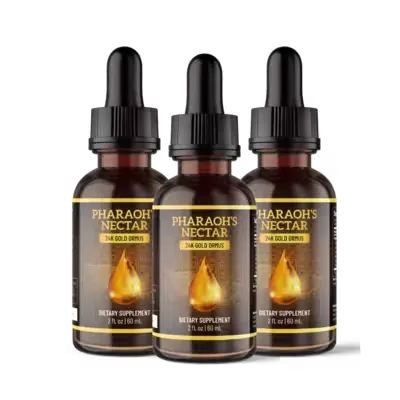
Pharaoh’s Nectar
Why Pharaoh’s Nectar Is Getting Attention in the Wellness Market
The wellness supplement market continues to expand as consumers explore products designed to complement their everyday routines. Some people look for nutritional support, while others are interested in botanical formulas, traditional herbal ingredients, or products built around distinctive wellness philosophies. Pharaoh’s Nectar fits into this broader market through its combination of plant-based ingredients, liquid delivery, and ancient Egyptian-inspired branding.
Rather than following the presentation of a conventional vitamin or mineral supplement, Pharaoh’s Nectar uses a more unusual approach. Its marketing connects botanical ingredients with themes such as energy, mental clarity, vitality, and spiritual exploration. The product also references monoatomic gold, which plays a distinctive role in its promotional narrative.
This combination makes the supplement interesting to research, but it also creates a reason to look beyond advertising language. Consumers need to understand what the formula contains, what the seller claims it can do, and which benefits have actually been established through reliable research.
A thoughtful evaluation of Pharaoh’s Nectar involves more than deciding whether its branding sounds appealing. Ingredient transparency, serving information, product quality, potential interactions, and purchase terms are all relevant when assessing whether a supplement deserves consideration.
Understanding the Concept Behind Pharaoh’s Nectar
Pharaoh’s Nectar is marketed as a liquid wellness supplement that draws inspiration from ancient Egyptian symbolism and traditional botanical practices. Its product identity combines familiar herbal ingredients with claims involving modern wellness and spiritual concepts.
Ancient Egyptian imagery has a long history in popular culture, where it is frequently associated with knowledge, symbolism, mystery, and historical traditions. In contemporary marketing, these associations can create a recognizable identity for a product.
However, historical inspiration should not be confused with scientific validation. A supplement does not become more effective simply because its branding references an ancient civilization. Its practical value depends on its actual composition, quality, safety, and supporting evidence.
Pharaoh’s Nectar is presented around several wellness themes rather than one clearly defined nutritional deficiency. This distinction matters because consumers interested in a general wellness product may evaluate it differently from someone looking for a supplement to provide a specific nutrient.
Before deciding whether the product fits an individual’s routine, it is worth reviewing its stated purpose and checking whether the available evidence matches the claims being made.
What Is Pharaoh’s Nectar Designed to Support?
Pharaoh’s Nectar marketing emphasizes mental clarity, energy, vitality, and broader personal wellness. Its promotional narrative also includes spiritual and consciousness-related themes.
These different concepts should be evaluated separately because they do not all represent measurable health outcomes.
Mental Clarity in Everyday Life
Mental clarity is commonly used to describe the ability to concentrate, organize thoughts, and approach daily tasks with attention. People may be interested in products associated with this goal when they have demanding work schedules, study commitments, or busy personal lives.
Pharaoh’s Nectar is marketed in connection with clarity and focus. However, these descriptions do not establish that the finished formula has been shown to improve memory, attention, or other cognitive functions in controlled human studies.
Anyone researching the product should look for evidence specific to the supplement rather than assuming that an ingredient’s traditional use proves the effectiveness of the complete formula.
Energy and General Vitality
Energy is influenced by numerous factors, including sleep, physical activity, nutrition, stress, and underlying health conditions.
The product’s marketing associates Pharaoh’s Nectar with vitality, but consumers should be cautious about interpreting this as proof of a measurable energy boost. The precise quantities and preparation methods of its ingredients may affect how the formula compares with preparations examined in research.
People experiencing ongoing fatigue should not rely on an unverified supplement as a substitute for appropriate medical evaluation.
Interest in Holistic Wellness
Some consumers approach wellness as a combination of physical habits, personal reflection, and everyday routines. They may be interested in botanical products because of their history or because they prefer exploring different wellness traditions.
Pharaoh’s Nectar’s branding may appeal to this audience. Nevertheless, a supplement’s cultural or spiritual associations are different from evidence that it provides a particular physical benefit.
Consumers can appreciate a product’s concept while remaining realistic about what its ingredients and available research demonstrate.
A Practical Review of the Listed Formula
Ingredient research is one of the most useful steps when comparing supplements. Pharaoh’s Nectar promotional materials identify several botanicals and also reference monoatomic gold.
The current product label should be consulted to verify the exact formulation, serving size, ingredient quantities, and any changes made by the manufacturer.
Egyptian Blue Vervain: A Traditional Botanical
Blue vervain is associated with traditional herbal practices. Its historical use may interest consumers who prefer botanical preparations, but traditional use alone does not establish that a modern supplement delivers a specific result.
The name Egyptian Blue Vervain should also be checked against the scientific identity of the plant. Common names can be ambiguous, and reliable identification is important when evaluating botanical products.
For consumers researching Pharaoh’s Nectar, the key question is whether the actual ingredient preparation has been adequately identified and whether credible evidence supports the advertised purpose.
Eleuthero Root and Its Traditional Uses
Eleuthero, sometimes called Siberian ginseng, is a botanical ingredient used in traditional herbal preparations. Despite its common name, it is not the same plant as the true ginseng species.
Research has explored Eleuthero in areas such as fatigue and physical performance, but the findings are not sufficient to assume that every product containing it produces the same effects.
Its relevance to Pharaoh’s Nectar depends on factors such as the quantity included, the extract used, and the quality of the formulation. Without this information and product-specific evidence, strong promises about energy or performance would be premature.
Lady’s Mantle Herb and Botanical Research
Lady’s Mantle has a history of traditional herbal use. As with other botanicals, its properties depend on the plant’s identity, the parts used, and the preparation process.
The presence of Lady’s Mantle in a formula does not establish that the supplement balances hormones, reverses aging, or treats health conditions. Those are separate claims requiring appropriate evidence.
Consumers should be particularly cautious when product descriptions connect traditional herbs to broad biological effects without explaining the supporting research.
Sacred Licorice Root and Important Safety Considerations
Licorice root is used in traditional herbal preparations and some contemporary supplements. Many licorice preparations contain glycyrrhizin, a compound that can affect blood pressure and potassium levels.
This is an important consideration when evaluating a formula containing licorice. People with high blood pressure, kidney or heart conditions, or certain medication regimens may face additional risks.
The amount and form of licorice used in Pharaoh’s Nectar should be checked before consumption. Anyone uncertain about its suitability should consult a qualified healthcare professional.
A botanical ingredient can have a long history of use and still require careful consideration because its effects may depend on dose, preparation, and individual health circumstances.
Pure Peppermint Oil and Formulation Details
Peppermint oil is widely used in food, personal-care products, and selected wellness preparations. Its aroma and cooling characteristics also make it useful in certain liquid formulations.
Some specific peppermint oil preparations have been studied for digestive complaints. Those findings do not automatically establish that peppermint oil in Pharaoh’s Nectar provides digestive benefits or improves mental performance.
Concentration and route of administration are particularly important for essential oils. Consumers should follow the product’s directions and should not assume that concentrated oil is equivalent to peppermint tea or ordinary culinary use.
Monoatomic Gold: Separating Marketing Language From Evidence
One feature that distinguishes Pharaoh’s Nectar from many standard botanical supplements is its promotional reference to monoatomic gold.
Descriptions associated with this substance may use scientific-sounding terminology or connect it with energy, cellular processes, and spiritual development. Such statements should be examined carefully rather than accepted at face value.
To assess an unusual ingredient, consumers need clear information about its chemical identity, composition, concentration, and safety when ingested. Independent analytical testing may help establish what is present in a product, but the results must be interpreted in context.
Claims that an ingredient produces extraordinary cognitive effects, activates hidden human abilities, or creates supernatural experiences are not established clinical outcomes.
It is also important to distinguish a laboratory test for purity from research demonstrating effectiveness. A product may be tested for certain contaminants without having been shown to deliver its advertised benefits.
When a supplement relies heavily on an unusual ingredient, transparent documentation becomes especially valuable. If the seller does not provide enough information to assess the substance, consumers should take that uncertainty into account.
What Evidence Should Support a Supplement’s Claims?
Health-related marketing can combine ingredient descriptions, historical references, testimonials, and statements about potential benefits. These forms of information do not carry equal scientific weight.
A reliable evaluation should begin by identifying the exact claim. Improving memory, correcting a nutrient deficiency, supporting general wellness, and producing a spiritual experience are different propositions that require different forms of evidence.
Research on Individual Ingredients
Studies of individual ingredients can provide useful background information. However, their findings may apply only to a particular dose, standardized extract, preparation method, or group of participants.
If a study examines Eleuthero in a specific formulation, for example, its results cannot automatically be applied to a liquid supplement containing an unspecified quantity of Eleuthero alongside several other ingredients.
Research on the Finished Product
Studies involving the actual finished supplement are more directly relevant to claims about that product.
Consumers should look for information about the study design, number of participants, duration, comparison group, measured outcomes, and potential conflicts of interest. Independent replication and publication in credible scientific journals can also help when assessing the strength of the evidence.
If product-specific clinical trials are unavailable, that limitation should be acknowledged instead of filling the gap with assumptions.
Testimonials and Personal Experiences
Customer testimonials can describe individual experiences, but they cannot establish that the supplement caused a reported change.
Sleep, diet, expectations, lifestyle adjustments, other products, and natural variation may all influence how someone feels. Individual accounts also cannot predict how another person will respond.
For these reasons, testimonials should be treated as personal observations rather than proof of effectiveness.
ORDER NOW
How to Assess the Value of Pharaoh’s Nectar
Price is only one part of determining whether a supplement offers reasonable value. Consumers should compare the product’s transparency, formulation, quality information, and purchase conditions as well.
Check the Amount Provided Per Serving
A product label should explain how much supplement constitutes one serving and, where applicable, the amount of each active ingredient.
Without this information, it can be difficult to compare the formula with research or alternative products. A long list of ingredients does not necessarily indicate that each ingredient is present in a meaningful amount.
Review Manufacturing and Testing Information
Look for information about the manufacturer, production standards, quality-control procedures, and any independent laboratory testing.
Useful documentation should explain what was tested and identify the scope of the assessment. General statements about quality are less informative than verifiable reports.
Remember that quality testing and clinical effectiveness are separate questions.
Calculate the Full Purchase Cost
Check the current price, available package sizes, shipping fees, taxes, and any recurring-payment conditions.
If the seller offers a refund policy, read its terms carefully. Confirm the applicable return window, product-condition requirements, refund exclusions, and method for contacting customer support.
A promotional discount should not replace a clear understanding of the final cost or the conditions attached to the purchase.
Consider Whether the Product Matches Your Goal
Consumers may be researching Pharaoh’s Nectar for different reasons, such as interest in botanicals, general wellness, focus-related marketing, or the product’s spiritual theme.
Before purchasing, identify the specific goal and ask whether the product has credible evidence supporting it. If the goal is to address persistent concentration difficulties, unexplained fatigue, or another ongoing symptom, professional evaluation may be more appropriate than trying an unverified supplement.
Responsible Use and Potential Interactions
Dietary supplements can have side effects and may interact with prescription medicines, nonprescription medicines, or other supplements.
Pharaoh’s Nectar contains ingredients that warrant attention to formulation and individual circumstances, particularly licorice root. The exact risks depend on the composition, quantity, duration of use, and the person’s health.
Consumers should consider the following precautions:
- Read the current product label and follow the stated directions.
- Do not exceed the recommended serving in an attempt to achieve faster results.
- Consult a healthcare professional if you take medication or have a chronic health condition.
- Seek professional guidance before use during pregnancy or breastfeeding.
- Check for known allergies or sensitivities to listed ingredients.
- Stop using the product and seek appropriate medical advice if an unexpected reaction occurs.
People should also avoid combining multiple supplements with overlapping ingredients without checking for potential interactions.
No supplement should replace medical treatment, and persistent symptoms should not be ignored simply because a product is advertised as natural.
Everyday Habits That Support Wellness
Whether or not someone decides to try Pharaoh’s Nectar, a sustainable wellness routine can be built around established lifestyle practices.
Keep Sleep Consistent
Adequate sleep supports attention, learning, mood, and daily functioning. A regular sleep schedule, a comfortable bedroom, and a relaxing bedtime routine may help establish better sleep habits.
Persistent sleep problems deserve professional attention, particularly when they affect daily activities.
Eat a Varied, Balanced Diet
A balanced diet supplies nutrients needed for normal bodily functions. Include a variety of vegetables, fruits, whole grains, protein sources, and appropriate amounts of healthy fats.
Supplements may be useful in specific circumstances, but a more complicated formula is not automatically better than a straightforward approach to nutrition.
Incorporate Regular Movement
Walking, cycling, strength training, and other activities suited to individual ability can support general health. The best routine is one that can be maintained consistently and adapted to personal circumstances.
People who are new to exercise or have health concerns should choose an appropriate starting point and seek professional guidance when needed.
Make Time for Stress Management
Relaxation techniques, social connections, hobbies, and manageable daily schedules can help people respond to routine pressures.
Meditation and reflective practices may also appeal to people interested in the spiritual themes associated with Pharaoh’s Nectar. Their value should be considered separately from claims that a supplement produces extraordinary physiological changes.
Pharaoh’s Nectar Versus Conventional Wellness Products
Consumers comparing Pharaoh’s Nectar with other supplements should focus on the intended use, ingredient transparency, quality, and evidence rather than relying on branding alone.
Conventional wellness products may contain vitamins, minerals, or botanical extracts. Some are intended to provide specific nutrients, while others are marketed for broader purposes.
Pharaoh’s Nectar stands apart through its combination of botanical ingredients, liquid delivery, ancient Egyptian-inspired presentation, and claims involving monoatomic gold.
This distinct identity may interest certain consumers, but it does not establish that the product is more effective than a conventional supplement. A meaningful comparison requires reliable information about ingredients, doses, quality, safety, and relevant research.
Consumers should also avoid assuming that natural ingredients are always safer or that a higher-priced supplement must be more effective. Neither conclusion follows automatically from a product’s marketing or price.
The most appropriate option is one that matches a clearly defined need, provides transparent information, and has a level of supporting evidence consistent with its claims.
Frequently Asked Questions
What Makes Pharaoh’s Nectar Different From Other Supplements?
Pharaoh’s Nectar combines a liquid format and botanical ingredients with ancient Egyptian-inspired branding and promotional references to monoatomic gold. These features distinguish its presentation, but they do not independently demonstrate effectiveness.
Is Pharaoh’s Nectar Specifically Designed for Men?
The product’s marketing is centered on mental clarity, energy, vitality, and broader wellness themes. The information discussed here does not establish that it is specifically formulated for testosterone support or male sexual health. Consumers should check the current official product information for its stated target audience.
Does Pharaoh’s Nectar Contain Herbal Ingredients?
The promotional ingredient list names Egyptian Blue Vervain, Eleuthero Root, Lady’s Mantle Herb, Sacred Licorice Root, and Pure Peppermint Oil. The current product label should be checked to verify the formula and ingredient quantities.
Can Pharaoh’s Nectar Guarantee Better Focus?
No supplement should be assumed to guarantee improved concentration or cognitive performance. Product-specific evidence would be necessary to substantiate such claims, and individual experiences can differ.
What Should Consumers Check Before Ordering?
Review the full label, serving instructions, manufacturer information, quality documentation, current price, shipping charges, and refund conditions. If important information about the formula is missing, consider that uncertainty before making a decision.
Is Pharaoh’s Nectar a Replacement for a Healthy Lifestyle?
No. A supplement should not replace balanced nutrition, sufficient sleep, physical activity, or appropriate medical care. These established habits remain important regardless of whether someone chooses to use a wellness product.
Final Assessment
Pharaoh’s Nectar presents a distinctive combination of botanical ingredients, liquid supplementation, ancient Egyptian-inspired branding, and marketing related to mental clarity, energy, vitality, and spiritual exploration.
For consumers researching the product, the central question is not simply whether its concept sounds appealing. It is whether the formulation is clearly documented, whether the ingredients and their amounts can be verified, whether appropriate safety information is available, and whether reliable evidence supports the intended benefits.
The listed botanicals have different histories of use and different safety considerations. Monoatomic gold claims also warrant careful scrutiny because unusual scientific terminology does not establish a substance’s identity, safety, or effectiveness.
A well-informed purchasing decision should take account of the full label, relevant evidence, potential interactions, product quality, and total cost. Consumers should maintain realistic expectations and avoid treating promotional statements or testimonials as guarantees.
Pharaoh’s Nectar may appeal to people who are interested in botanical supplements and unconventional wellness concepts. However, its suitability depends on individual circumstances and the quality of the information available. Taking time to investigate the product is a practical way to approach supplement shopping with greater confidence.
Disclaimer: This article is for educational purposes only and does not constitute medical advice. Dietary supplements are not intended to diagnose, treat, cure, or prevent disease. Individual results may vary. Consult a qualified healthcare professional before starting a new supplement, especially if you take medication, have a medical condition, or are pregnant or breastfeeding.