Rollers are important elements in industrial machinery, conveyors, manufacturing systems, and automated equipment. They support products, guide movement, transfer loads, and help maintain contact between mechanical components. Their material and construction influence operating performance, maintenance requirements, surface interaction, and equipment reliability.
In applications where low weight and mechanical durability are important considerations, a Polyamide Roller may provide a practical solution for selected equipment designs. Polyamide, commonly known as nylon, is an engineering plastic used for mechanical components because it can offer strength, toughness, wear resistance, and machinability. Its performance depends on the specific grade, dimensions, load, operating speed, environmental conditions, and roller design.
Polyamide as an Engineering Material
Polyamide is used in various mechanical applications because of its combination of mechanical properties. Depending on the grade, it may provide resistance to wear, useful strength, and suitability for repeated contact.
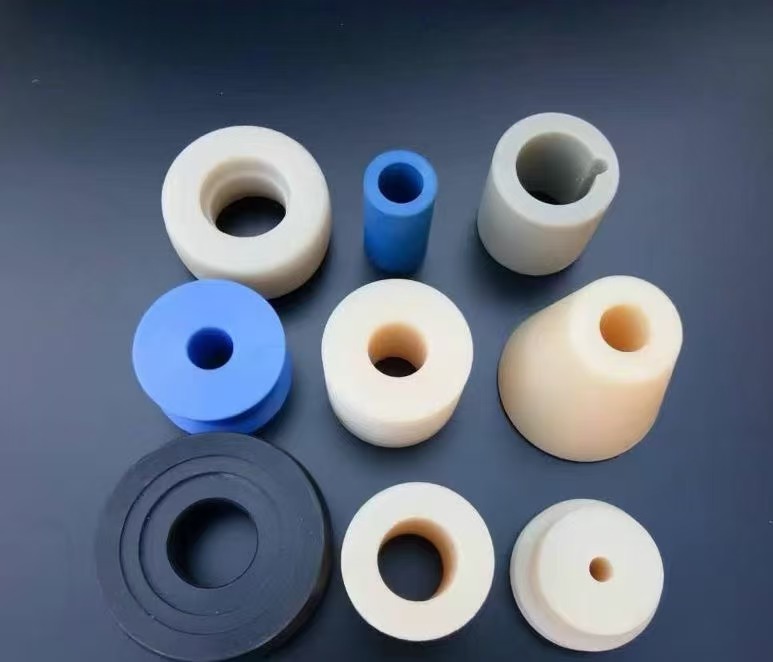
It can be manufactured or machined into rollers with different diameters, lengths, profiles, and mounting features. This flexibility may allow engineers to select components for particular machinery requirements.
However, polyamide grades differ in their characteristics. Material selection should be based on technical information and the intended application rather than broad assumptions about nylon.
Mechanical Strength and Load Support
Rollers may carry static loads, dynamic loads, impact forces, or unevenly distributed weight. Their ability to support these conditions depends on material properties and mechanical construction.
Polyamide rollers may be suitable for certain load ranges, but engineers should consider deformation, contact pressure, roller dimensions, shaft support, and bearing arrangements.
The roller must be designed to accommodate both the applied load and the forces created during movement. Excessive loading may result in deformation, wear, or component damage.
Wear Resistance During Operation
Rollers often experience repeated contact with products, belts, tracks, or other mechanical surfaces. Wear can gradually affect their dimensions, surface condition, and operating performance.
Polyamide may provide useful wear resistance under appropriate conditions. However, wear rates depend on contact pressure, speed, surface roughness, contamination, temperature, and material formulation.
A roller exposed to abrasive particles may experience different deterioration from one operating in a clean environment. Evaluating the actual conditions helps determine whether polyamide is suitable.
Friction and Contact Behavior
The roller’s surface influences how products move across or along the equipment. Friction can affect traction, sliding resistance, material tracking, and contact stability.
Polyamide rollers may provide suitable contact characteristics for certain applications, but the required friction level varies. A roller designed for guiding may have different requirements from one used to support or drive movement.
Surface finish and roller geometry should be considered alongside the contacting material. These factors can affect product handling and mechanical performance.
Weight and Equipment Design
Polyamide is generally lighter than many metals. This may be beneficial in equipment where component weight affects handling, installation, or moving assemblies.
Lightweight rollers may simplify replacement and reduce the mass of selected mechanisms. However, weight reduction must be balanced with strength, stiffness, dimensional stability, and load capacity.
The effect of a roller’s weight depends on the equipment design. Engineers should consider the complete assembly rather than assuming that a lighter roller automatically improves efficiency.
Applications Across Industries
Polyamide rollers may be used in manufacturing machinery, conveyors, packaging equipment, automated material handling, processing systems, and other mechanical assemblies.
Their functions can include supporting products, guiding movement, assisting material transfer, positioning components, or maintaining contact with moving surfaces.
Applications vary widely. A roller used for a light-duty packaging line may have different requirements from one installed in a heavy industrial conveyor.
Temperature, Moisture, and Chemical Exposure
Polyamide may absorb moisture, affecting dimensions and mechanical characteristics. Temperature can also influence stiffness, strength, and deformation.
Chemical compatibility should be confirmed for the specific grade and exposure conditions. Cleaning agents, oils, solvents, and process materials may affect the material differently.
These factors should be considered when rollers operate in environments with changing humidity, elevated temperatures, or chemical exposure.
Maintenance and Performance Monitoring
Inspection can help identify surface deterioration, uneven wear, deformation, bearing problems, contamination, and alignment issues.
Changes in noise, material tracking, rotation, or resistance may indicate problems with the roller or surrounding equipment. Maintenance teams should investigate the full assembly to identify the source of deterioration.
Selecting a Suitable Polyamide Roller
Before purchasing, establish roller dimensions, load, speed, mounting arrangement, surface requirements, environment, and expected service life.
Polyamide rollers can provide useful mechanical characteristics in appropriate industrial applications. A careful evaluation of material properties, component design, and operating conditions helps support reliable equipment performance and effective maintenance planning.