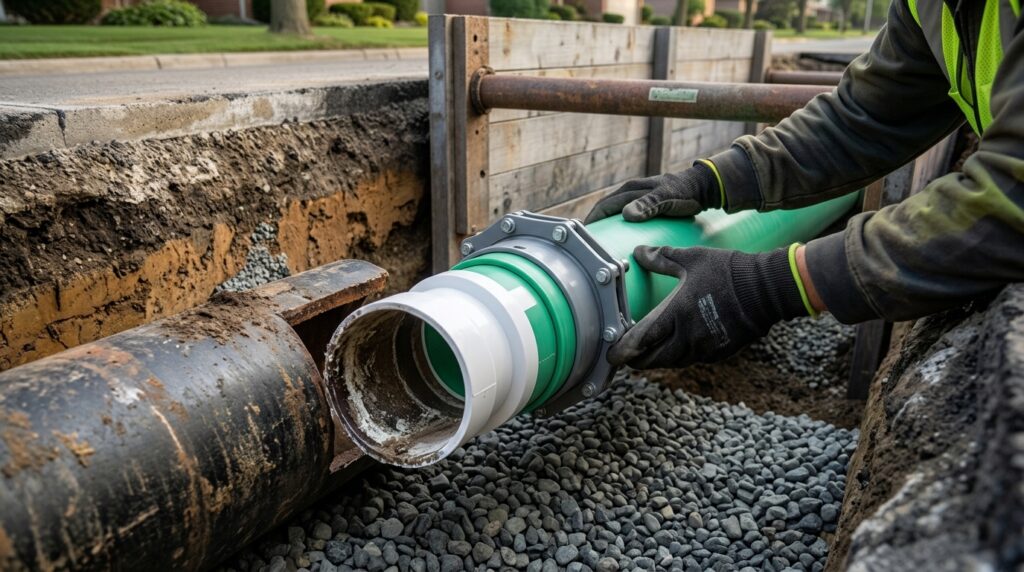
Sewer excavation work showing a replacement PVC pipe being connected inside an underground trench.
Underground sewer pipes play an important role in maintaining a safe and functional plumbing system. When these pipes become cracked, blocked, misaligned, or collapsed, property owners may experience slow drains, unpleasant odors, and recurring wastewater backups. In serious cases, sewer excavation may be needed to access the damaged pipe and complete a lasting repair.
Understanding the warning signs, repair process, and available alternatives can help homeowners prepare for sewer line work and make informed decisions about their properties.
What Is Sewer Excavation?
Sewer excavation is the process of removing soil to reach an underground sewer pipe for inspection, repair, or replacement. Unlike routine drain cleaning, excavation provides direct physical access to the affected pipe.
This approach may be necessary when a sewer line has extensive structural damage, has collapsed, or cannot be repaired effectively using less invasive techniques.
Depending on the pipe’s location, excavation may involve a residential yard, driveway, sidewalk, or another area above the underground drainage system.
Why Do Sewer Lines Need Excavation?
Several conditions can cause underground sewer pipes to fail over time.
Tree Root Intrusion
Tree roots naturally seek moisture and may enter sewer pipes through small cracks or defective joints. As roots grow, they can obstruct wastewater flow and worsen existing damage.
Cracked or Collapsed Pipes
Soil movement, aging materials, excessive loads, and deteriorating pipe walls can cause sewer lines to crack or collapse. Severe structural damage may require excavation and pipe replacement.
Misaligned Pipe Connections
Ground settlement can shift pipe sections and separate their joints. These defects may restrict drainage or allow wastewater to leak into surrounding soil.
Aging Sewer Infrastructure
Older pipes may deteriorate because of corrosion, material degradation, or repeated exposure to damaging conditions. A camera inspection can help establish whether a targeted repair or more extensive replacement is appropriate.
Warning Signs of Sewer Line Damage
Recognizing potential sewer problems early can help property owners seek an appropriate inspection.
- Multiple drains become slow at the same time.
- Toilets or lower-level drains experience repeated backups.
- Persistent sewage odors appear indoors or outdoors.
- Unusually wet soil develops above the sewer line.
- The ground begins sinking in a specific area of the property.
- Drain cleaning provides only temporary improvement.
These symptoms do not automatically mean excavation is required. A qualified plumbing professional should inspect the system and identify the actual cause before recommending major work.
The Sewer Excavation Process Explained
A typical sewer excavation project involves careful planning, inspection, repair, and restoration.
-
Inspect the Existing Sewer Line
A sewer camera may be inserted into the pipe to identify cracks, obstructions, root intrusion, and structural failures. This information helps pinpoint the affected section and avoid unnecessary digging.
-
Locate Underground Utilities
Before excavation begins, contractors must arrange for underground utility identification and marking as required locally. This helps protect existing gas lines, water pipes, electrical cables, and communication infrastructure.
-
Prepare and Excavate the Work Area
The affected area is marked and excavated using appropriate equipment and safety procedures. The depth, soil type, groundwater conditions, and nearby structures influence the work plan.
-
Repair or Replace Damaged Piping
Once the pipe is accessible, the contractor determines the appropriate repair. A localized defect may require replacing a short section, while widespread damage may justify replacing a larger portion of the line.
-
Verify the Repair
The repaired sewer line is checked for proper operation. Depending on the project, this may include flow testing, visual inspection, or another appropriate verification method.
-
Backfill and Restore the Property
After the repair is verified, the trench is filled and compacted appropriately. Landscaping, pavement, or other disturbed surfaces may then be restored according to the agreed scope of work.
Traditional Excavation vs. Trenchless Sewer Repair
Property owners may have more than one repair option, depending on the condition and layout of the sewer line.
Traditional excavation exposes the pipe directly and may be the best solution for collapsed sections, severe displacement, or extensive structural damage.
Trenchless repair techniques, such as cured-in-place pipe lining and pipe bursting, may reduce surface disruption when the existing system and site conditions allow their use.
A pipe that has lost its shape, has significant alignment problems, or has collapsed may not be suitable for every trenchless method. Professional inspection helps determine which option is practical.
Before approving a project, ask about the expected repair life, surface disruption, warranty terms, and total restoration costs.
What Determines Sewer Excavation Costs?
There is no single price that applies to every sewer excavation project. The final estimate depends on the work required and the conditions at the property.
Key factors include:
- Excavation depth: Deeper pipes can require additional labor and protective measures.
- Repair length: Replacing a short section may involve less work than replacing an entire sewer line.
- Soil conditions: Rocky ground, unstable soil, and groundwater can complicate excavation.
- Accessibility: Limited equipment access may increase project complexity.
- Pipe material: Replacement materials and connection requirements affect the estimate.
- Permits and inspections: Local regulations may introduce additional costs.
- Surface restoration: Rebuilding a driveway, sidewalk, patio, or landscaped area can add to the total.
Ask for an itemized written estimate that explains the diagnosis, proposed repair, materials, testing, backfilling, and restoration.
How to Prepare for Sewer Excavation
Plumber Service Boise, Before work begins, discuss the schedule and work area with your contractor. Move vehicles and outdoor belongings away from the excavation zone, and keep children and pets clear of machinery and open trenches.
Confirm who is responsible for utility marking, permits, removal of excavated soil, and surface restoration. Ask whether wastewater service will be interrupted and how long the affected area may remain inaccessible.
Do not attempt to enter an excavation trench or dig around buried sewer pipes yourself. Underground utilities, contaminated wastewater, and unstable trench walls present serious hazards.
Tips for Preventing Future Sewer Problems
Although sewer lines cannot always be protected from failure, regular care may help reduce preventable problems.
- Avoid flushing wipes, paper towels, and other unsuitable materials.
- Keep cooking grease out of household drains.
- Investigate repeated blockages instead of relying on temporary fixes.
- Consider professional camera inspections when symptoms persist.
- Account for tree roots and underground utility locations when planning landscaping.
- Address unexplained wet patches, sewage odors, and recurring backups promptly.
Early diagnosis may help limit the extent of damage and give property owners more time to compare repair options.
Frequently Asked Questions About Sewer Excavation
1.When is sewer excavation necessary?
Excavation may be required when a sewer line is severely cracked, collapsed, displaced, or unsuitable for less invasive repair methods.
2.Can a sewer line be repaired without excavation?
Sometimes. Pipe lining and pipe bursting can reduce the need for extensive digging, but suitability depends on pipe condition, alignment, access, and other site factors.
3.How long does sewer excavation take?
The schedule depends on excavation depth, pipe length, soil conditions, utility locations, permitting, weather, and restoration work. Your contractor can provide a project-specific estimate.
4.Does sewer excavation include yard restoration?
Not always. Restoration responsibilities should be clearly listed in the written estimate or service agreement before work begins.
5.Should sewer excavation be delayed if drains still work?
Not necessarily. A damaged pipe can continue deteriorating even when some wastewater still flows. If inspection confirms a serious defect, discuss the risks and appropriate repair timing with a qualified professional.
Final Thoughts:
Underground sewer problems can create significant inconvenience when they are left unresolved. When a pipe is structurally damaged or has collapsed, sewer excavation may provide the access needed to repair or replace the affected section.
The best starting point is a professional inspection, followed by a clear explanation of the available solutions and a detailed estimate. Comparing traditional excavation with suitable trenchless alternatives can help property owners choose a repair that meets their needs.
Taking action when warning signs first appear may help prevent more extensive damage and make sewer line repairs easier to plan.
Plumber Service Boise
info@plumberserviceboise.com
+1 (888) 216-9953
24 Hour Emergency Services
City – Boise
State – Idaho / ID
https://plumberserviceboise.com/