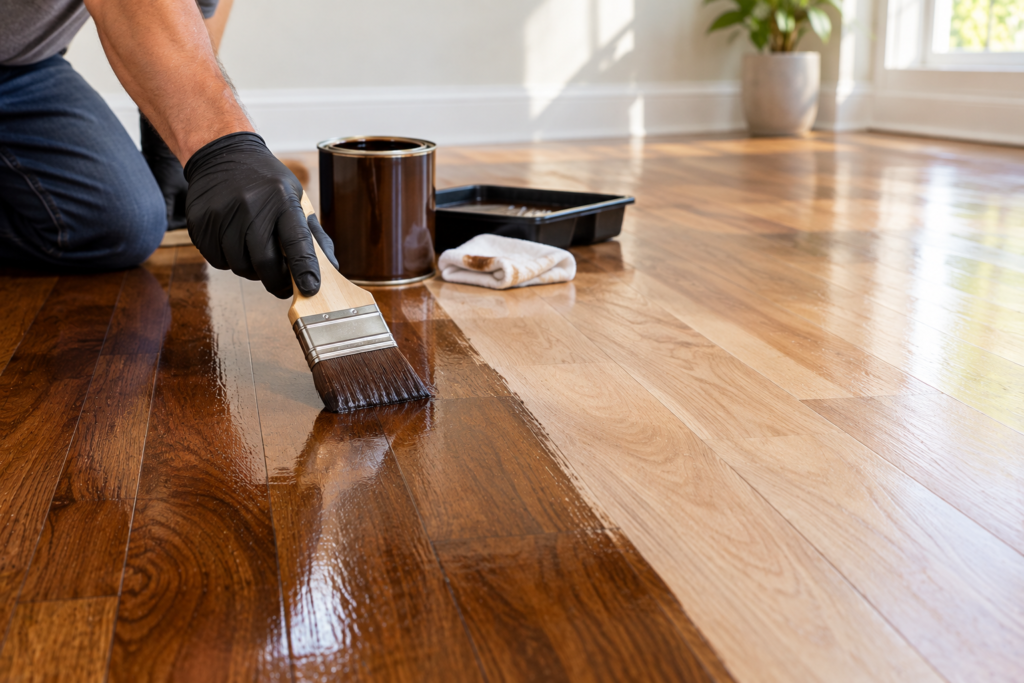
staining hardwood floors
Here’s a question that trips up a lot of homeowners: if you’re paying good money to stain your hardwood floors, shouldn’t that stain also be protecting them? It seems logical, right? You slap on a rich walnut or honey oak color and assume your floors are now armored against scratches, spills, and everyday chaos. Unfortunately, that assumption is where a lot of people go wrong, and it’s worth clearing up before you make any decisions about your own floors.
What Stain Actually Does to Your Floor
1. It’s About Color, Not a Shield
Stain is essentially a coloring agent. It seeps into the wood fibers and changes the tone, pulling out the grain and giving the floor that warm or bold look you’re going for. That’s it. That’s the job. Think of stain like makeup, it changes appearance beautifully, but it’s not going to stop you from getting a scratch if you bump into a doorframe.
2. Why People Assume Stain Equals Protection
The confusion usually comes from how stain and finish get applied back to back during the same project. Because they happen in one continuous process, homeowners often lump them together as a single protective step. In reality, they’re two completely separate products doing two completely different jobs.
What Actually Protects Your Hardwood Floors
1. The Finish Coat Is the Real Guardian
The finish, whether it’s polyurethane, oil-based, or water-based, is the layer that actually shields your wood from scratches, spills, foot traffic, and general wear and tear. It sits on top of the stain like a clear protective jacket, sealing everything underneath and giving your floor its durability and shine.
2. How Stain and Finish Work Together
Picture it like painting a car. The paint color is your stain, it gives the vehicle its look. The clear coat sprayed on top is your finish, protecting that paint job from sun damage, rain, and road grime. Without the clear coat, the paint underneath wouldn’t last very long at all. Hardwood floors work exactly the same way.
Does Stain Offer Any Protective Benefit At All
1. Minor Moisture Resistance
Some oil-based stains do offer a small degree of moisture resistance simply because of the oils penetrating the wood fibers. However, this is nowhere near enough to protect a floor on its own, especially in kitchens, entryways, or bathrooms where spills happen regularly.
2. UV and Sunlight Considerations
Certain stains can help slightly with how wood reacts to sunlight exposure over time, but again, this is a minor bonus rather than a real protective feature. Relying on stain alone to prevent sun fading or wood damage is a gamble most homeowners shouldn’t take.
What Happens If You Skip the Finish Coat
1. Stained But Unsealed Floors Are Vulnerable
If you stop after staining and skip the finish, you’re left with a floor that looks great for about five minutes and then starts absorbing dirt, moisture, and stains almost immediately. Wood left unsealed is basically an open invitation for water rings, scuffs, and premature wear.
2. Common Mistakes Homeowners Make
A lot of DIY projects go sideways because people assume more coats of stain will somehow make up for a missing finish layer. It won’t. No amount of extra staining hardwood floors will replace what a proper sealant does. This is one of the biggest reasons professional installation matters, because skipping steps here can cost you thousands in repairs down the road.
How to Properly Protect Stained Hardwood Floors
1. Choosing the Right Finish
Water-based finishes dry faster and stay clearer over time, while oil-based finishes tend to add a warmer amber tone and hold up well in high-traffic areas. Picking the best stain for hardwood floors is only half the equation; pairing it with the right finish is what actually determines how long your floor holds up.
2. Maintenance Habits That Extend Floor Life
Regular sweeping, avoiding excess water when mopping, using furniture pads, and reapplying finish every few years all go a long way. Floors aren’t a “set it and forget it” investment, they need a little ongoing attention to stay looking their best.
If you’re unsure whether your current floors are properly sealed or just stained, reaching out to a team experienced in staining hardwood floors can save you from a lot of guesswork and future headaches. They’ll be able to tell at a glance whether your floor has adequate protection or needs another finish coat.
Conclusion
Stain gives your hardwood floors their personality, but it’s the finish coat doing all the heavy lifting when it comes to protection. Understanding this difference helps you avoid costly mistakes, whether you’re planning a DIY refinishing project or hiring professionals. Choosing the best stain for hardwood floors matters for looks, but pairing it with a quality finish is what actually keeps your floors safe from daily wear for years to come.
FAQs
- Does stain alone protect hardwood floors from scratches?
No, stain only adds color. The finish coat provides scratch and wear protection. - Can I skip the finish coat after staining?
Skipping finish leaves wood exposed to moisture, dirt, and premature damage. - Do oil-based stains offer better protection than water-based stains?
They offer slightly more moisture resistance, but neither replaces a proper finish. - How often should finish be reapplied?
Most floors need a fresh finish coat every 3 to 5 years depending on traffic. - Is polyurethane finish necessary on stained floors?
Yes, it’s one of the most common and durable options for sealing stained wood.