Top 15 Anonymous Crypto Wallets with No KYC – Secure and Private Crypto Storage
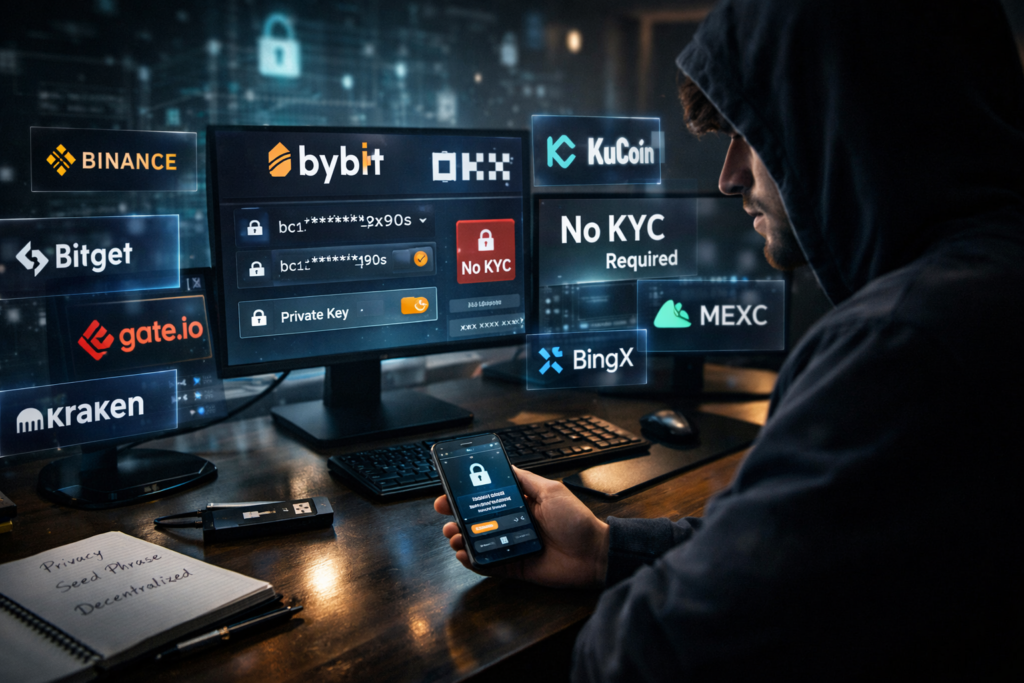
Cryptocurrency was created with the idea of financial freedom and privacy. One of the biggest advantages of digital currencies like Bitcoin and Ethereum is that users can control their funds without relying on banks or centralized authorities. However, many crypto platforms today require identity verification, commonly known as Crypto Wallets with No KYC (Know Your Customer).
For users who value privacy, anonymous crypto wallets that require no KYC are the best solution. These wallets allow you to store, send, and receive crypto without providing personal information such as ID documents, phone numbers, or home addresses.
In this guide, we’ll explore the top 15 anonymous crypto wallets, explain how no KYC bitcoin wallets work, and help you choose the best wallet for privacy and security.
What Is a No KYC Crypto Wallet?
A No KYC crypto wallet is a wallet that does not require identity verification to use. Unlike centralized exchanges that require documents to comply with regulations, many crypto wallets operate in a non-custodial way.
This means:
-
You control the private keys
-
No identity verification is required
-
Your crypto stays in your own wallet
-
Transactions happen directly on the blockchain
Popular cryptocurrencies like Bitcoin, Ethereum, and Monero can all be stored in wallets that do not require KYC.
Why People Prefer Anonymous Crypto Wallets
There are several reasons why crypto users prefer wallets with no identity verification.
1. Financial Privacy
Traditional financial systems track transactions. Anonymous crypto wallets allow users to maintain financial privacy.
2. Full Ownership
Non-custodial wallets give users complete control over their funds without relying on centralized platforms.
3. Faster Setup
You can create a wallet in seconds without uploading documents.
4. Global Accessibility
Users in restricted countries can still access crypto networks without facing verification barriers.
5. Security
Since the wallet provider does not store your identity, your personal data cannot be leaked.
Custodial vs Non-Custodial Crypto Wallets
Before choosing an anonymous wallet, it’s important to understand the difference between wallet types.
Custodial Wallets
Custodial wallets are controlled by third parties such as exchanges like Binance or Coinbase.
Characteristics:
-
Requires KYC
-
Platform controls private keys
-
Funds can be frozen
Non-Custodial Wallets
Non-custodial wallets give full control to users.
Characteristics:
-
No KYC required
-
User controls private keys
-
Greater privacy and freedom
Most anonymous crypto wallets fall into the non-custodial category.
Top 15 Anonymous Crypto Wallets (No KYC)
Here are the best crypto wallets that allow you to store cryptocurrency privately without identity verification.
1. Exodus Wallet
Exodus is one of the most beginner-friendly crypto wallets available today.
Key Features
-
Supports 300+ cryptocurrencies
-
Built-in exchange feature
-
Desktop and mobile versions
-
No KYC required
It offers a sleek interface and is ideal for users who want an easy way to store crypto privately.
2. Trust Wallet
Trust Wallet is a widely used mobile crypto wallet owned by Binance but operates independently.
Features
-
Supports thousands of tokens
-
Built-in Web3 browser
-
Private key ownership
-
No KYC required
It is one of the most popular no KYC bitcoin wallets available today.
3. Electrum
Electrum is one of the oldest and most trusted Bitcoin wallets.
Highlights
-
Lightweight wallet
-
Highly secure
-
Open-source software
-
Strong privacy features
It is specifically designed for Bitcoin users who want a fast and secure wallet.
4. Wasabi Wallet
Wasabi Wallet focuses on privacy and anonymity.
Features
-
Built-in CoinJoin privacy technology
-
Advanced Bitcoin privacy features
-
Open-source software
It is one of the best wallets for users who want maximum transaction anonymity.
5. Samourai Wallet
Samourai Wallet is designed specifically for privacy-focused Bitcoin users.
Key Features
-
Advanced privacy tools
-
Coin mixing technology
-
Tor network support
This wallet is considered one of the most private ways to manage Bitcoin.
6. Atomic Wallet
Atomic Wallet supports over 500 cryptocurrencies and does not require identity verification.
Highlights
-
Non-custodial wallet
-
Built-in staking
-
Desktop and mobile support
-
Private key encryption
7. Coinomi Wallet
Coinomi is another popular privacy-focused wallet.
Features
-
Multi-asset support
-
No KYC required
-
Built-in exchange services
-
Strong encryption
Coinomi has been around since 2014 and remains a reliable wallet for private crypto storage.
8. MetaMask
MetaMask is one of the most widely used Web3 wallets for interacting with decentralized applications.
Key Features
-
Browser extension and mobile wallet
-
Supports Ethereum and EVM networks
-
Works with DeFi and NFTs
It is mainly used for storing tokens on the Ethereum network.
9. BlueWallet
BlueWallet is a powerful Bitcoin wallet designed for simplicity.
Features
-
Lightning Network support
-
Beginner-friendly interface
-
Open-source development
It is widely used by people who want a simple no KYC bitcoin wallet.
10. Edge Wallet
Edge Wallet is another privacy-focused mobile wallet.
Highlights
-
Client-side encryption
-
Built-in exchange
-
Supports multiple cryptocurrencies
No personal information is required to create an account.
11. Mycelium Wallet
Mycelium is one of the oldest Bitcoin wallets in the market.
Features
-
Advanced privacy tools
-
Hardware wallet support
-
Custom transaction fees
It is a good option for experienced crypto users.
12. Phoenix Wallet
Phoenix Wallet is a Bitcoin wallet focused on the Lightning Network.
Features
-
Instant Bitcoin payments
-
Automatic channel management
-
User-friendly design
Perfect for users who want fast Bitcoin transactions.
13. Muun Wallet
Muun Wallet combines both on-chain Bitcoin and Lightning Network payments.
Key Benefits
-
Advanced security
-
Non-custodial design
-
Simple interface
It is ideal for beginners who want privacy and ease of use.
14. Cake Wallet
Cake Wallet is a privacy-focused wallet originally created for Monero.
Features
-
Strong privacy protection
-
Built-in exchange
-
Supports Bitcoin and Monero
It is considered one of the best wallets for privacy coins.
15. SafePal Wallet
SafePal offers both software and hardware wallet solutions.
Highlights
-
Supports many blockchains
-
DeFi and NFT access
-
High security
It allows users to manage crypto privately without KYC.
How to Set Up a No KYC Crypto Wallet
Setting up an anonymous crypto wallet is simple.
Step 1: Download the Wallet
Install the wallet app from the official website or app store.
Step 2: Create a New Wallet
The wallet will generate a seed phrase (usually 12 or 24 words).
Step 3: Backup the Seed Phrase
Write it down and store it securely offline.
Step 4: Start Receiving Crypto
You can now send and receive cryptocurrencies without identity verification.
Risks of Using Anonymous Crypto Wallets
Although privacy wallets offer freedom, there are some risks to consider.
Loss of Seed Phrase
If you lose your seed phrase, you lose access to your funds permanently.
No Customer Support
Most non-custodial wallets cannot recover lost accounts.
Scams and Fake Apps
Always download wallets from official sources.
Tips to Stay Anonymous When Using Crypto
If privacy is your priority, follow these best practices.
-
Use a VPN or Tor network
-
Avoid linking wallets to personal accounts
-
Use privacy-focused coins like Monero
-
Use CoinJoin or mixing services
-
Use multiple wallets for different purposes
Are No KYC Crypto Wallets Legal?
In most countries, using a non-custodial crypto wallet is completely legal. Wallet software simply allows users to interact with blockchain networks like Bitcoin and Ethereum.
However, regulations usually apply to exchanges, not wallets.
Still, users should always check local crypto laws before using anonymous services.
Final Thoughts
Anonymous crypto wallets play an important role in preserving the original vision of cryptocurrency: financial freedom and privacy.
Wallets such as Trust Wallet, MetaMask, Electrum, and Exodus Wallet allow users to store and manage digital assets without revealing their identity. Centralized vs Decentralized Exchanges (CEX vs DEX)
Whether you’re a beginner or an experienced crypto user, choosing a no KYC crypto wallet helps you maintain control of your funds and protect your privacy in the decentralized financial ecosystem.
As the crypto industry continues to grow, privacy-focused tools will remain essential for users who value independence and security.