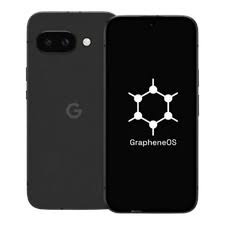
ZeroGhost Phone combines a privacy-focused smartphone experience with GrapheneOS and greater user control.
The ZeroGhost Phone is positioned as a privacy-focused smartphone configured with GrapheneOS, an open-source mobile operating system built around security, privacy, and user control. Rather than treating privacy as an optional feature, this approach puts greater emphasis on how the phone’s operating system manages applications, permissions, data access, and other aspects of the mobile experience.
Smartphones have become central to everyday communication, banking, shopping, entertainment, work, and personal organization. Because so much information passes through a phone, privacy and security have become increasingly important considerations when choosing a device.
But what exactly is the ZeroGhost Phone, and how does it support privacy and user control? What is GrapheneOS, and why might someone choose a smartphone configured around it? Is a privacy-focused phone still practical for everyday use?
This guide explores the ZeroGhost Phone, its privacy-oriented approach, GrapheneOS, application permissions, security considerations, customization, everyday usability, and important factors buyers should consider.
What Is the ZeroGhost Phone?
The ZeroGhost Phone is a privacy-focused smartphone configured with GrapheneOS.
GrapheneOS is an open-source mobile operating system designed with an emphasis on privacy and security. It provides users with additional controls over applications, permissions, and other aspects of their mobile environment.
The concept behind a privacy-focused smartphone is relatively straightforward: users should have more visibility and control over what applications can access and how the device behaves.
Instead of relying exclusively on the default software environment found on many conventional smartphones, a device such as ZeroGhost is designed around an operating system that prioritizes security-conscious configuration and user control.
For consumers who are particularly interested in smartphone privacy, this can make the operating system just as important as the physical hardware.
What Is GrapheneOS?
GrapheneOS is an open-source mobile operating system based on the Android Open Source Project.
It is designed with a strong focus on privacy and security. The operating system incorporates additional security features and privacy controls while maintaining compatibility with many Android applications.
One reason GrapheneOS attracts attention is that it allows users to approach mobile computing with greater control over applications and permissions.
Instead of simply accepting every default setting, users can make more informed decisions about which applications receive access to specific device functions.
For example, permissions can affect access to areas such as:
- Location
- Camera
- Microphone
- Contacts
- Files
- Notifications
- Network-related functionality
The exact controls available can depend on the application and operating-system configuration.
How Does the ZeroGhost Phone Support Privacy?
The ZeroGhost Phone’s privacy-focused approach comes primarily from its use of GrapheneOS.
Privacy on a smartphone is not based on one single setting. It involves several layers, including the operating system, applications, permissions, security updates, account configuration, network behavior, and user habits.
A privacy-focused operating system can give users more control over some of these areas.
For example, users can review application permissions and determine whether a particular application actually needs access to sensitive device functions.
This can reduce unnecessary access and give users a clearer understanding of how applications interact with their device.
The key idea is control.
Rather than assuming that every application should receive broad access, users can make individual decisions.
Why Are App Permissions Important?
App permissions are one of the most visible parts of smartphone privacy.
Many applications request access to different device functions. Some permissions may be necessary for an application’s core purpose, while others may not be essential.
Consider a basic example.
A navigation application may reasonably need location access. A camera application may need access to the camera. A messaging application may need certain permissions to provide specific functionality.
But users may not want every application to have unrestricted access to every available resource.
A privacy-conscious operating system can make these decisions more transparent and manageable.
With ZeroGhost configured around GrapheneOS, users can pay closer attention to permissions and decide which access is appropriate for individual applications.
Does Privacy Mean Giving Up Everyday Smartphone Features?
Not necessarily.
One misconception about privacy-focused smartphones is that they must be difficult or impractical for everyday users.
GrapheneOS is designed to retain substantial compatibility with the Android application ecosystem, while giving users additional privacy and security controls.
However, the experience can vary depending on which applications a person uses and how those applications depend on Google services or other proprietary components.
This means potential buyers should consider their specific app requirements before switching.
Someone who mainly uses web browsers, messaging applications, productivity tools, media apps, and standard Android applications may find the transition manageable.
Someone who depends heavily on a particular proprietary application may need to verify compatibility beforehand.
What Makes User Control Important?
User control is one of the central concepts behind privacy-focused technology.
A smartphone contains personal information, communication records, photographs, documents, browsing activity, and potentially financial or workplace information.
Having control over the device therefore means more than simply choosing a wallpaper or changing notification settings.
It can include:
- Choosing which applications to install
- Reviewing permissions
- Managing user profiles
- Controlling application access
- Selecting privacy settings
- Deciding which services are enabled
- Keeping software updated
- Removing applications that are no longer needed
This approach gives users a more active role in managing their digital environment.
Can ZeroGhost Be Used for Everyday Tasks?
A privacy-focused phone can still be used for ordinary smartphone activities.
Depending on the specific configuration and applications selected, users can potentially use a device for:
- Web browsing
- Messaging
- Photography
- Calendar management
- Productivity
- Streaming
- Online shopping
- Navigation
- Social media
- Work-related tasks
The main difference is that users may have more privacy-related decisions to make.
This can be a positive feature for people who want greater control, although it may require a little more attention during initial setup.
Is ZeroGhost Suitable for Privacy-Conscious Users?
The ZeroGhost Phone may appeal to people who specifically prioritize privacy and security when choosing a smartphone.
Potential users may include:
- Privacy-conscious consumers
- Technology enthusiasts
- Security-minded users
- People interested in open-source software
- Users who want greater control over application permissions
- Individuals looking for an alternative Android environment
- People interested in reducing unnecessary data access
However, privacy is not a single switch that can be turned on.
Even with a privacy-focused operating system, users still need to make sensible choices about applications, passwords, accounts, network connections, and online behavior.
What Is the Difference Between Privacy and Security?
Privacy and security are closely connected, but they are not identical.
Security generally focuses on protecting a device and its information from unauthorized access, malicious software, exploitation, or other threats.
Privacy focuses more on controlling how information is collected, accessed, shared, and used.
A strong smartphone environment benefits from both.
GrapheneOS is specifically designed with both privacy and security in mind, which makes it relevant to consumers who want to take a more active approach to their mobile security.
ZeroGhost’s positioning builds on that operating-system foundation.
How Does an Open-Source Operating System Help?
GrapheneOS is open-source, meaning its source code is available for inspection and development.
Open-source software does not automatically mean that something is perfectly secure or private. However, transparency can be valuable because security researchers and developers can examine the software and identify potential issues.
An open development model can also encourage community involvement and technical scrutiny.
For privacy-conscious users, this transparency can be an important consideration when comparing different mobile operating systems.
Does ZeroGhost Use Android?
GrapheneOS is based on the Android Open Source Project.
This means it retains many familiar Android concepts while implementing its own privacy and security enhancements.
For users already familiar with Android, this can make the general interface and application model more recognizable than moving to a completely different mobile platform.
However, the experience can differ depending on how the device is configured and which services the user chooses to install.
What About Google Services?
Google services are an important consideration for anyone evaluating GrapheneOS.
GrapheneOS provides an approach that allows users to decide how and whether Google services are used rather than simply assuming that the conventional Google mobile environment is required.
This gives users more flexibility.
Some people may want a minimal installation with fewer services. Others may want access to specific applications that rely on Google components.
The right configuration depends on the individual’s needs.
Before purchasing a privacy-focused phone, it is worth identifying the applications and services you use every day and checking how they function in the intended environment.
What Are User Profiles?
Another useful concept in privacy-focused mobile environments is separating different activities or applications through user profiles.
Different profiles can help separate applications and data between different contexts.
For example, someone might want a primary profile for everyday activities and another profile for specific applications.
The exact benefits depend on how profiles are configured and used.
For technically minded users, this can provide another layer of organization and isolation.
How Important Are Software Updates?
Software updates are essential to smartphone security.
No operating system should be considered permanently secure simply because it is privacy-focused.
Security vulnerabilities can be discovered over time, and developers release updates to address them.
Users should therefore keep their operating system and applications updated.
This is one of the most important practical habits for maintaining smartphone security.
A privacy-focused device still requires responsible maintenance.
Can Privacy-Focused Phones Prevent All Tracking?
No.
It is important to maintain realistic expectations.
A privacy-focused operating system can provide stronger controls and reduce unnecessary access, but no smartphone can guarantee complete anonymity or eliminate every form of tracking.
Tracking can involve applications, websites, accounts, networks, advertising systems, and user behavior.
For example, if someone voluntarily signs into an online service and provides information, the operating system cannot make that account information disappear.
The ZeroGhost Phone should therefore be viewed as a tool for improving control and privacy—not as a guarantee of complete invisibility.
How Can Users Improve Privacy on a ZeroGhost Phone?
The operating system is only one part of the equation.
Users can strengthen their overall privacy habits by taking several practical steps.
Review Permissions
Check which applications have access to sensitive features such as location, camera, microphone, and contacts.
Remove Unnecessary Applications
If an application is no longer needed, uninstalling it can reduce unnecessary access.
Keep Software Updated
Install operating-system and application security updates when they become available.
Use Strong Authentication
Use strong passwords and appropriate multi-factor authentication for important accounts.
Limit Unnecessary Accounts
Avoid creating accounts or providing personal information when it is not necessary for the service.
Be Careful With Downloads
Only install applications from trusted sources and understand what an application does before giving it access to sensitive information.
Review Privacy Settings Regularly
Privacy is not a one-time setup. Settings and applications change over time.
Explore ZeroGhost Today – https://zero-ghost.com
Is ZeroGhost Difficult to Use?
The answer depends on the user.
Someone already familiar with Android and privacy settings may find the transition relatively straightforward.
A user who has never adjusted permissions or considered alternative operating systems may need some time to understand the available controls.
This is not necessarily a disadvantage.
Greater control often comes with greater responsibility.
Instead of relying entirely on default settings, users may need to make decisions about how their device should operate.
For privacy-conscious consumers, that additional control may be exactly what they are looking for.
What Should Buyers Consider Before Choosing ZeroGhost?
Before purchasing a privacy-focused smartphone, consumers should consider more than privacy features.
Application Compatibility
Make a list of essential applications and determine whether they work as expected in the intended environment.
Hardware
Consider the phone’s display, battery, camera, storage, connectivity, and other hardware characteristics.
Software Support
Check how software updates and security support are handled.
Setup
Understand whether the device arrives preconfigured and what options are available to customize it.
Personal Technical Experience
Consider whether you are comfortable adjusting privacy and application settings.
Daily Requirements
Think about banking, work, transportation, entertainment, messaging, and other services you rely on.
A privacy-focused phone is most useful when it supports the user’s actual lifestyle.
Is ZeroGhost Better Than a Conventional Smartphone?
There is no universal answer.
A conventional smartphone may be preferable for someone who prioritizes maximum compatibility, convenience, and access to every mainstream service.
A privacy-focused phone may be preferable for someone who places greater importance on privacy controls, security architecture, and user choice.
The comparison therefore depends on priorities.
Instead of asking whether ZeroGhost is simply “better,” a more useful question is:
Does a privacy-focused smartphone match the way you want to use your phone?
For privacy-conscious users, the answer may be yes.
What Are the Potential Advantages of ZeroGhost?
Several characteristics may make ZeroGhost interesting to privacy-focused consumers.
Privacy-Oriented Operating System
The device uses GrapheneOS, which is designed around privacy and security.
Greater User Control
Users can make more deliberate decisions about applications and permissions.
Open-Source Foundation
GrapheneOS is based on open-source software, providing greater transparency than completely closed operating systems.
Android Compatibility
The platform maintains compatibility with many Android applications.
Security Focus
The operating system incorporates security-focused design principles.
Customizable Environment
Users can configure the phone according to their individual needs.
Are There Any Limitations?
A balanced evaluation should consider potential limitations as well.
Privacy-focused smartphones may require more setup and attention than conventional devices.
Some applications may not behave exactly as they do on standard Android configurations, particularly if they depend heavily on proprietary Google services.
Some users may also find the additional privacy settings unfamiliar at first.
These considerations do not necessarily make the product unsuitable. They simply mean that buyers should understand what they are choosing.
Frequently Asked Questions About the ZeroGhost Phone
What is the ZeroGhost Phone?
The ZeroGhost Phone is a privacy-focused smartphone configured with GrapheneOS, an open-source mobile operating system designed around security, privacy, and user control.
What is GrapheneOS?
GrapheneOS is an open-source mobile operating system based on the Android Open Source Project. It focuses strongly on privacy and security.
Is ZeroGhost an Android phone?
ZeroGhost uses GrapheneOS, which is based on the Android Open Source Project. This provides compatibility with many Android applications while offering a different approach to privacy and security.
Is the ZeroGhost Phone completely private?
No smartphone can guarantee complete privacy or anonymity. ZeroGhost is designed to provide stronger privacy controls and greater user control, but users still need to make responsible choices about applications, accounts, networks, and online behavior.
Can I install Android apps on ZeroGhost?
GrapheneOS supports many Android applications. However, application compatibility can vary, particularly for apps that depend on specific proprietary services.
Does ZeroGhost support Google applications?
GrapheneOS provides users with more choice regarding Google services. Users should check the requirements of their preferred applications before deciding how they want to configure the phone.
Why are app permissions important?
Permissions determine what resources an application can access, such as location, camera, microphone, contacts, and files. Reviewing permissions can help users limit unnecessary access.
Is ZeroGhost suitable for everyday use?
It can be suitable for everyday use, depending on the user’s applications and requirements. Buyers should verify compatibility with essential services before switching.
Does a privacy-focused phone require technical knowledge?
Basic smartphone use does not necessarily require advanced technical knowledge, but users may need to spend more time understanding privacy settings, permissions, and application configuration.
Does GrapheneOS improve smartphone security?
GrapheneOS is designed with security as a major priority and incorporates additional security-focused features. Users should still keep their device and applications updated and follow good security practices.
Who should consider a ZeroGhost Phone?
Privacy-conscious consumers, security-minded users, technology enthusiasts, and people interested in greater control over their mobile environment may find a privacy-focused smartphone worth considering.
Final Thoughts: Is ZeroGhost Worth Considering?
The ZeroGhost Phone takes a different approach to smartphone ownership by putting privacy, security, and user control at the center of the experience.
Its use of GrapheneOS gives users an operating-system environment designed around these priorities. Features such as application permission management, user control, security-focused architecture, and an open-source foundation can make the platform particularly interesting to privacy-conscious consumers.
However, no operating system can eliminate every privacy risk. The way users install applications, manage accounts, choose permissions, update software, and interact with online services remains important.
For someone who wants a conventional smartphone experience with minimal configuration, a standard device may be more convenient. For someone who wants to take a more active role in controlling their mobile environment, ZeroGhost may offer an appealing alternative.
The best approach is to evaluate the phone based on your own priorities. Check application compatibility, understand the GrapheneOS environment, review the available privacy controls, and consider how much control you want over the software running on your device.
Ultimately, the appeal of the ZeroGhost Phone is not simply that it is marketed as privacy-focused. Its value comes from giving users an environment where privacy and security can become more deliberate parts of everyday smartphone use.