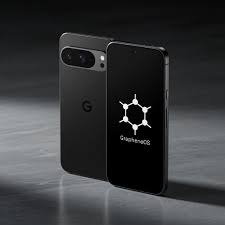
ZeroGhost phone combines privacy-focused controls with GrapheneOS security features.
The ZeroGhost phone is positioned around a privacy-focused smartphone experience built on GrapheneOS. Its approach combines features such as application sandboxing, granular permission controls, verified boot, and a flexible starting environment. These technologies are intended to give users greater visibility into applications, services, and access settings.
Smartphones have become central to everyday life. People use them for communication, banking, shopping, navigation, work, entertainment, photography, and countless other activities. As smartphones become more capable, privacy and security have also become increasingly important. Users want to know which applications can access their information, what permissions have been granted, and how much control they have over the services running on their devices.
But what does that mean in practical terms? What privacy features does ZeroGhost offer, and how can users understand the role of GrapheneOS, permissions, sandboxing, and verified boot?
This guide explains the main privacy-oriented features associated with the ZeroGhost phone in straightforward language.
What Is the ZeroGhost Phone?
The ZeroGhost phone is designed for users who want a smartphone experience with a stronger focus on privacy and control.
Rather than treating privacy as a single setting, the approach involves several layers. These layers can include operating-system security, application isolation, permission management, and verification mechanisms.
The concept is particularly relevant for people who want to make more deliberate decisions about:
- Which applications they install
- Which permissions applications receive
- Which services run on the device
- What information apps can access
- How applications interact with one another
- How the device verifies its software environment
ZeroGhost uses GrapheneOS as the foundation for its privacy-focused smartphone experience. GrapheneOS is known for its security and privacy-oriented design, providing additional controls and protections compared with a conventional smartphone configuration.
The exact hardware, software configuration, applications, and services included with a particular ZeroGhost offering should always be checked directly before purchase because product configurations can change.
Why Is Smartphone Privacy Important?
A modern smartphone can contain a large amount of personal information.
Depending on how a device is configured, applications may request access to information such as:
- Location
- Contacts
- Camera
- Microphone
- Photos and media
- Notifications
- Files
- Network connectivity
- Device-related information
Not every application needs access to every category.
For example, a weather application may reasonably request location access, while a simple calculator generally does not need access to contacts or a microphone.
Privacy-focused smartphone systems can give users more control over these relationships.
Instead of assuming that every installed application should have broad access, users can review permissions and decide what is appropriate for each application.
How Does GrapheneOS Relate to ZeroGhost?
One of the most important aspects of the ZeroGhost phone is its GrapheneOS foundation.
GrapheneOS is an open-source mobile operating system focused on privacy and security. It is designed to provide security improvements and additional privacy controls while maintaining compatibility with many Android applications.
For a user, the important point is that the operating system plays a major role in determining how applications interact with the device.
An operating system can influence:
- Application isolation
- Permission controls
- Security boundaries
- System updates
- Installation behavior
- Hardware-backed security features
- User profiles
- Network-related controls
ZeroGhost’s use of GrapheneOS therefore forms an important part of its privacy-oriented positioning.
What Is Application Sandboxing?
Application sandboxing is a key concept in smartphone security.
In simple terms, sandboxing helps separate applications from one another and restricts what each application can access.
Imagine a smartphone as an apartment building. Each application has its own room, while certain areas of the building are restricted. An application should not automatically be able to walk into another application’s room or access information stored elsewhere.
Sandboxing creates boundaries that can help reduce unnecessary access.
For users, this means applications are not simply treated as having unrestricted access to the entire smartphone.
Instead, the operating system establishes security boundaries around applications.
Why Does Sandboxing Matter?
Application isolation can be important because no application is automatically trustworthy simply because it is available for download.
Even legitimate applications can contain vulnerabilities, collect more information than users expect, or be affected by security problems.
Strong application isolation can help limit the potential impact of a compromised or malicious application.
This does not make a smartphone completely immune to attacks. No operating system can guarantee perfect security. However, isolation is an important layer in a broader security model.
What Are Granular Permission Controls?
Another major privacy feature is granular permission management.
Permissions determine what an application is allowed to access or use.
For example, an application might request access to:
- Camera
- Microphone
- Location
- Contacts
- Photos
- Files
- Notifications
A privacy-focused configuration allows users to review these permissions instead of simply accepting broad access without consideration.
Why Are Permissions Important?
Consider a simple example.
Suppose a flashlight application requests access to the microphone, contacts, and location.
A user might reasonably ask why a flashlight needs those permissions.
Permission controls make this type of decision more visible.
Users can evaluate the application’s purpose and decide whether the requested access makes sense.
This creates a more deliberate relationship between the user and installed applications.
How Can Users Control App Access?
A privacy-focused smartphone experience is not only about blocking applications. It is also about giving users more information and control.
Users can review the permissions associated with applications and adjust settings according to their preferences and requirements.
This can help answer questions such as:
Which apps can access my location?
Users can inspect location permissions and determine which applications should have access.
Which applications can use the microphone?
Microphone permissions can be reviewed to identify applications that have been granted audio access.
Which apps can use the camera?
Camera permissions can help users determine which applications are authorized to activate or interact with the camera.
Which apps can access my contacts?
Contact permissions can be reviewed and limited when an application does not require contact information.
The specific controls and interface depend on the operating-system version and device configuration.
What Is Verified Boot?
Verified boot is another important component of the security model.
The basic idea is that the device can verify important software components during the startup process.
This helps establish whether the operating system software being loaded is consistent with an authorized or expected state.
In practical terms, verified boot can help protect against certain forms of unauthorized modification to system software.
It is one part of a broader security architecture rather than a standalone privacy feature.
Why Is Verified Boot Useful?
If someone is concerned about smartphone security, it is important to consider what happens before applications even begin running.
Security does not start when an application opens.
The operating system itself needs to be protected.
Verified boot helps create a chain of trust during startup, making it more difficult for unauthorized system modifications to go unnoticed.
This is particularly relevant for users who prioritize device integrity.
Privacy and Security Are Related but Different
Privacy and security are often used interchangeably, but they are not exactly the same.
Security is primarily concerned with protecting systems and information from unauthorized access, modification, or attack.
Privacy is more concerned with how information is collected, accessed, shared, and controlled.
A secure application can still collect extensive information about its users.
Similarly, a privacy-focused system still needs strong security protections.
A smartphone such as ZeroGhost attempts to address both areas through operating-system security and user-facing privacy controls.
What Does a Flexible Starting Environment Mean?
ZeroGhost is described as providing a flexible starting environment.
The idea behind a flexible environment is that users can have more control over which applications, services, and configurations they choose to use.
Instead of assuming that every user wants the same collection of applications, a privacy-focused setup can allow users to make more deliberate choices.
This can be useful for people who prefer a minimal smartphone environment.
A user might choose to install only:
- Communication applications
- Navigation tools
- Banking applications
- Productivity software
- Media applications
- A preferred web browser
Another user might want a larger collection of applications.
The important idea is that users can evaluate what they actually need rather than automatically accepting unnecessary software.
Does a Privacy Phone Mean No Tracking?
This is an important question.
A privacy-focused smartphone should not be interpreted as a guarantee that tracking or data collection can never occur.
Privacy depends on multiple factors, including:
- Operating-system configuration
- Application behavior
- User permissions
- Network services
- Account settings
- Websites visited
- Information voluntarily provided by the user
For example, if a user installs an application that collects information and grants it extensive permissions, the operating system cannot make every privacy decision for them.
Users still need to understand the applications they install and the permissions they grant.
Can Users Still Install Apps?
A privacy-focused operating system does not necessarily mean users have to abandon applications entirely.
GrapheneOS is designed to support Android applications, while providing additional privacy and security controls.
Users can therefore choose applications based on their needs.
However, application compatibility and service requirements can vary.
Some applications may depend on specific Google services or other components. Users should therefore verify compatibility before purchasing a device or moving their primary smartphone setup.
What About Google Services?
Users interested in GrapheneOS frequently have questions about Google services.
GrapheneOS takes a different approach from a standard Android installation. Users can choose whether and how certain Google services are used, depending on their needs and the available configuration.
This is significant for privacy-focused users because it allows them to make more deliberate decisions about the services running on their phone.
Some people may prefer a minimal configuration, while others may require specific applications that depend on Google services.
The right configuration ultimately depends on the user’s requirements.
Who Might Consider a ZeroGhost Phone?
A privacy-focused smartphone can be relevant to several types of users.
Privacy-Conscious Smartphone Users
People who want greater visibility into application permissions and device configuration may appreciate a privacy-oriented operating system.
Security-Minded Users
Users who place a strong emphasis on security boundaries, verified boot, and application isolation may be interested in the technology behind the device.
Minimalist Users
People who prefer to install only the applications they actually need may find a flexible starting environment appealing.
Technology Enthusiasts
Users interested in alternative Android-based operating systems may want to explore GrapheneOS and its security architecture.
Professionals Handling Sensitive Information
Some professionals may want greater control over application access and device configuration. However, organizations should evaluate their specific security requirements rather than assuming a consumer privacy phone automatically satisfies enterprise security policies.
Explore ZeroGhost – https://zeroghost.shop
What Should Buyers Consider Before Purchasing?
A privacy-focused smartphone should be evaluated like any other technology product.
Before purchasing a ZeroGhost phone, prospective buyers can consider several factors.
Hardware Specifications
Check:
- Processor
- RAM
- Storage
- Display
- Camera system
- Battery
- Connectivity
- Charging capabilities
Privacy software is important, but hardware still affects everyday usability.
Software Configuration
Buyers should understand which operating system version is installed and how the device is configured.
Application Compatibility
Check whether the applications you rely on are compatible with the device and its operating-system configuration.
This is particularly important for banking, business, authentication, streaming, and productivity applications.
Updates
Security depends heavily on keeping software updated.
Buyers should understand how operating-system and security updates are delivered and how long the device is expected to receive them.
Warranty and Support
Review the seller’s warranty, return policy, technical support, and repair options before purchase.
Product Configuration
Product configurations can change. Buyers should confirm the current specifications, included software, storage capacity, and other details on the official product page before ordering.
How Does ZeroGhost Compare With a Typical Smartphone?
The biggest difference is the emphasis placed on privacy and user control.
A conventional smartphone may prioritize convenience and broad compatibility, often integrating many services and applications into the default experience.
A privacy-focused phone places more emphasis on:
- Permission control
- Application isolation
- Security architecture
- Software verification
- User configuration
- Reduced reliance on unnecessary services
This does not automatically mean one approach is better for every user.
A person who prioritizes maximum compatibility with mainstream applications may prefer a conventional smartphone.
Someone who prioritizes privacy controls and system-level security may prefer a privacy-focused setup.
What Are the Benefits of Application Isolation?
Application isolation can provide several security advantages.
If one application experiences a vulnerability, strong isolation can help prevent that application from freely accessing data belonging to other applications.
This is particularly important because smartphones often contain many different types of information.
For example, a phone might contain:
- Personal photos
- Work documents
- Banking applications
- Private messages
- Password managers
- Contact information
Keeping applications within appropriate security boundaries can reduce unnecessary exposure between applications.
Again, isolation is not a guarantee against every type of attack, but it can be an important defensive layer.
What Are User Profiles?
Modern privacy-focused operating systems can also provide mechanisms for separating different users or activities.
User profiles can help create separate environments on the same physical device.
For example, someone might use one profile for personal applications and another for work-related activities.
The benefit is that applications and data can be separated according to the profile structure.
This can be useful for users who want additional organization and separation without carrying multiple smartphones.
Availability and specific functionality depend on the operating-system implementation and configuration.
Does ZeroGhost Improve Everyday Privacy?
The potential privacy benefit comes from giving users more control over how the smartphone is configured.
For example, instead of treating privacy as a single on/off setting, users can make decisions about:
- Which apps are installed
- Which permissions are granted
- Which services are used
- How applications are separated
- What software configuration is maintained
This approach can make privacy more practical because users can adapt the phone to their individual needs.
Common Questions About ZeroGhost Phone
What is ZeroGhost phone?
ZeroGhost phone is a privacy-focused smartphone experience built around GrapheneOS, with features such as application sandboxing, granular permission controls, verified boot, and a flexible software environment.
Is ZeroGhost phone based on GrapheneOS?
The ZeroGhost product description identifies GrapheneOS as the foundation of its privacy-focused smartphone experience.
Does ZeroGhost phone block every form of tracking?
No smartphone can guarantee that all tracking or data collection is eliminated. Privacy also depends on applications, permissions, network services, account settings, and user behavior.
Can I install Android apps on a ZeroGhost phone?
GrapheneOS is designed to support Android applications, although compatibility can vary between individual apps and services.
What is application sandboxing?
Application sandboxing separates applications and limits their ability to access resources belonging to other applications or the wider system without authorization.
Why are granular permissions important?
Granular permissions allow users to decide which applications can access resources such as the camera, microphone, location, contacts, and other information.
What does verified boot do?
Verified boot helps verify important software components during device startup, contributing to the integrity of the operating-system environment.
Is ZeroGhost suitable for everyone?
Not necessarily. Users should consider application compatibility, hardware specifications, software requirements, support, updates, and their personal privacy priorities before purchasing.
Does privacy-focused software guarantee complete security?
No. Security is a layered process. A strong operating system can reduce certain risks, but users must still maintain updates, use strong authentication, install trustworthy applications, and practice safe digital habits.
Practical Privacy Tips for Any Smartphone
Even users who do not purchase a privacy-focused phone can improve their smartphone privacy.
Review Application Permissions
Regularly check which applications have access to sensitive resources.
Remove Unused Applications
If an application is no longer needed, uninstalling it can reduce the amount of software interacting with your device.
Keep Software Updated
Security updates can address known vulnerabilities, making timely updates an important part of smartphone security.
Use Strong Authentication
A strong device passcode and appropriate authentication methods can help protect the device if it is lost or stolen.
Be Careful With Links and Downloads
Avoid installing applications or opening links from suspicious sources.
Check Privacy Settings
Review account and application privacy settings periodically because configurations can change after updates.
Use Separate Accounts or Profiles When Appropriate
Separating personal and work activities can reduce unnecessary overlap between different types of information.
Final Thoughts
The ZeroGhost phone takes a privacy-focused approach to smartphone use by combining GrapheneOS with security and privacy technologies such as application sandboxing, granular permission controls, and verified boot.
The central idea is greater user control.
Rather than relying entirely on default settings, users can make more deliberate decisions about applications, permissions, services, and their overall smartphone environment.
For privacy-conscious users, this approach can be appealing because smartphone privacy is not simply about hiding information. It is also about understanding what is happening on the device and having meaningful control over access.
At the same time, buyers should maintain realistic expectations. A privacy-focused operating system cannot eliminate every digital risk, and privacy ultimately depends on a combination of technology, configuration, applications, and user behavior.
Before purchasing a ZeroGhost phone, prospective buyers should verify the current hardware configuration, software setup, application compatibility, update policy, warranty, support options, and any other product-specific terms.
For users who value greater control over their mobile environment, ZeroGhost phone offers an interesting privacy-oriented alternative to a conventional smartphone setup.