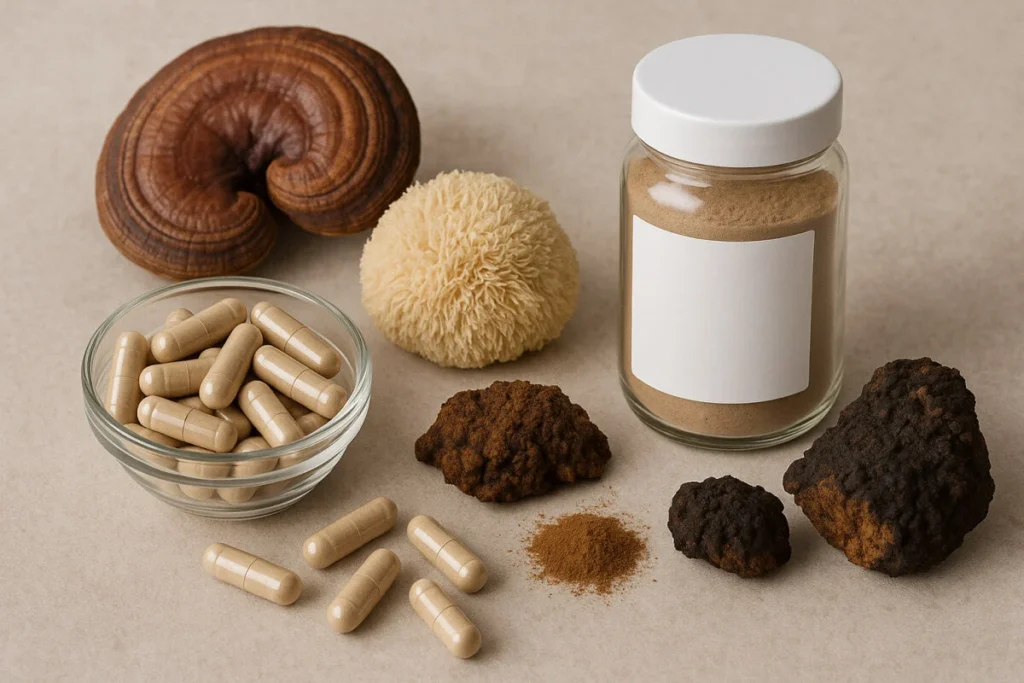
Functional mushroom supplements have moved well beyond the niche wellness shelves where they were once found. These days, you’ll see mushroom powders, capsules, extracts and blends marketed for everything from everyday wellness to focus and energy. The growing interest isn’t hard to understand, but choosing a product deserves more thought than picking the most attractive label.
Before adding one to your routine, look at the mushroom itself, the form it’s supplied in, the ingredients, the testing information and the claims being made. A little research can save you from buying a product that doesn’t match what you’re actually looking for.
If you’re comparing different wellness brands or looking for Amentara discount codes, don’t let the price be the only deciding factor. A cheaper bottle isn’t necessarily better value if it provides little information about the ingredient, serving size or testing behind the product.
Start With the Mushroom, Not the Marketing
The first question is simple: what’s actually in the product?
Functional mushrooms can refer to several different species, including lion’s mane, reishi, cordyceps and turkey tail. Each has a different nutritional and chemical profile, and research into their potential effects varies considerably.
This matters because mushroom supplements aren’t interchangeable. A product containing lion’s mane isn’t the same as one containing reishi, even if both are placed under the broad “functional mushroom” label.
Amentara, for example, has a dedicated functional mushroom collection, but its wider catalogue also includes several ethnobotanical categories. Its website provides product and educational information around these ingredients, which is useful context when comparing products rather than assuming every botanical works in the same way.
Check the Serving Information
Once you’ve identified the mushroom, look at how much of it you’re actually getting.
A label should make it reasonably clear what constitutes a serving and how many servings are included. FDA guidance says dietary supplement labels generally need to provide a Supplement Facts panel showing serving size and the amount of dietary ingredients per serving, subject to certain exceptions.
This is especially useful when comparing powders with capsules or extracts. Two products may appear similar at first glance but contain very different amounts per serving.
Don’t assume that a larger number on the front of the packet automatically means a better product. More isn’t always better, particularly with supplements.
Look for Specific Ingredient Information
A good supplement label should tell you what you’re buying.
Look beyond phrases such as “mushroom complex” or “premium blend”. Check whether individual ingredients are named and whether the quantities are disclosed. If a blend contains several mushrooms but doesn’t provide much detail about their amounts, it becomes harder to compare the product with alternatives.
The source and form of the mushroom can also matter. Some products use powders made from the whole mushroom, while others use extracts. Those forms aren’t necessarily equivalent, so it’s worth reading the manufacturer’s explanation rather than assuming one is automatically superior.
Don’t Treat “Natural” as a Safety Guarantee
Natural sounds reassuring. It isn’t a safety certificate.
The FDA specifically advises consumers not to assume that a supplement is safe simply because it is described as natural. Some supplements can have strong effects in the body, interact with medicines or create problems when combined with other products.
This is one reason it’s sensible to tell a doctor, pharmacist or another qualified healthcare professional about supplements you’re taking, particularly if you use prescription medicines or have an existing health condition.
Pregnancy, breastfeeding and upcoming surgery are also situations where professional advice is especially important.
Be Careful With Big Health Claims
This is probably the easiest part of supplement shopping to overlook.
A product page might use confident language about immunity, memory, energy, stress or other areas of health. But a marketing statement isn’t the same thing as strong clinical evidence.
The FDA says dietary supplements are not approved for safety and effectiveness before they are marketed in the same way as prescription medicines. It also warns consumers to be cautious about products making claims that sound too good to be true.
That doesn’t mean research into functional mushrooms is irrelevant. It means consumers should look at the quality and limits of the evidence instead of treating every wellness claim as an established fact.
A trustworthy article or product description should be comfortable saying when research is still developing.
Check for Testing and Quality Information
Testing is another useful point of comparison.
Consumers should look for clear information about manufacturing, ingredient identity and testing. Some brands provide certificates of analysis or other documentation, although the presence of a testing statement alone shouldn’t be treated as proof that a product is suitable for everyone.
Amentara, for instance, says it uses third-party testing and provides information about its approach to product testing and sourcing on its website.
When a company provides this kind of information, read the details. Find out what is being tested and whether the information relates to the specific product you’re considering.
Consider the Full Ingredient List
Mushrooms may be the headline ingredient, but they’re not always the only one.
Capsules, gummies, powders and drinks can contain sweeteners, flavourings, fillers, preservatives or other botanical ingredients. The FDA requires dietary supplement labels to list ingredients in the Supplement Facts panel and identify other ingredients separately.
If you have allergies, dietary restrictions or sensitivities, this section deserves as much attention as the mushroom itself.
It can also prevent accidental duplication. Someone taking several wellness products may unknowingly consume the same ingredient from multiple sources.
Think About What You Actually Need
Before buying anything, ask yourself why you want the supplement.
Are you simply interested in adding mushrooms to your diet? Are you looking for a convenient powdered ingredient? Or are you responding to a specific health concern?
That last situation deserves extra caution. Supplements shouldn’t replace prescribed treatment or professional medical advice. The FDA specifically advises consumers not to use dietary supplements as substitutes for prescription medicines or a varied diet.
Having a clear reason for buying also makes it easier to ignore products that promise everything at once.
Frequently Asked Questions
What are functional mushroom supplements?
Functional mushroom supplements are products made with mushrooms or mushroom-derived ingredients and sold in forms such as powders, capsules, extracts and blends. Different mushrooms have different properties, and evidence for specific health effects varies.
Are functional mushroom supplements safe?
Safety depends on the specific mushroom, product, dose, other ingredients and the individual taking it. Supplements can interact with medicines or cause adverse effects, so people with medical conditions or those taking medication should speak with a healthcare professional before use.
How do I choose a good mushroom supplement?
Start by checking the mushroom species, serving size, ingredient amounts, other ingredients, manufacturer information and available testing details. Be cautious about products that provide little information or make unusually broad health claims.
Are mushroom supplements FDA approved?
Dietary supplements are not generally approved by the FDA for safety and effectiveness before they reach the market in the way that prescription drugs are. The FDA regulates supplements under a different framework and can take action against products that are adulterated or misbranded.
Should I take mushroom supplements with medication?
Don’t assume that supplements and medicines can always be combined safely. Some supplement ingredients can interact with medicines, so it’s sensible to discuss your plans with a doctor, pharmacist or other qualified healthcare professional.
Is a mushroom extract better than mushroom powder?
Not necessarily. Extracts and powders are different forms, and their composition can vary by product and manufacturing method. Compare the ingredient information and intended use rather than assuming one format is automatically better.
Buying a functional mushroom supplement doesn’t need to be complicated. The key is to slow down before clicking “buy”. Check what’s actually in the product, look beyond the front-of-pack claims and find out what the manufacturer can tell you about quality and testing.
With supplements, a little healthy scepticism can be useful. The most convincing label isn’t always the most informative one.