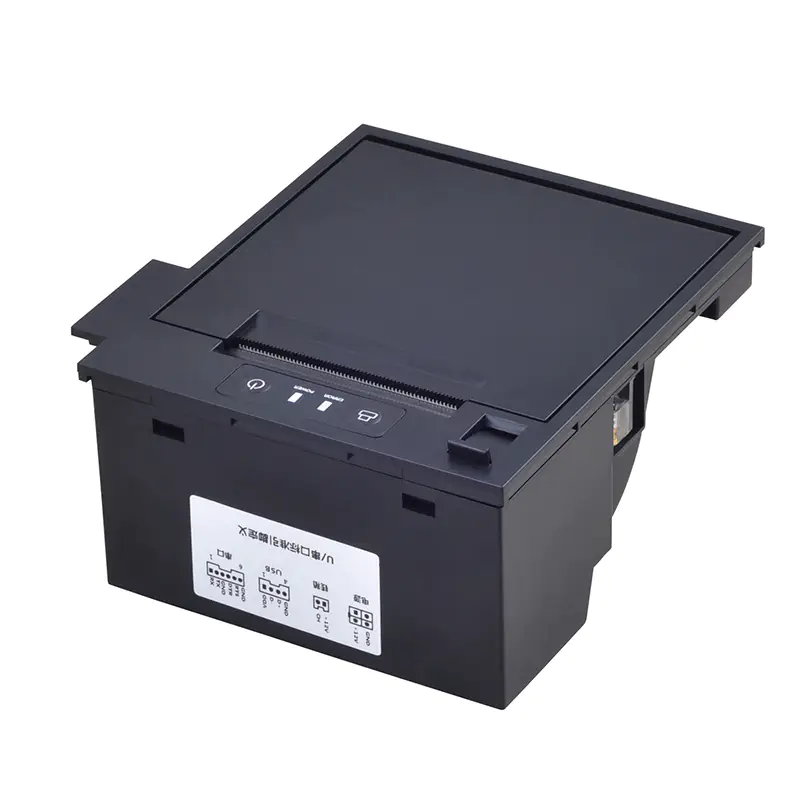
Product testing plays an important role in manufacturing compact printers for industrial and embedded applications. Before a printer is integrated into equipment, it needs to meet defined mechanical, electrical, and functional requirements.
A Panel Printer Manufacturer may use multiple testing stages to evaluate printer performance and identify potential issues before products reach customers. Understanding these processes can help equipment designers make more informed decisions when selecting an integrated printing solution.
Why Product Testing Matters
Printers used in industrial equipment may operate frequently and communicate directly with automated systems. A problem with printing, paper feeding, power, or communication can affect the operation of the larger machine.
Testing helps identify defects and inconsistencies before products are shipped. It can also help manufacturers verify that printers continue to meet established specifications across production batches.
Mechanical Testing
Mechanical components play an important role in printer performance. The paper feed, print mechanism, cutter, housing, mounting points, and other components must work together correctly.
Testing may involve checking whether the printer feeds paper smoothly, maintains proper alignment, and operates correctly through repeated print cycles.
For embedded applications, manufacturers may also evaluate the mechanical dimensions and mounting features to ensure that products remain consistent with their specified design.
Print Quality Testing
Print output should be clear and consistent throughout normal operation. Depending on the printer, testing may evaluate text, graphics, barcodes, symbols, or other printed elements.
Important factors can include:
- Print clarity
- Character consistency
- Alignment
- Print density
- Print speed
- Paper feeding
- Cutting performance where applicable
Consistent output is particularly important when printed information is used for measurements, identification, production records, or transaction documentation.
Electrical Testing
Electrical testing helps verify that the printer operates within its specified power requirements. Manufacturers may evaluate voltage behavior, current consumption, startup performance, and other electrical characteristics.
Proper electrical testing is important because the printer may share a power system with controllers, sensors, displays, and other equipment.
Communication Testing
An integrated printer must receive data correctly from its host system. Communication testing can help confirm that supported interfaces and commands function as expected.
Testing may involve sending different types of print data to the printer and checking whether the output matches the intended format. This can help identify communication errors before the printer is integrated into a larger system.
Paper Handling Tests
Paper handling is a fundamental part of printer operation. Testing can evaluate how the mechanism loads, feeds, and advances the paper during normal printing.
If the printer includes an automatic cutter or similar mechanism, that component may also require functional testing. Proper paper handling helps reduce interruptions caused by misfeeds, jams, or incomplete output.
Durability and Repeated-Cycle Testing
Industrial equipment may require frequent printing over long periods. Repeated-cycle testing can help evaluate how mechanical components perform after continued use.
The exact testing method depends on the printer design and intended application. Cycle testing can provide manufacturers with information about component performance and help identify potential weaknesses in the mechanism.
Environmental Testing
Printers may be installed in environments with varying temperature, humidity, dust, or vibration levels. Where applicable, environmental testing can evaluate performance under specified operating conditions.
The relevant test conditions should reflect the printer’s intended operating range. Customers should review the manufacturer’s documented specifications rather than assuming that every printer is suitable for harsh industrial environments.
Firmware and Functional Testing
Modern compact printers may rely on firmware to control printing functions, communication, paper handling, and other operations. Firmware testing helps ensure that these functions behave as expected.
Manufacturers may also test different operating conditions and input commands to identify unexpected behavior before a product is released or shipped.
Quality Control During Production
Testing is not necessarily limited to the final stage of manufacturing. Quality checks can take place throughout production, depending on the manufacturer’s processes.
Components may be inspected before assembly, while completed units can undergo functional testing before shipment. This layered approach can help identify problems at different stages of the manufacturing process.
Prototype Testing
Before a new printer design enters full production, prototypes may be evaluated to verify the design. Prototype testing can reveal issues related to mechanical construction, electrical behavior, paper handling, or system integration.
For customized applications, testing a prototype within the customer’s actual equipment can be particularly useful. It allows engineers to evaluate the printer under realistic operating conditions.
Testing for Customized Applications
Standard testing may not cover every requirement of a specialized application. A customized printer may require additional evaluation based on its mounting arrangement, communication method, paper format, or operating environment.
Manufacturers and equipment designers can establish application-specific test criteria to determine whether the customized configuration meets the project’s requirements.
Documentation and Test Results
Testing is most useful when results are properly documented. Manufacturers can use test records to track product quality, investigate failures, and maintain consistent production standards.
For customers, clear technical specifications and testing information can also make it easier to evaluate whether a printer is appropriate for a particular application.
What Buyers Should Ask Manufacturers
When evaluating a printer supplier, buyers can ask several questions about product testing:
- What functional tests are performed before shipment?
- How is print quality evaluated?
- Are communication interfaces tested?
- Are paper feeding and cutting functions checked?
- Is repeated-cycle testing performed where appropriate?
- Are environmental specifications supported by testing?
- How are customized products validated?
- What quality-control documentation is available?
The answers can provide useful insight into how seriously the manufacturer approaches product consistency and reliability.
Testing Is Part of a Larger Quality Process
Product testing should not be viewed as a substitute for good design and manufacturing practices. Reliable products generally depend on a combination of appropriate materials, controlled assembly processes, engineering validation, and effective quality control.
Testing provides an important verification step by checking whether the finished product performs according to its defined requirements.
Conclusion
Product testing is an important part of producing reliable printers for industrial and embedded applications. Mechanical, electrical, communication, print-quality, paper-handling, environmental, and functional testing can each address different aspects of printer performance.
When evaluating a Panel Printer Manufacturer, understanding its testing and quality-control practices can help businesses assess whether a product is suitable for their equipment. Clear specifications, appropriate validation, and consistent testing can all contribute to a more dependable integrated printing solution.