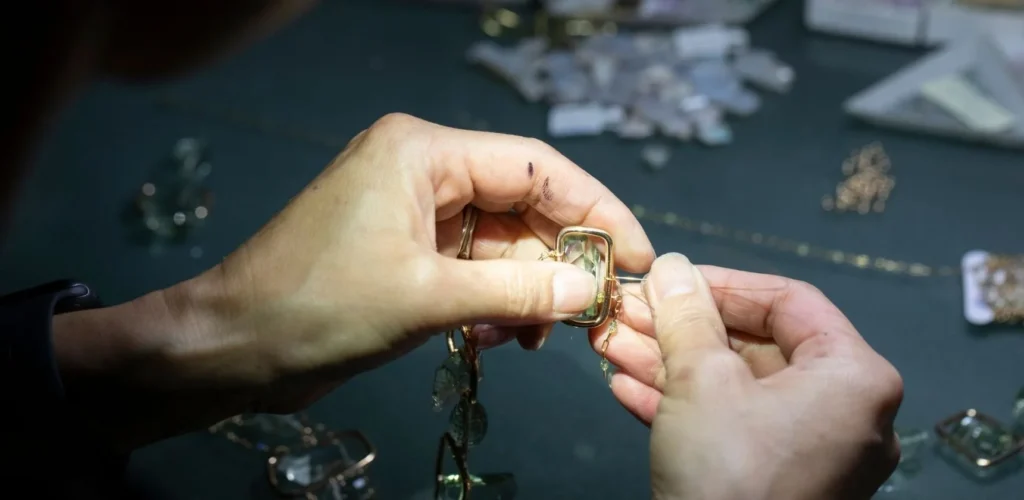
A single careless drop into a jewelry drawer can leave a cloudy scratch on a stone you spent weeks choosing. Gems vary widely in hardness, and they scratch one another when stored loosely. This matters even more for handmade gemstone jewelry, where open settings and unique stones are harder to replace. This guide explains why scratches happen, how to sort your pieces, and which storage methods actually protect them.
Why Gemstones Scratch in the First Place
Every scratch follows the same basic rule: a harder material can scratch a softer one. Gemologists measure this with the Mohs scale, which ranks minerals from 1 (talc) to 10 (diamond). A diamond can mark almost any other stone, and a ruby can scratch an amethyst resting beside it in the same pouch.
Dust is another culprit. Household dust often contains tiny quartz particles, and quartz sits at 7 on the scale. Over months of wearing and wiping, that grit can dull the surface of softer gems such as opal, turquoise, and pearl. Careful storage is therefore just as important as careful wear.
What the Mohs Scale Does and Does Not Tell You
Hardness describes scratch resistance, not toughness. Toughness describes how well a stone survives a knock. Topaz is a good example: it rates 8, yet it can split along internal planes called cleavage if struck at the wrong angle. Emerald rates around 7.5 to 8, but it often contains natural fractures, so a bump against a hard surface can chip it.
Treat the scale as a sorting tool rather than a guarantee. A hard stone still needs cushioning, and a soft stone needs distance from anything harder.
Sort Your Collection Before You Choose a Container
Good storage begins with sorting. Gather every piece and divide it into three rough groups: hard stones (diamond, sapphire, ruby), mid-range stones (quartz varieties, garnet, peridot, tanzanite), and soft or delicate materials (pearl, opal, turquoise, amber, lapis).
Keep each group apart, and never let a diamond share a compartment with anything else. Even within a group, give each piece its own space, because the metal matters too. Gold and silver are relatively soft, so a hard gemstone can gouge a band, while a prong or clasp can scrape the polished surface of a stone.
Pay attention to chains and hooks as well. Fine chains tangle and drag across softer cabochons, and sharp earring posts can poke through thin fabric. Fasten clasps and thread necklaces through their own hooks or tubes before putting them away.
Quick Storage Reference by Gemstone Type
The table below pairs common stones with their approximate hardness and the storage approach that suits them. Hardness values are typical ranges and can shift slightly by variety and source, so use them as a guide rather than an exact rule.
| Gemstone | Approximate Mohs Hardness | Storage Notes |
|---|---|---|
| Diamond | 10 | Scratches nearly everything. Keep in its own pouch or compartment. |
| Sapphire and ruby | 9 | Very hard but can still scratch softer stones and metal. Store separately from mid-range gems. |
| Topaz | 8 | Hard, yet it cleaves. Pad well and avoid hard knocks. |
| Emerald | 7.5–8 | Often fractured internally. Use a cushioned slot and avoid stacking. |
| Amethyst, citrine, quartz | 7 | Can be scratched by dust and harder gems. Wrap or pouch each piece. |
| Garnet and peridot | 6.5–7.5 | Mid-range. Keep apart from sapphire, ruby, and diamond. |
| Moonstone | 6–6.5 | Prone to surface wear and cleavage. Store in a soft pouch. |
| Opal | 5.5–6.5 | Soft and sensitive to heat and dryness. Keep in cloth, away from radiators. |
| Turquoise | 5–6 | Porous and soft. Avoid contact with oils, perfume, and harder stones. |
| Pearl | 2.5–4.5 | Very soft and organic. Use breathable cloth, not sealed plastic, and lay pieces flat. |
| Amber | 2–2.5 | Extremely soft. Keep isolated and away from solvents and heat. |
Notice how the soft materials at the bottom share a common need: isolation. Whenever a piece sits in the lower half of the table, treat every other stone in the box as a potential threat.
Choosing the Right Storage Containers
The best container is the one that keeps each piece from touching another. Price matters less than design, and a modest box with proper dividers often beats an expensive one with a single open tray.
Fabric-Lined Boxes with Dividers
A box with individual slots, ring rolls, and padded earring rows is the most reliable option for everyday storage. Look for soft linings such as velvet, microfiber, or cotton. Rough fabrics can leave fine abrasions on soft stones, and loose-fill compartments let pieces slide together when the box is moved.
If a box has only a few large compartments, add your own barriers. Small cotton pouches or folded flannel squares work well inside larger sections.
Individual Soft Pouches
Pouches are the simplest way to protect gemstone jewelry that does not fit neatly into a slot. Use one pouch per piece, and choose soft cotton, flannel, or microfiber. Drawstring pouches also keep dust away, which helps protect the surface polish.
Silver set with stones may tarnish, so consider pouches or cloths treated to slow tarnish. Pearls, on the other hand, do better in plain breathable fabric because sealed plastic can trap moisture over time.
Rolls, Trays, and Hanging Organizers
Jewelry rolls suit travel and small spaces because every item gets a separate pocket. Shallow trays with fabric inserts work well for display on a dresser, provided pieces do not overlap. Hanging organizers keep necklaces from tangling, but make sure each pendant hangs freely and does not swing against its neighbor.
How to Store Each Type of Jewelry
Different shapes create different risks. A ring faces different dangers than a long necklace, so adjust your approach to the piece.
Rings
Rings are the most scratch-prone items because the stone sits proud of the band. Slide each ring into a ring slot or its own small pouch. Avoid stacking rings in one compartment, since prongs and gem edges rub against neighboring bands.
Necklaces and Pendants
Store necklaces flat in a lined drawer tray or hang them on a hook with enough room around each one. Fasten the clasp first so the chain does not twist. Place heavier pendants in separate pouches so the stone does not rest on a delicate chain.
Earrings and Bracelets
Keep earrings as pairs in a padded row or a small pouch, with the posts protected. Dangle earrings should hang or lie flat so their drops do not bend. Bracelets with stones on the outside should be laid in a lined section where the gems face upward and nothing presses on them.
Extra Care for Handcrafted and Artisan Pieces
Pieces made by independent artisans often include features that factory-made items do not. Wire-wrapped pendants, open-backed settings, hand-set bezels, and irregular cabochons all need thoughtful handling because there is little standardization in how they are built.
Wire wraps can bend if something presses on them. Store these items in a rigid compartment or a box with enough height that nothing sits on top. Open-backed stones expose the underside of the gem, so avoid dropping them into a pouch with sharp metal items.
Also check the maker’s care notes. Some artisans treat or finish their stones in ways that affect cleaning and storage, such as oiled turquoise or stabilized opal. If you are unsure, ask the maker how the piece was finished before you decide where it belongs.
Protecting Gems from Humidity, Heat, and Light
Scratches are not the only enemy. Environment affects how gemstones age, and a poor storage spot can undo your careful organizing.
Choose a cool, dry place with stable conditions. Bathrooms are a poor choice because steam and temperature swings can encourage tarnish on metals and stress porous stones. Radiators and sunny windowsills create heat, which can harm opal and amber and may also fade some colored gems over time. Amethyst, for instance, can lose color with prolonged strong light.
If you live somewhere very humid, add silica gel packets to the storage area, but keep them from touching the jewelry directly. Be more cautious with pearls and opal, which do not like extreme dryness, so avoid overly aggressive desiccants for those pieces.
Clean Before You Store, Then Check Regularly
Oils, lotions, and dust left on a stone become abrasive grit once they dry. Before putting a piece away, wipe it gently with a soft, lint-free cloth. For a deeper clean, use lukewarm water with a drop of mild dish soap and a soft brush, unless the stone is porous, treated, or fragile, in which case a dry cloth is safer.
Dry each piece thoroughly before storing it. Trapped moisture can lead to tarnish on silver and can damage glued settings. Take a few minutes each month to open your containers, check for loose stones, and rearrange anything that has shifted.
Storage Mistakes That Cause the Most Damage
A few habits cause most of the scratches jewelry owners see:
- Tossing pieces loosely into one drawer or dish
- Storing diamonds or sapphires beside pearls, opals, or turquoise
- Leaving pieces on bathroom counters or windowsills
- Using a rough fabric lining or a tangled chain pile
- Putting away jewelry that is still damp or dirty
Packing Gemstone Jewelry for Travel
Travel is when most careful owners slip. Bags get tossed, and pieces jostle against each other in transit. Use a jewelry roll or a small hard case with dividers, and wrap each item in its own pouch before it goes in.
Carry valuable or sentimental pieces in your hand luggage rather than checked baggage. Avoid wearing delicate gems during activities like swimming, gym sessions, or gardening, and store them safely at your destination rather than leaving them on a bedside table or sink.
Conclusion
Scratch-free storage comes down to three habits: separate stones by hardness, give every piece its own soft space, and keep jewelry clean and dry before it goes away. Hard stones such as sapphire and diamond need isolation, softer materials such as pearl and opal need gentle padding, and delicate artisan work benefits from extra support around settings and wires. None of this requires expensive equipment. A divided box, a handful of soft pouches, and a quick monthly check are enough to keep your collection looking as good as the day you bought it.
Frequently Asked Questions
Can I store all my gemstone rings in one jewelry box?
Yes, as long as each ring has its own slot or pouch. A shared compartment lets harder stones scratch softer ones and lets prongs snag against other bands.
What is the best material for lining a jewelry box?
Soft fabrics such as velvet, microfiber, flannel, and cotton are good choices. Avoid rough or textured linings that can leave fine marks on soft stones like pearl and opal.
Is it safe to keep gemstone jewelry in plastic bags?
Small zip bags can separate pieces for short-term storage, but they are not ideal for long-term use. Pearls and other organic materials need breathable fabric, and trapped moisture can speed tarnish on silver settings.
Should I keep pearls and opals separate from other stones?
Yes. Both are much softer than most gems and are easily scratched by quartz, sapphire, and diamond. Give them separate pouches and keep them away from heat and very dry air.
How often should I check my stored jewelry?
A monthly check is usually enough. Look for loose stones, bent wires, tarnish, and any pieces that have shifted against each other, and rearrange as needed.